
Choosing the right decoration for your glass packaging can feel overwhelming, with a confusing array of technical terms and options. Making a hasty decision can lead to a finished product that doesn't capture your brand's essence, causing production delays and budget overruns. Understanding the main types of custom printing on glass is the first step to making an informed choice that aligns your design vision with manufacturing reality.
The main options to compare are screen printing for crisp logos and text, hot stamping for foil effects, decals for detailed multi-color artwork, laser decoration for surface marks or suitable light-through patterns, and adhesive labels for changing product information. Start with the intended appearance, then check the bottle shape, final surface, artwork and conditions of use.
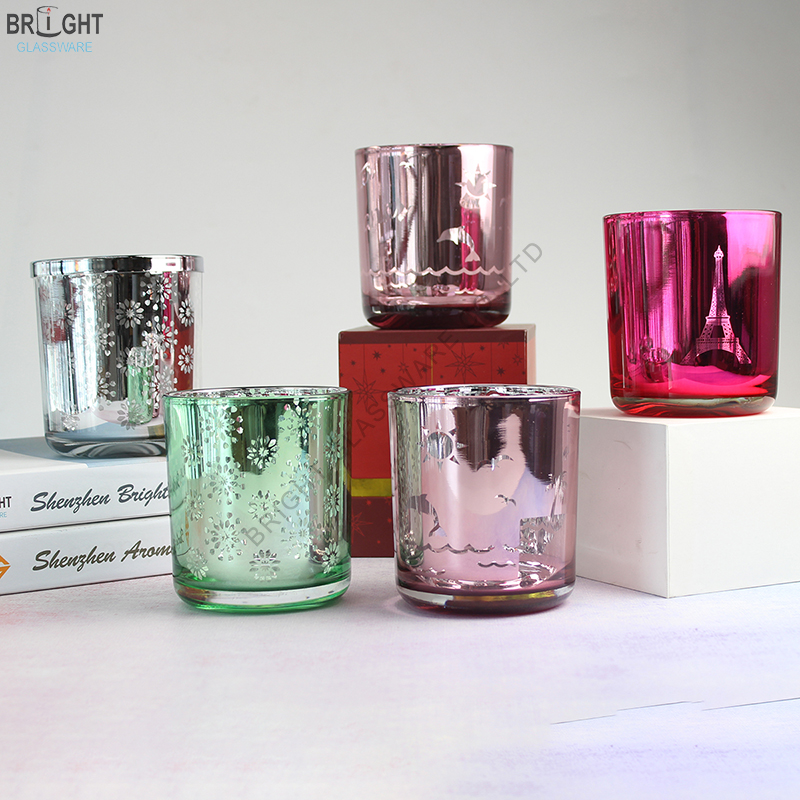
Making the right choice depends on your artwork, bottle shape, budget, and desired final effect. Let's explore each of these glass decoration methods in more detail so you can confidently select a suitable process for your brand's packaging.
| Your design priority | Option to sample | Confirm before ordering |
|---|---|---|
| Clear text and spot colors | Screen printing | Print area, color matching and registration |
| A reflective foil logo | Hot stamping | Foil finish, fine details and alignment |
| Detailed multi-color artwork | Decals or a specified transfer route | Surface fit, joins and curing method |
| Frequently changing product information | Adhesive labels | Label shape, material, adhesive and handling conditions |
| A surface-engraved or light-through motif | Laser decoration | Bare-glass or coating-removal route, legibility and lighting |
What is Screen Printing and When Should You Use It?
Do you need a crisp, clear logo or text on your glass jar but worry about cost and complexity? You might be facing a design with specific brand colors that must be matched perfectly. This is where a proven, reliable method is essential.
Screen printing, also known as silk screening, is worth considering for solid colors, text and logos on glass. Designs with a small number of spot colors are a useful starting point. Cylindrical and flat printing areas are common, while tapered or other shapes need an equipment and sample check.1
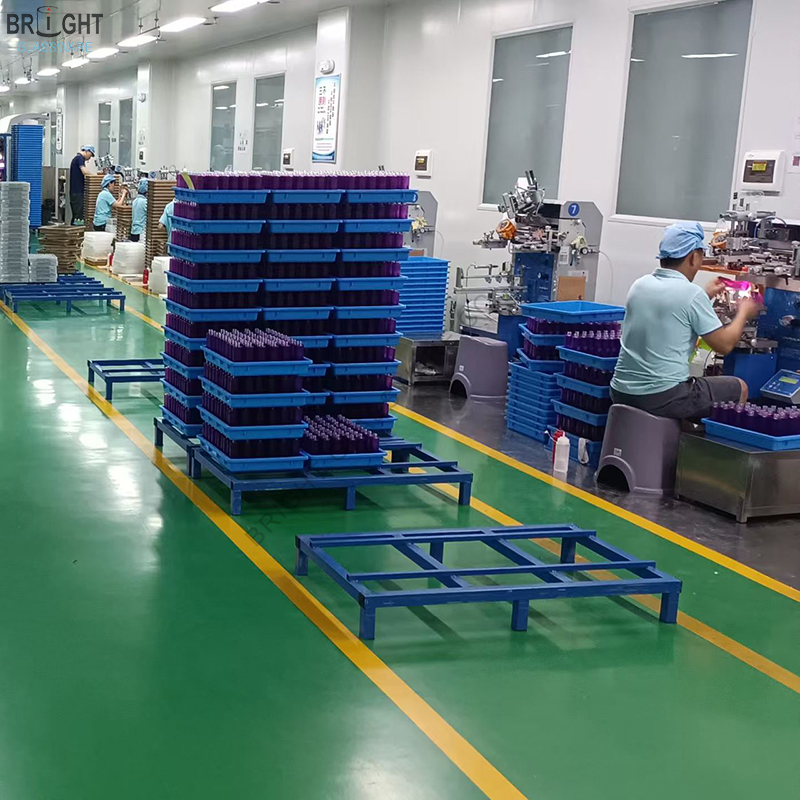
Dive Deeper into Screen Printing
Screen printing presses ink through a mesh carrying the design onto the glass. Each color normally requires its own screen and printing stage. The ink system determines the next step: UV-curable inks and thermally cured organic inks must be distinguished from ceramic colors that require firing. Ask which ink and curing route will be used on your final container; a high firing temperature is not a requirement for every screen print.1
Best Use Cases for Screen Printing:
-
Brand Logos & Text: It produces sharp lines and clear text, perfect for brand names and product information.
-
Spot Color Designs: It is useful for specified solid colors. Use a Pantone reference and approve an actual sample on the final glass surface.
-
Wrap-Around Patterns: Simple repeating patterns or text may suit wrap-around printing; confirm the printable circumference and how the artwork joins.
When evaluating screen printing, there are a few critical details to discuss with your supplier. I recommend addressing these points during the initial inquiry.
Key Considerations for Your Project:
-
Surface Geometry: While best for flat or cylindrical surfaces, specialized equipment can handle some tapered or slightly irregular shapes. Always confirm if your specific bottle shape is suitable.
-
Multi-Color Registration: For designs with more than one color, ask about the "registration tolerance"—the acceptable amount of misalignment between colors. A tight registration is crucial for a professional look.
-
Printable Area: There are physical limits to how close a print can get to the heel (bottom) or shoulder (top) of a bottle. Confirm the maximum printable height and width for your chosen container.
-
Wrap-Around Seams: For a full-wrap design, confirm whether the selected process needs a gap, overlap or join. Approve its position and appearance on a sample, and allow for it in the artwork.
Here’s a simple breakdown of how color count impacts the process:
| Feature | 1-Color Screen Print | Multi-Color Screen Print |
|---|---|---|
| Setup | One color separation and screen | Separate screens and color-registration planning |
| Quote inputs | Print area, ink system and quantity | Also color count, registration and curing stages |
| Production planning | Confirm the chosen equipment and cycle | Confirm the available stations and curing arrangement |
| Artwork fit | Simple logos and text | Designs whose separations and alignment can be approved |
For clean lines and solid colors, screen printing is a useful route to sample first. Our guide to screen printing on glass explains the container, artwork and approval checks in more detail.
How Can You Achieve a Metallic Finish with Custom Printing on Glass?
Are you dreaming of a luxurious, reflective gold or silver logo for your perfume bottle or candle jar? Many brands want that high-end metallic look but are unsure how to achieve it or what to ask for. The result can sometimes be a flat, dull "gold" ink instead of the brilliant shine you envisioned.
Hot stamping transfers a decorative foil layer using heat and pressure. It is one way to create a metallic or reflective logo on glass. The result depends on the chosen foil, base layer and container surface, so approve the finish on an actual sample.2
Dive Deeper into Hot Stamping
The setup may use a design die or a roll-on arrangement, depending on the system. One route we offer on glass is to screen-print a UV primer first, then apply the foil in registration with that design. Confirm the compatible primer, foil, surface preparation and curing conditions for the project; this is a foil-transfer process, rather than ceramic color fused into the glass.2
Hot Foil Stamping vs. Metallic Screen Printing Ink: Metallic screen-printing inks and hot-stamping foils offer different effects. Compare physical samples for color, reflectivity, texture and edge quality. Foils also come in different finishes, so the word "gold" alone does not define the appearance. A metallic-looking jar photograph does not identify how its decoration was made.2
When you're ready to add a metallic touch, here is what I recommend you focus on during the sampling and approval stage:
-
Specify the Finish: Be clear about the "shine" you want. Ask for samples of different foils—shiny, matte, brushed, or even holographic—to find the perfect match for your brand.
-
Check Fine Details: Inspect the sample for the clarity of small text and the integrity of thin lines. The edges of the stamped area should be sharp and clean, with no "feathering" or smudging.
-
Confirm Alignment: If the hot stamping is combined with other printed elements, check the alignment (registration) between the foil and the other parts of the design.
-
Test on the Final Surface: A foil can look different on clear glass versus a color-coated or frosted jar. Always request samples on the exact container with its final surface treatment. If the base finish is still being chosen, compare body-colored and coated glass before signing off the decoration.
Foil can be a visual accent for perfume, cosmetics and candle packaging. Its value should be judged in the complete pack design. Research on foil-stamped food packaging found that effects on shopper attention varied by product; it does not establish a guaranteed benefit for glass packaging.3
What's the Best Option for Complex, Multi-Color Designs?
Does your design feature a photorealistic image, subtle color gradients, or a pattern that needs to cover a complex, curved surface? You might be concerned that traditional screen printing can't handle this complexity, leaving you to compromise on your creative vision.
For intricate, multi-color or photographic designs, decals are worth comparing with direct printing. Artwork is prepared on a carrier and transferred to the glass. The materials and finishing steps vary: a fired ceramic decal and an organic transfer are different systems, with different conditions to confirm.4
Dive Deeper into Decal Application
Decals can be considered for detailed illustrations and gradients. First clarify the transfer route. With a water-slide decal, water releases the printed film from its backing so it can be positioned on the object. Heat-release transfers use a different transfer arrangement. Hydrographic dipping is another process and should not be treated as the same method.4
For a fired ceramic decal, the selected color and carrier system determines the drying and firing steps. Other systems use their specified curing conditions. Ask the supplier to name the material system and finishing process instead of relying on the general word "decal".4
Advantages of Decal Application:
-
Artwork Detail: Suitable systems can reproduce detailed illustrations, photographs or gradients; approve a sample at the intended size.
-
Surface Coverage: Selected systems may suit larger areas or some curves and tapers; confirm fit and the join on the actual container.
-
Placement: Agree a positioning reference and acceptable variation, then check the sample against it.
This technique requires careful evaluation. I recommend confirming the following on a physical sample before ordering:
-
Seam Line: Full-wrap decals will have a seam where the two ends meet. Ask to see a sample to evaluate how visible this seam is and how the pattern aligns.
-
Distortion on Curves: On heavily tapered or spherical surfaces, the artwork may experience slight distortion. A physical sample lets you approve this before committing to production.
-
Bubbles or Wrinkles: The application process must be flawless to avoid tiny air bubbles or wrinkles under the decal. Inspect your approval samples closely under good light.
For brands with visually rich identities, decals open up a world of creative possibilities for custom printing on glass.
Can Custom Printing on Glass Create a Light-Through Effect?
Do you want your candle's flame to create a magical glow by illuminating your logo or a hidden pattern from within? Many candle brands want this captivating effect but aren't sure which manufacturing technique can achieve it cleanly and consistently.
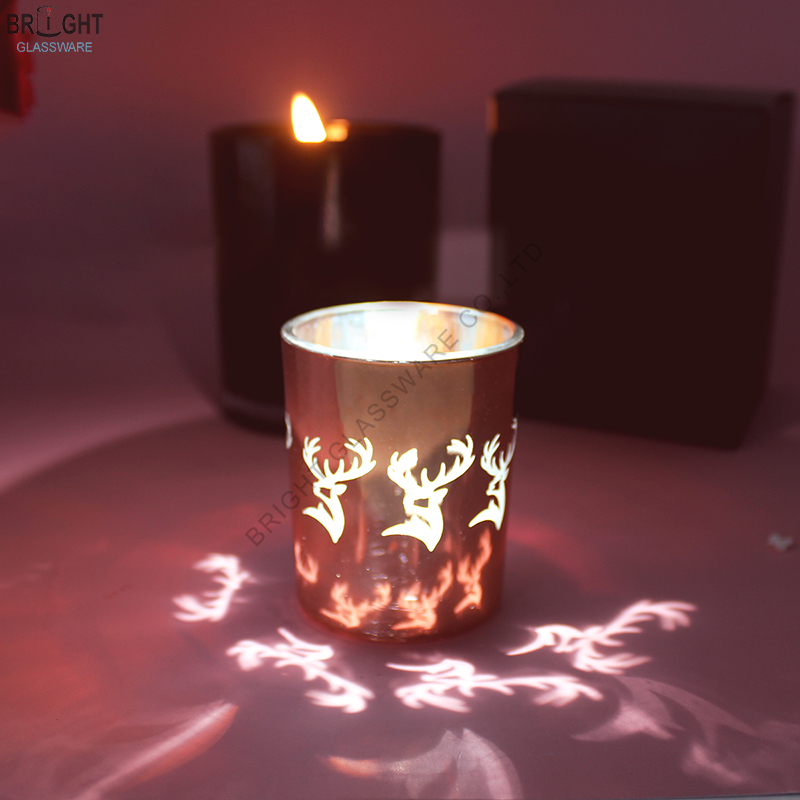
For a light-through design, laser decoration can remove selected areas of a suitable surface coating to expose the glass below. Confirm how the base glass and remaining coating transmit light. Body-colored glass and an etched frosted surface behave differently from a removable color coating; the finish must be identified before choosing the route.
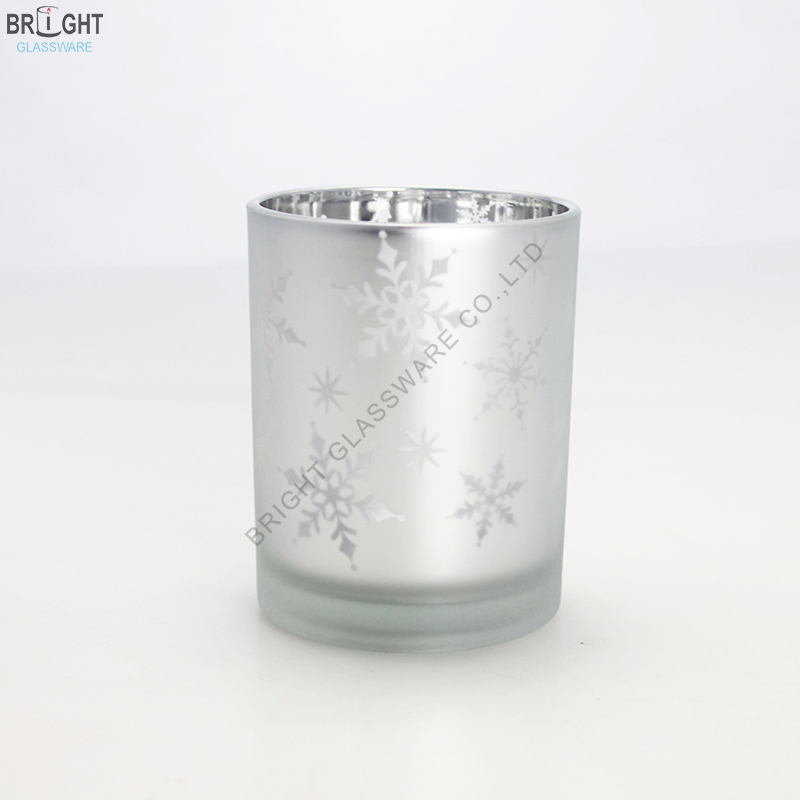
Dive Deeper into Laser Engraving
A computer-controlled laser follows the artwork. The selected route determines whether it removes a coating or modifies the glass itself:
- Removing a Surface Coating: A suitable coating is selectively removed to form the motif. Pattern contrast depends on the base glass, coating and light source. Approve the actual combination rather than a photograph alone.
- Direct Glass Engraving: The laser modifies the bare glass surface to form a mark, often with a frosted appearance. This is a different result from exposing a pattern through a coating. Confirm detail, feel and surface quality on the selected glass.5
We can supply both laser-decoration routes. For candle brands, I recommend reviewing samples in two different conditions:
-
Unlit Appearance: How does the design look in daylight on a retail shelf? Is the logo or pattern crisp and easily readable against the colored background?
-
Illuminated Appearance: Review the sample with the agreed display light source. Do fine details and the logo remain legible? Approve the intended appearance; visual approval and finished-candle performance checks are separate acceptance items.
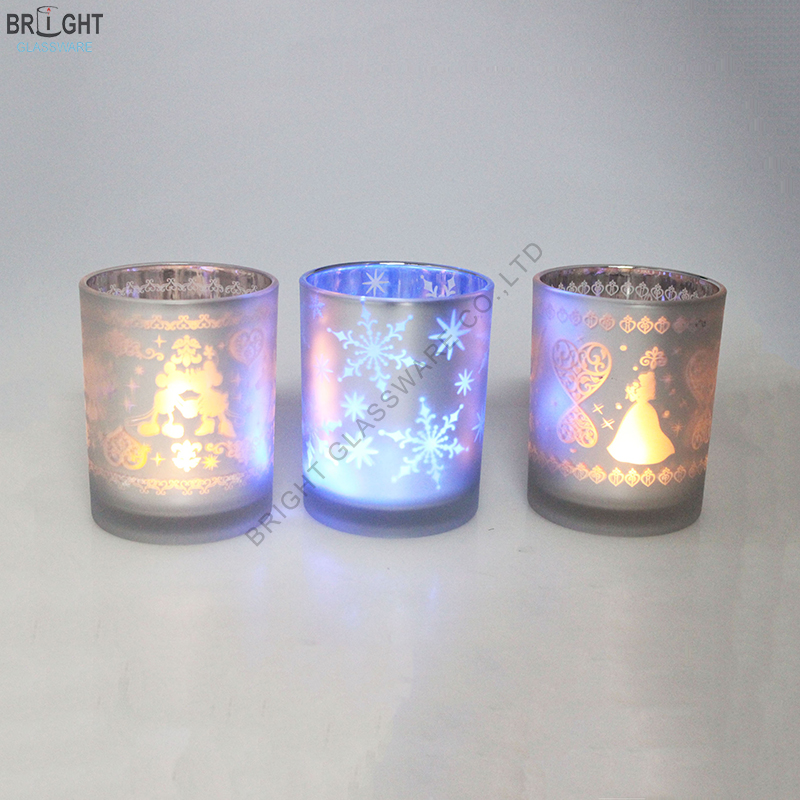
This two-state review helps buyers decide whether a pattern works in the intended setting. Laser engraving is a related glass-decoration option rather than an ink-printing process. The finished item still needs the agreed checks for abrasion, relevant chemical contact and handling; remaining coatings are part of that assessment.
When Are Adhesive Labels the Better Choice?
If fragrance names, languages or product information change often, labels let buyers plan that variable information separately from a fixed brand decoration. Compare the complete label-and-application quote with the alternative printing routes, rather than assuming one method is always cheaper.
Choose the label shape, facestock and adhesive for the final bottle. Curves, ribs, coatings and possible oil or alcohol contact affect the choice. Check edge lift, wrinkles and the appearance after the agreed handling and exposure conditions. Avery Dennison's label-selection guidance identifies substrate shape, texture and contamination as relevant variables.6 For candle projects, our candle-jar labeling guide covers label area and artwork considerations.
What Should You Approve Before Bulk Production?
Approve the decoration on the final container and surface treatment, using the final artwork. Record the logo size and position, color and gloss, fine-text clarity, multi-color registration and any wrap join. For light-through designs, include the agreed lighting appearance.
Agree the relevant adhesion, abrasion and resistance checks for the intended product, including the liquids, contact time and handling involved. Keep the signed sample and acceptance criteria available for production review. If a sample flakes, shifts or loses fine detail, document the issue and resolve the material, artwork or process question before approving a run.
Ask for the quote to identify the glass, base finish, decoration, setup or tooling, version changes and packaging. Start with glass candle jars or the selected bottle, then compare the complete configuration through our glass customization service.
Frequently Asked Questions
How do I choose the right printing method for my budget?
Compare quotes using the same container, artwork, quantity and acceptance requirements. Color count, print area, base finish, setup, tooling, curing, application and packaging can all affect the cost. Ask what changes when a design or language version changes; there is no universal cost ranking across all projects.
What is the minimum order quantity (MOQ) for custom printing on glass?
Our minimum order quantity for custom printing on glass is 1,000 pieces. Share the selected container, decoration, artwork and quantity so we can confirm the production configuration and provide a project-specific quotation.
Can you print on curved or irregularly shaped bottles?
Some curved or tapered containers can be decorated, depending on the equipment, printable area and artwork. Compare the specific screen-printing, decal or label route on a physical sample. Check distortion, joins, alignment and edge quality before approving the result.
How durable is custom printing on glass?
Durability depends on the final glass surface, decoration materials, preparation, curing and conditions of use. Hot-stamping foil is not a ceramic layer fused into glass. Agree the required adhesion, abrasion and relevant liquid-contact checks on the finished item; a generic process name does not prove compatibility with every candle, diffuser or perfume formula.
What artwork file format do I need to provide?
For text and logos, provide an AI, EPS or vector PDF, with dimensions and specified colors; a high-resolution PDF is not necessarily vector artwork. For photographs and gradients, agree the required raster resolution at the final print size. Confirm fonts, fine lines, white underprints and any wrap join with the supplier.
Conclusion
Selecting the right decoration method is as important as choosing the glass container itself. Screen printing, foil, decals, labels and laser decoration offer different ways to present a design. The best approach for your brand depends entirely on your design complexity, desired aesthetic, product function, and budget. The key is to define the target first, whether it is a specified brand color, foil finish, detailed artwork or light-through pattern.
For custom printing on glass, use the final bottle and artwork to compare feasible routes. Approve a physical sample and written acceptance criteria before bulk production.
To discuss a project, send your glass customization requirements, including the container or dimensions, final surface, artwork, target appearance, quantity and intended use. We can review a suitable decoration and sampling route with you.
Kammann — K9 V screen-printing systems. Container shapes, ink types and registration. ↩
Marabu — Metallic effects and hot-stamping primers. Material-system reference for metallic inks and foil effects. ↩
Hurley et al., 2016 — The Effect of Decorative Foil Stamping on Consumer Attention. Food-packaging study; effects varied by product. ↩
Vibrantz — Ceramic decoration colors and materials. Water-slide decal covercoats and heat-release decoration media. ↩
Gravotech — How glass laser engraving works. Marking the bare-glass surface. ↩
Avery Dennison — PSL 101: Construction, Selection and Testing. Label selection for surface shape, texture and contamination. ↩
Keep Reading