Borosilicate Glass · Wholesale & Project Sourcing
Borosilicate Glass Tea Kettles Wholesale
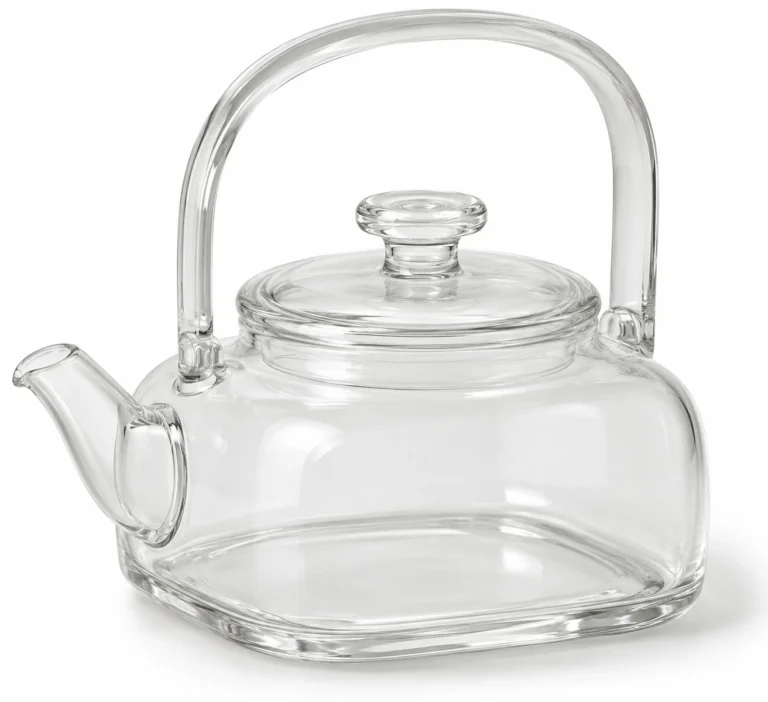
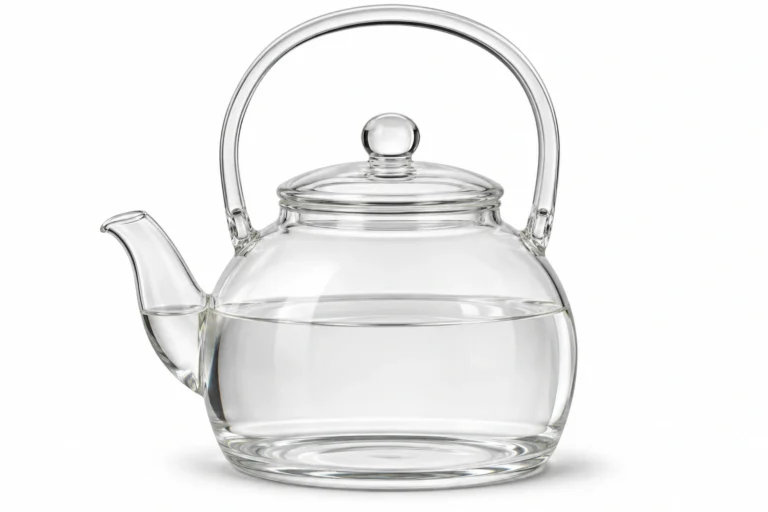
A kettle enquiry begins with how the water will be heated. The proposed heat source, base, handle and lid need to be considered as one product, with instructions for that exact construction. The words glass kettle are not enough to establish compatibility.
For kitchenware brands and distributors, describe the heating and pouring routine before choosing the silhouette. Keep non-electric kettle projects separate from electric appliances and from teapots intended only for steeping with separately heated water.
Explore Borosilicate Glass Tea Kettles
A suitable kettle model needs documented use information for the proposed heating source. Send the complete requirement where a matching model is not published.
Need Help Choosing the Right Option?
Specify the intended heat source, useful water fill, base dimensions, handle arrangement, destination market and order quantity.
Start with the Heat Source and Use Sequence
Heating equipment
Name the actual appliance or heating source. Gas, electric surfaces and induction are different requirements and should not be grouped under a general stovetop label.
Water level and handling
Describe the intended minimum and normal fill, lifting and pouring routine. These questions belong with the selected model's instructions.
Glass and fitted parts
Include the base, handle, lid and any whistle or filter in the review. A glass body by itself is not the complete kettle.
Glass Kettle Procurement for Kitchenware Buyers
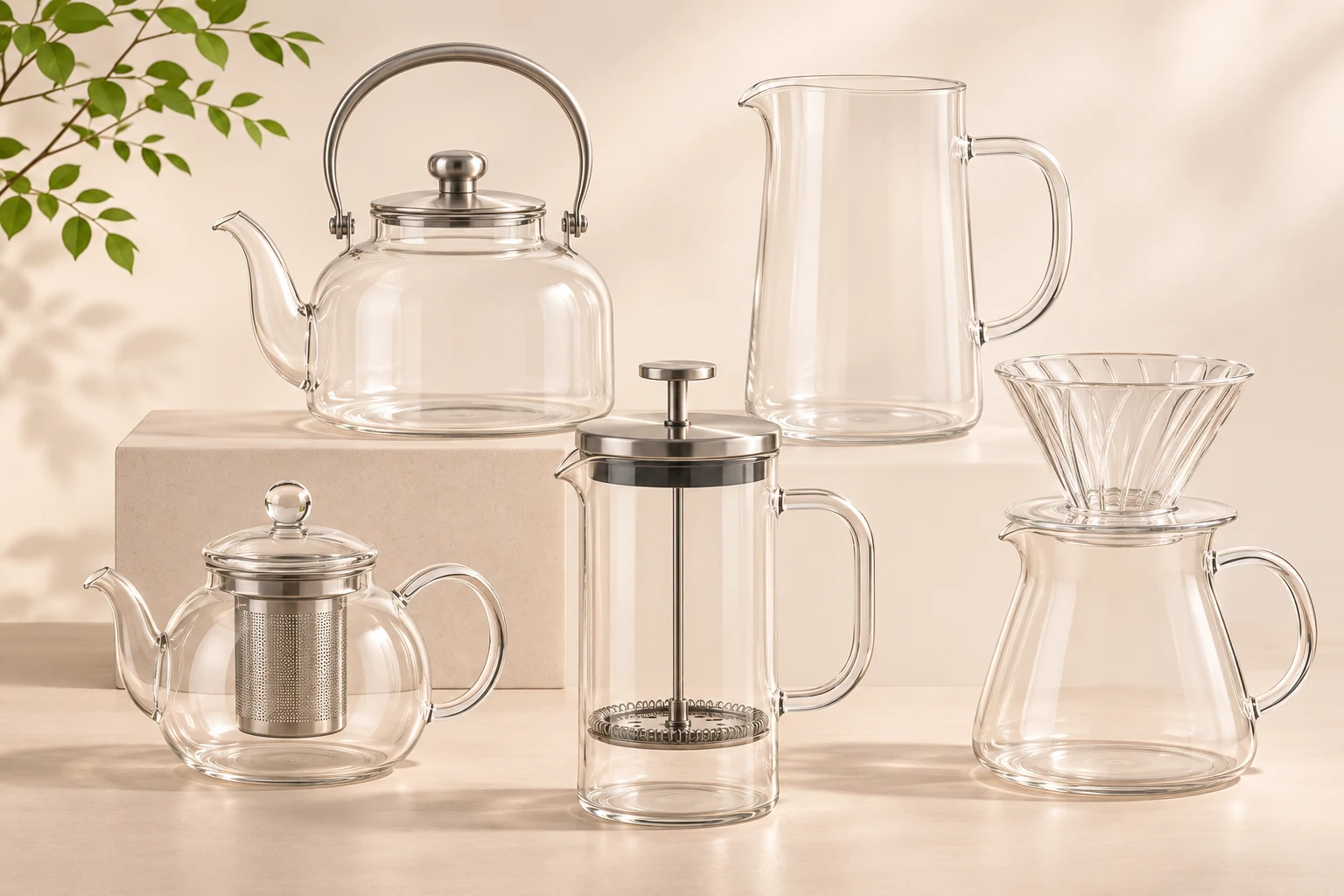
Define non-electric scope
State whether the request is for a vessel used on a separate heating source. An electric kettle has additional appliance requirements and belongs in its own product review.
Review the Specification →Base and appliance relationship
Provide the available heating area and any physical constraints. The base profile and the specified appliance need review together rather than assumed compatibility from a flat-looking bottom.
Review the Specification →Useful fill and headspace
Use the filling guidance relevant to the proposed model. A body capacity measured to the rim is not necessarily the quantity intended during water heating.
Review the Specification →Handle position and lifting
Review grip clearance, lifting direction and filled balance. The handle's visual material or colour does not establish its behaviour during the intended heating routine.
Review the Specification →Lid and spout operation
Show how water is added and poured, and whether the lid or another part is removed during use. A whistling feature, where requested, needs its own component and operation specification.
Review the Specification →Instructions as part of the product
Applicable heating, cleaning and handling guidance belongs with the chosen kettle. Include the intended market and any required documentation in the brief before preparing retail claims.
Review the Specification →Review the Complete Kettle Construction
Keep the glass body, handle attachment, lid and any spout fitting under one model reference. The quotation and sample review should describe the same assembly. Do not substitute a similar-looking part without identifying the change and its implications for the intended use.
Discuss Your Requirements →Explore Customization & Artwork Review →Develop Appearance Around the Functional Brief
Supply a drawing that shows the base and handle as clearly as the body profile. If branding or colour is proposed, identify its position and intended appearance. Those changes need review against the selected construction and use conditions; decoration should not be assumed suitable merely because it works on a drinking glass.
Sample Review & Production Planning
- Heat source: Name the intended appliance or heating method, with relevant physical constraints.
- Base: Provide base dimensions and the contact profile to be assessed with that equipment.
- Water fill: Identify the useful fill and the model-specific operating guidance required.
- Handle and lid: Show grip clearance, attachments and the complete lifting and pouring arrangement.
RequirementsUse, quantity and destination
SelectionBody, components and appearance
Sample ReviewFunction, handling and packing
Order DefinitionAgreed model and specification
Final ReviewIdentification and delivery scope
From Selection to an Agreed Specification
| Specification | What to Review | Buyer Approval / Output |
|---|---|---|
| Heat source | Name the intended appliance or heating method, with relevant physical constraints. | Heating-use requirement |
| Base | Provide base dimensions and the contact profile to be assessed with that equipment. | Base drawing |
| Water fill | Identify the useful fill and the model-specific operating guidance required. | Fill and instruction reference |
| Handle and lid | Show grip clearance, attachments and the complete lifting and pouring arrangement. | Assembly record |
| Market and documentation | State the destination and applicable product-information or evaluation requirements. | Market brief |
Plan Your Borosilicate Glass Tea Kettles Project
Specify the intended heat source, useful water fill, base dimensions, handle arrangement, destination market and order quantity.
Request a Project Quote →Packing & Delivery Planning for Borosilicate Glass Tea Kettles
Kettle packing must protect the glass base and projecting spout or handle, with all removable parts restrained in a defined arrangement.

Support the base
Review how the insert carries the chosen shape without concentrating pressure on a small projection or unsupported edge.
Allow for spout and handle
Use the full kettle envelope, including moving or projecting parts, when choosing the retail box dimensions.
Restrain the lid
Define whether the lid travels fitted or separately protected so it does not move against the body.
Keep the instructions matched
Link the included product information to the exact kettle version and market rather than using a generic glassware leaflet.
Plan Your Packing & Delivery
Share your order quantity, destination and retail or export packing requirements.
Discuss Packing & Shipping →Heating Compatibility Needs Model-Specific Evidence
Do not infer gas, electric-stove, induction or direct-flame compatibility from the borosilicate designation. The complete construction and applicable instructions must support the proposed use. Where a required use has not been established, keep it as a technical question in the enquiry rather than a claim in the product description.
Borosilicate Glass Tea Kettles for Different Buying Programs
A kitchenware retail project
Build the range around clearly stated heating methods and use instructions, with each kettle version identifiable.
A tea-focused home collection
Keep the water-heating vessel distinct from the brewing teapot while coordinating their appearance and useful serving quantities.
A distributor specification enquiry
Provide equipment, market and documentation requirements early so a proposed model is assessed against the actual sales brief.
Define MOQ, Samples & Production Around the Brief
State the destination and applicable product-information or evaluation requirements.
ModelNamed configuration and use
SampleAssembly to review
ArtworkFile, colour and position
PackingRetail and outer-carton scope
A Clearer Buying Brief for Borosilicate Glass Tea Kettles
Name the heating method
A precise appliance reference is more useful than the broad phrase stovetop safe.
Keep electric projects separate
An assembled electric appliance requires a different scope from a vessel placed on an external heat source.
Record the usable fill
Do not use rim capacity as an assumed operating water level.
Review the full handle assembly
Grip, attachment and filled handling need attention alongside the glass profile.
Ask about the exact version
A similar-looking kettle can have different fitted parts or use instructions.
Prepare claims from evidence
Retail wording should follow established model information rather than a desired keyword or concept image.
Questions About Borosilicate Glass Tea Kettles
Can any borosilicate glass kettle be used on a gas stove?
No. Compatibility must be established for the exact kettle construction and intended heat source. Obtain the applicable model instructions instead of relying on the material name.
Will a glass kettle work on an induction hob?
Do not assume so. Include induction use explicitly in the enquiry, with the equipment reference, and require supporting information for any proposed complete model.
Is a glass teapot an alternative to a kettle?
Only if its established use instructions support the required water-heating routine. A vessel intended for steeping with separately heated water should not be presented as a heating kettle.
Can I request a whistling kettle?
Include the desired feature and operation in the brief. The spout fitting, lid and complete assembly need a separate review; a general kettle category does not establish that option.
What details are needed for a wholesale kettle project?
Provide the heating source, intended market, useful fill, base and handle reference, quantities, artwork and packing. List required instructions or evaluations so the project scope is clear.
Still Have a Product Question?
Send your requirements or a reference so our team can review your project.
Ask Our Packaging Team →
Describe the use from filling to pouring
The intended sequence gives the reviewer a practical brief: where water is added, how the kettle is heated, how it is lifted and how it is emptied. Do not leave those steps implied by a lifestyle image.
Keep the base visible in the drawing
A side profile can hide the interface with the heating equipment. Include the underside or base detail when that relationship determines the product's intended use.
Avoid a shared instruction sheet for unlike models
Different handles, lids and constructions may need different information. Retain the applicable reference with the selected version rather than treating all clear-glass kettles as one product.
Separate a search phrase from a product claim
A buyer may search for a stovetop or induction glass kettle before a suitable model is established. Address the requirement directly without turning it into an unsupported compatibility statement.
Browse Borosilicate Glass Product Categories

Drinkware & Tea
Borosilicate Glass Drinkware →Borosilicate Glass Water Bottles →Borosilicate Glass Tea Infuser Bottles →Borosilicate Glass Cups & Mugs →Double-Wall Borosilicate Glasses →Borosilicate Glass Tumblers →Borosilicate Glass Wine Glasses →Borosilicate Glass Straws →Borosilicate Glass Baby Bottles →Borosilicate Glass Teapots →Borosilicate Glass Tea Kettles →Borosilicate Glass Electric Kettles →Borosilicate Glass Pitchers & Carafes →Borosilicate Glass French Presses →Borosilicate Glass Coffee Makers →Borosilicate Glass Tea Infusers →

Storage & Kitchen
Borosilicate Glass Food Storage Containers →Borosilicate Glass Storage Jars →Borosilicate Glass Cookware & Kitchenware →Borosilicate Glass Cooking Pots & Pans →Borosilicate Glass Bakeware →Borosilicate Glass Bowls →Borosilicate Glass Measuring Cups →Borosilicate Glass Plates & Tableware →Borosilicate Glass Oil Dispensers →Borosilicate Glass Food Covers →Borosilicate Glass Popcorn Makers →Borosilicate Appliance Glass →Borosilicate Glass Air Fryer Dishes →

Bottles, Home & Custom Projects
Request a Quote
Talk to Our Packaging Team
Share the model, capacity, color, closure, decoration, packaging and estimated quantity you need. We can review the options with you.
Category: Borosilicate Glass Tea Kettles