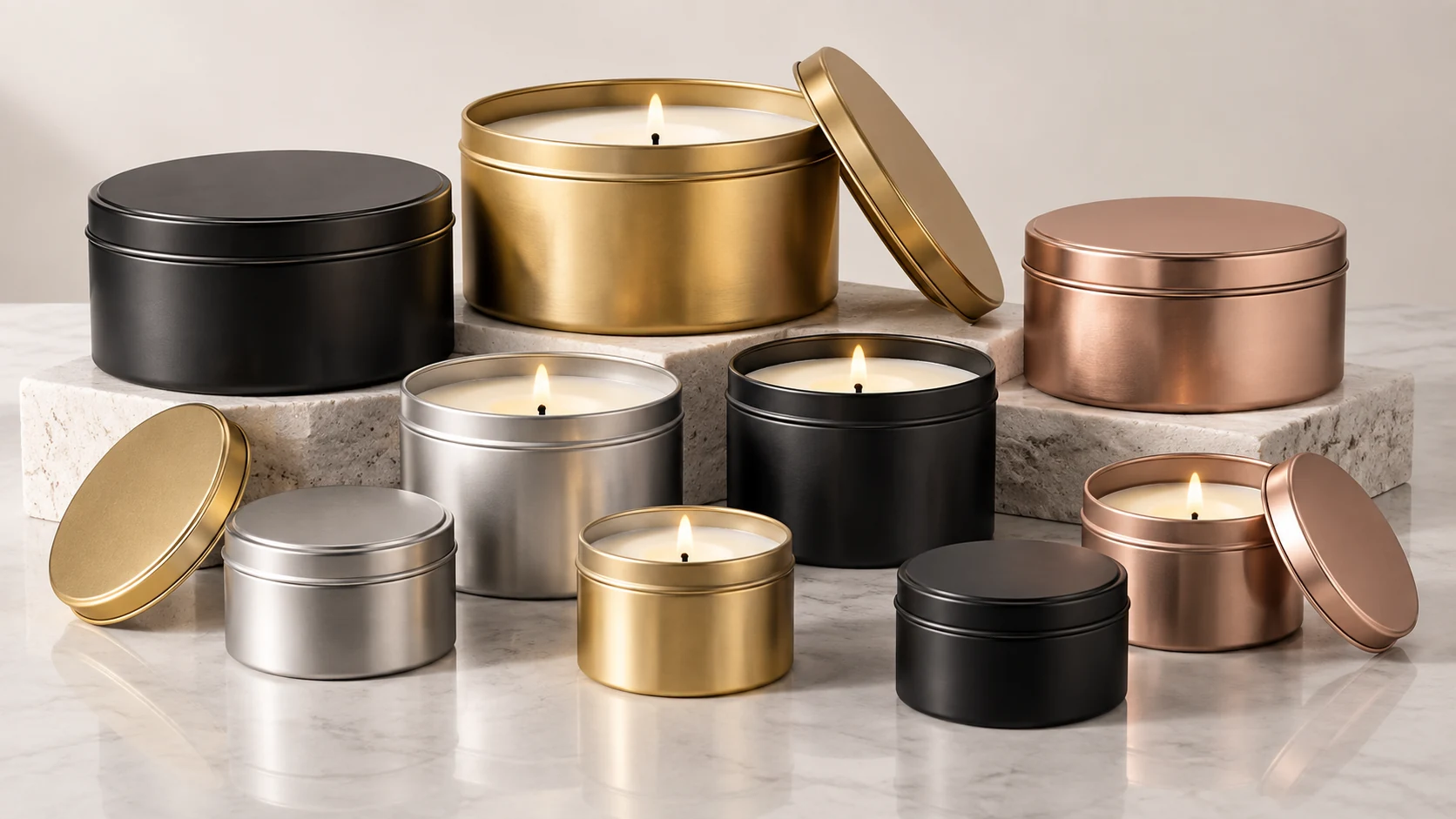
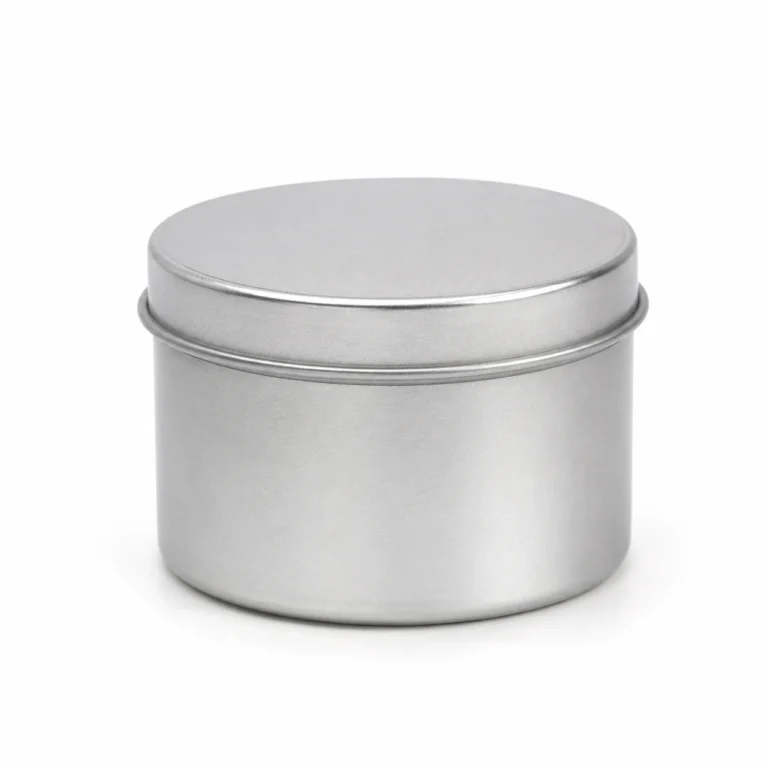
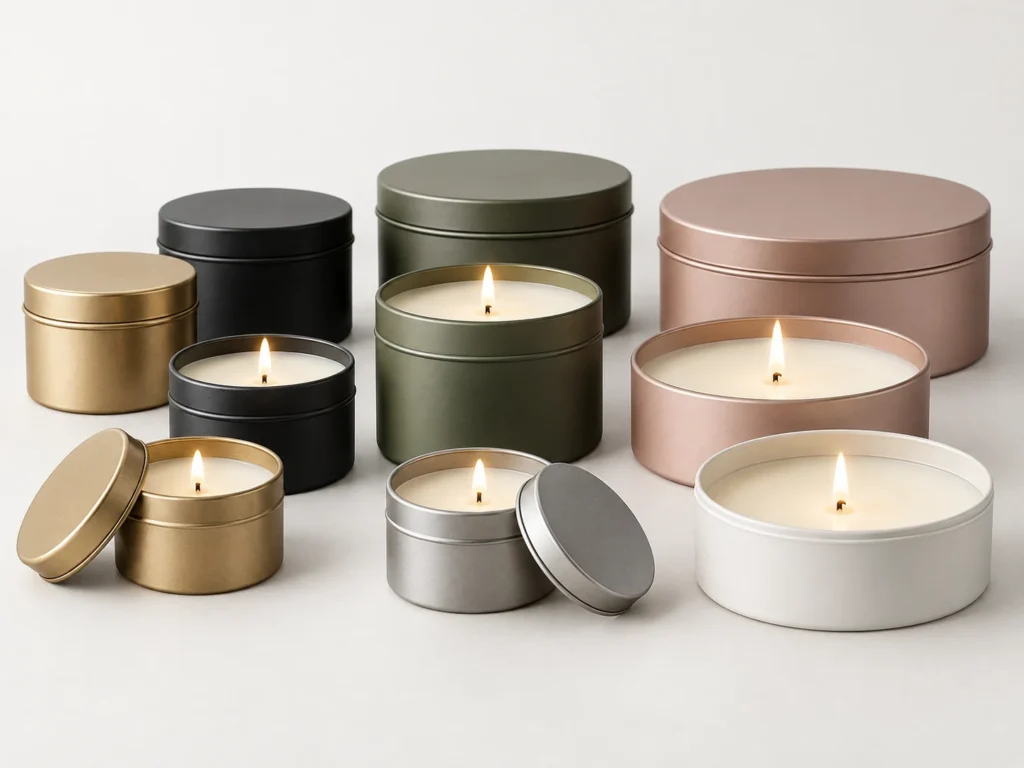
Wholesale candle tins provide a lightweight metal alternative to glass or ceramic candle vessels for travel candles, gift programs, massage candles and private-label collections. Compare usable wax fill, internal diameter, body depth, lid type, coating or print finish, wick layout and finished pack dimensions before selecting a tin.Metal tins may use slip lids, screw lids, hinged lids, window lids or model-specific closures. Approve the body and lid together, then validate the intended wax, fragrance and wick system in production-representative containers. Decoration, lid fit, coating performance and retail packaging should all be checked before repeat production.
Wholesale Overview
Candle tins are lightweight commercial vessels, but the body, lid and coating should still be treated as one approved set. Buyers need real internal dimensions, usable wax fill, wick layout, lid construction and surface-finish requirements before artwork and retail packaging are released. Typical buyers include Candle makers, Private-label brands, Gift & seasonal suppliers. For planning, From 2,000 pcs on selected standard candle-tin programs. Around 7 working days for standard samples is a practical reference. Around 35 working days after sample/artwork approval is a common planning reference. The recommended sourcing route is Tin…
Available Products
Showing 1–6 of 6 products
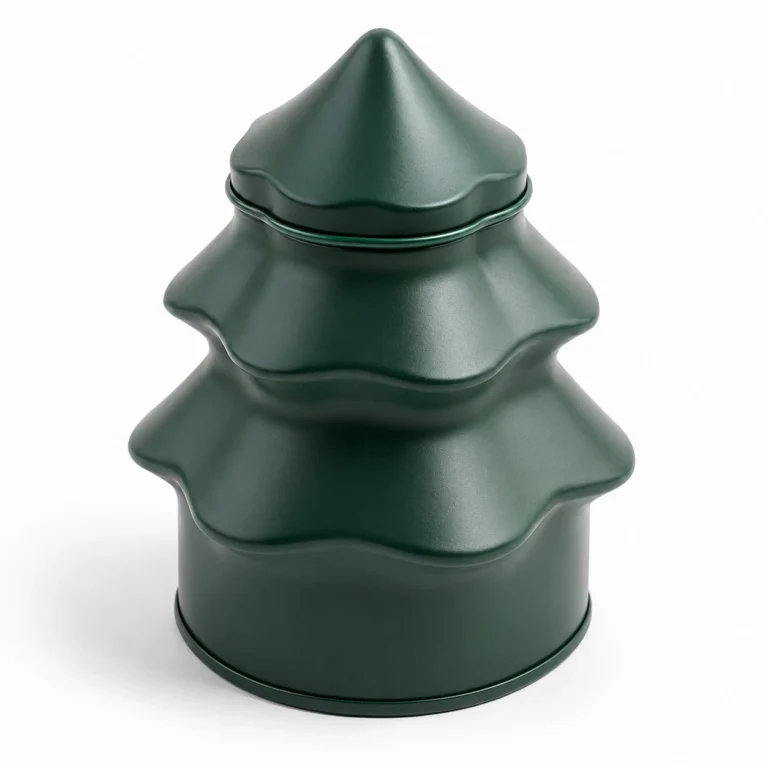
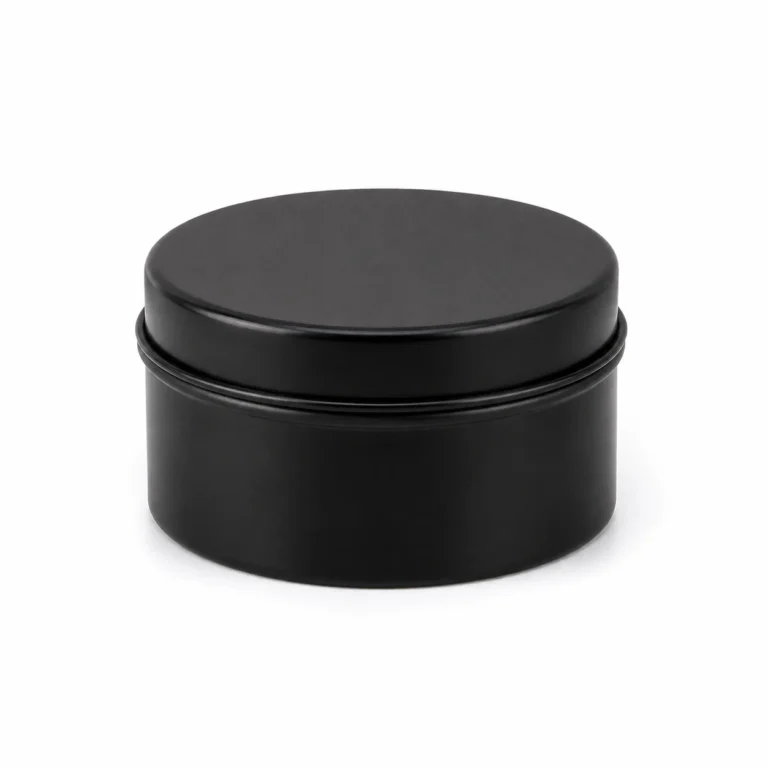
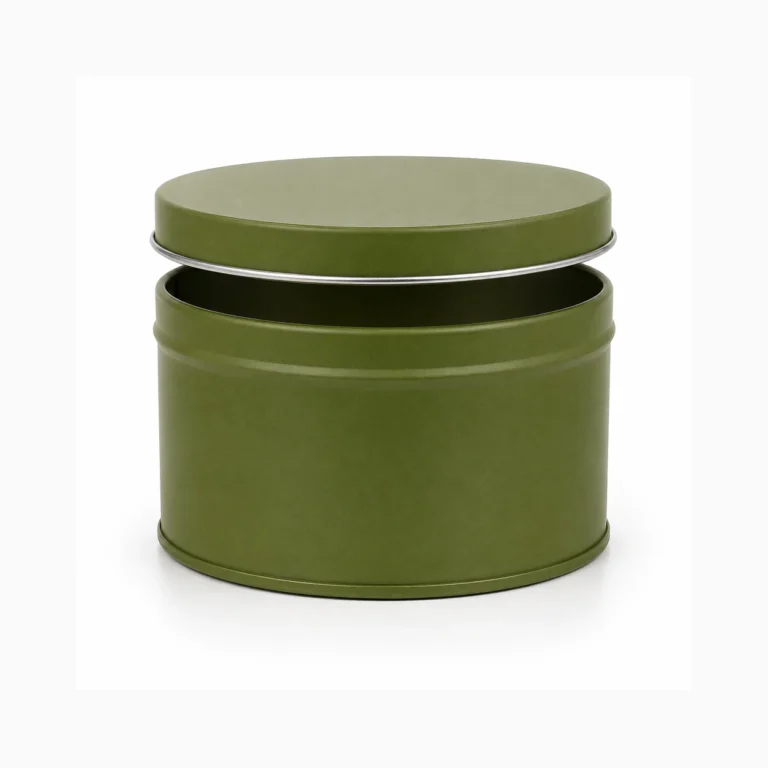
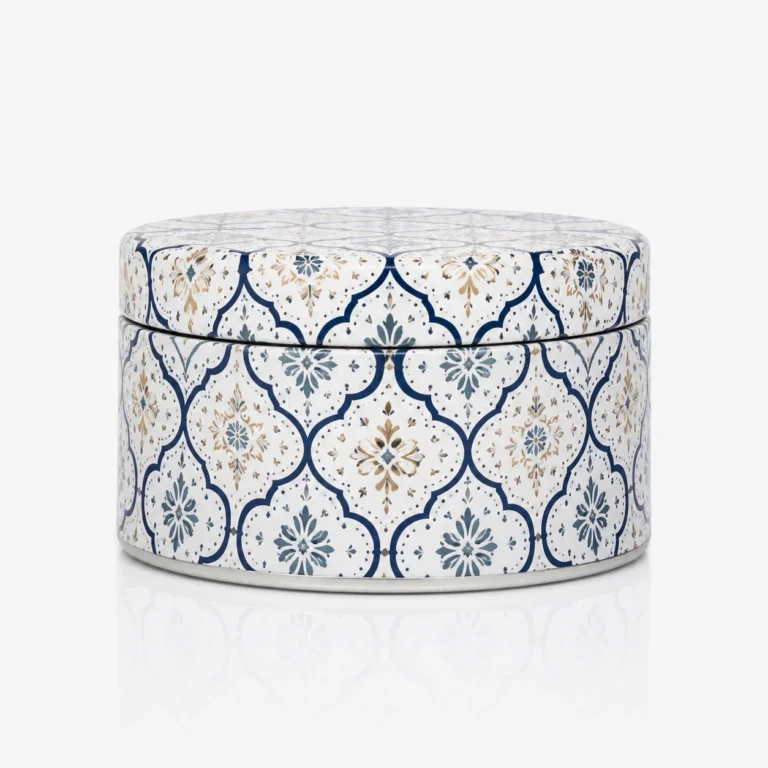
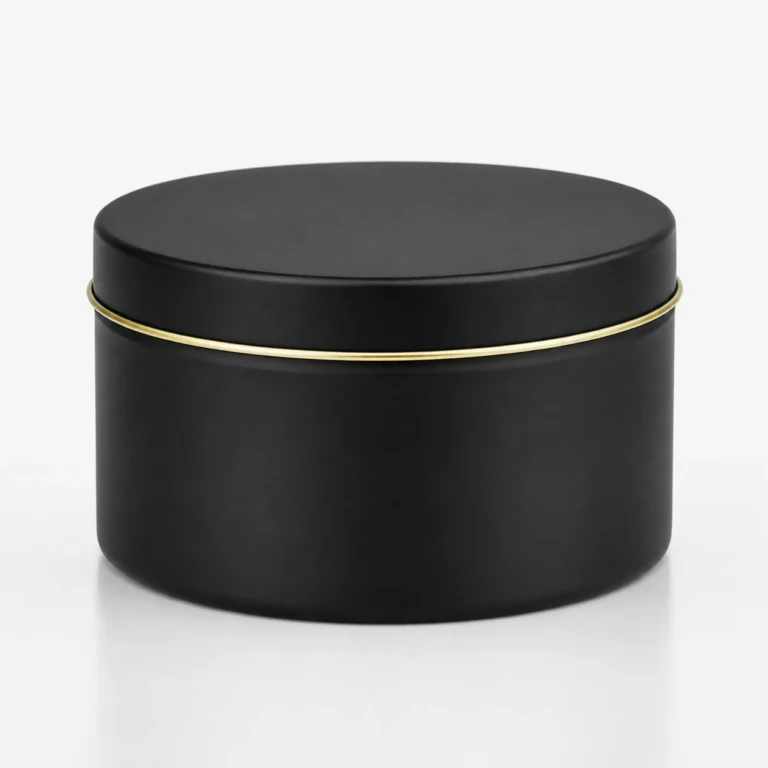
Product Shortlisting
Send your target capacity, style, closure or finish. We can shortlist suitable Candle Tins before you order samples.
Explore the Collection
Browse by the specification that matters most to your project. Each group keeps the visual reference, relevant options and next step together without turning the page into another dense catalog grid.
Browse by
Compare nominal capacity with usable wax fill, inner diameter and the intended candle format.
Browse by
Compare straight-sided, square, curved and custom shapes by internal geometry, branding area and packing.
Browse by
Review candle-jar color directions, then confirm whether the appearance comes from the glass, coating or another finish.
Browse by
Compare clear, frosted, coated, ribbed, embossed and other finishes for branding, handling and durability.
Browse by
Match the finished jar rim and opening with lids, liners or decorative accessories on production samples.
Browse by
Choose jars by scented-candle format, private label, multi-wick use, gifting and other candle programs.
Need help matching size, shape, color, finish or components?
Ask for Recommendations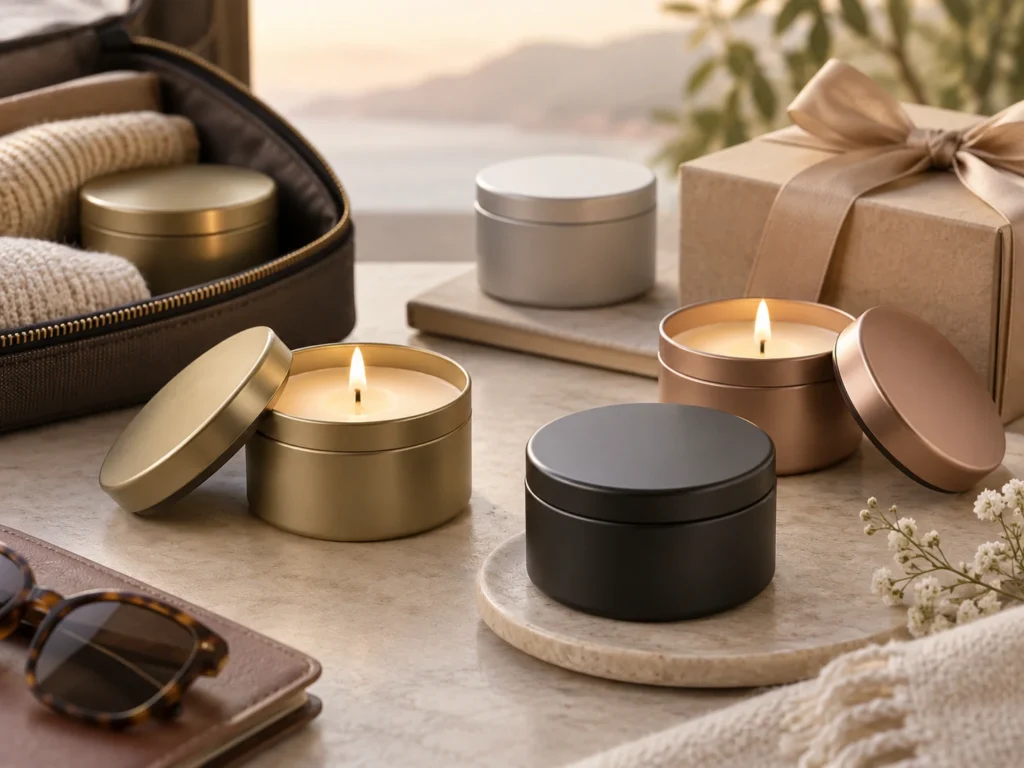
Wholesale Supply
Bright Glassware supports existing-model bulk orders and project-based customization for candle tins. From 2,000 pcs on selected standard candle-tin programs. Around 7 working days for standard samples is a practical reference. Around 35 working days after sample/artwork approval is a common planning reference. Final commercial terms depend on the selected model, component set, decoration and packing specification. To reduce rework, approve the container and key components before releasing branded packaging.
From 2,000 pcs on selected standard candle-tin programs. Existing molds are the…
Coordinate slip lids and screw lids with the selected container. Check retention…
Around 7 working days for standard samples is a practical reference. Around…
OEM & Customization
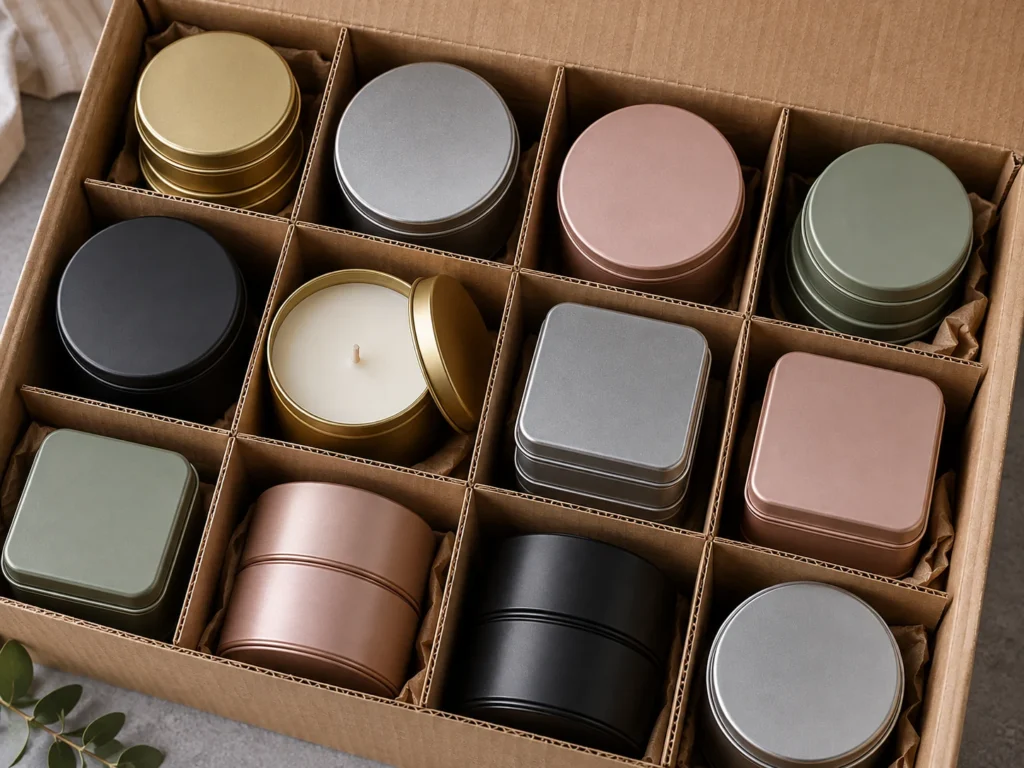
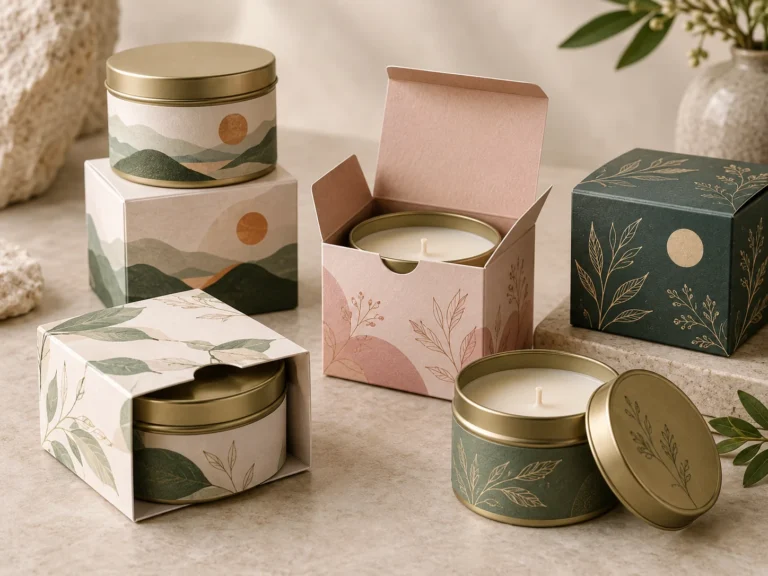
Customization can combine direct printing, labels, embossing / debossing and color coating with matched slip lids, screw lids and project-specific secondary packaging. Existing molds are preferred when speed and cost efficiency matter; custom mold development is suitable when the brand requires a proprietary shape or structure. Approve the actual decorated and assembled sample because glass/ceramic/metal surface, component fit and retail packaging can change the final result.
Packaging & Export
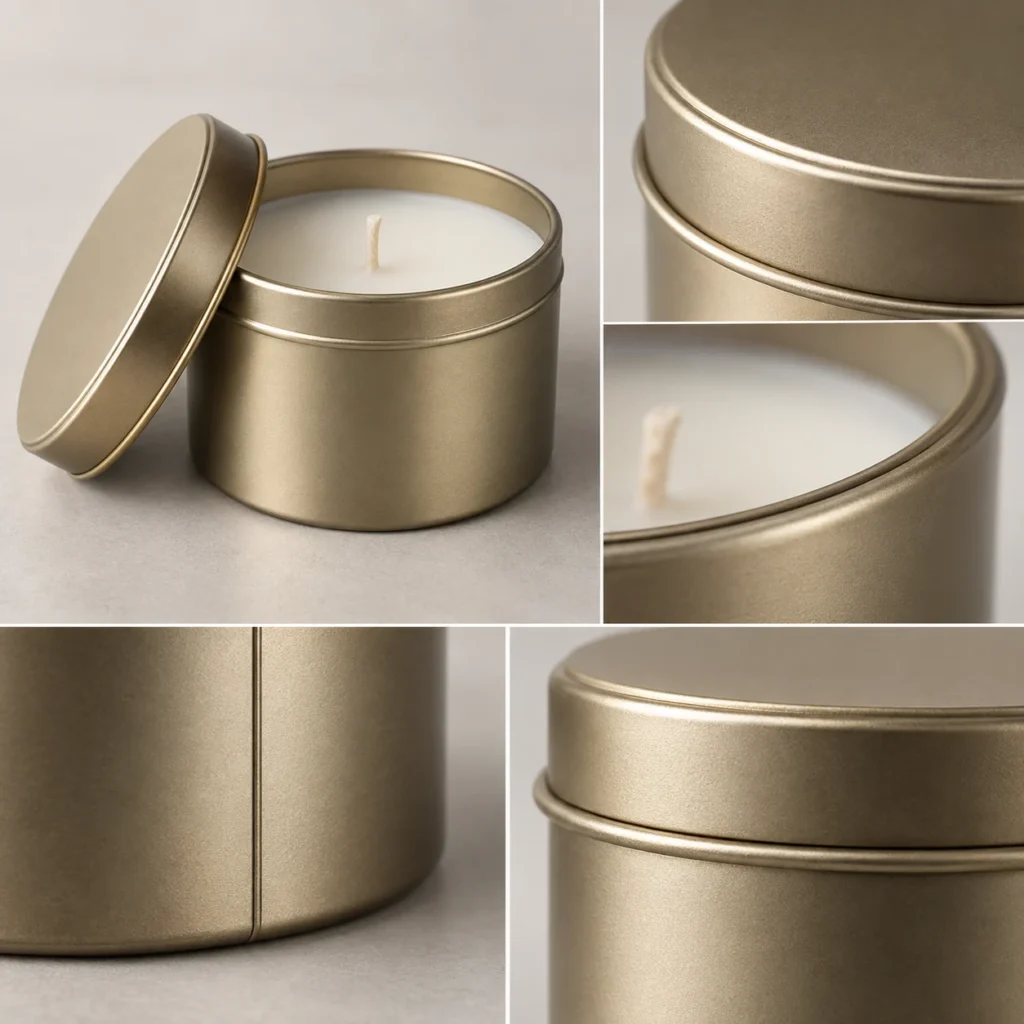
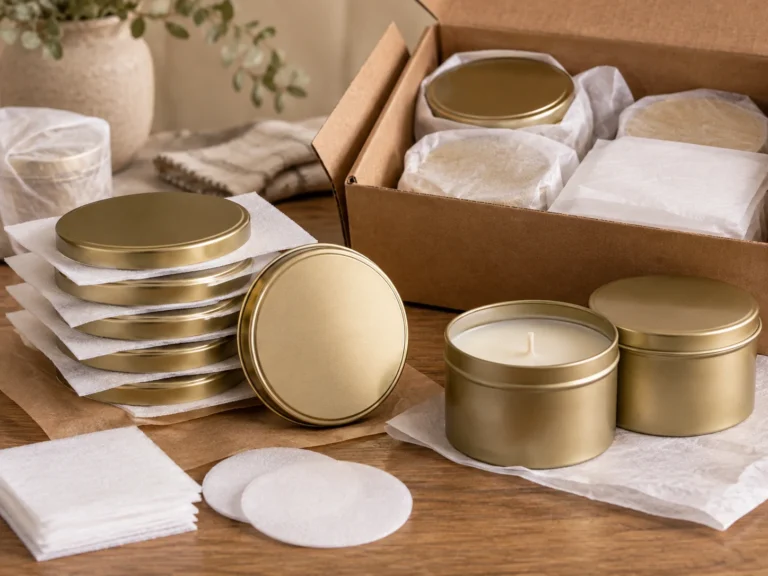
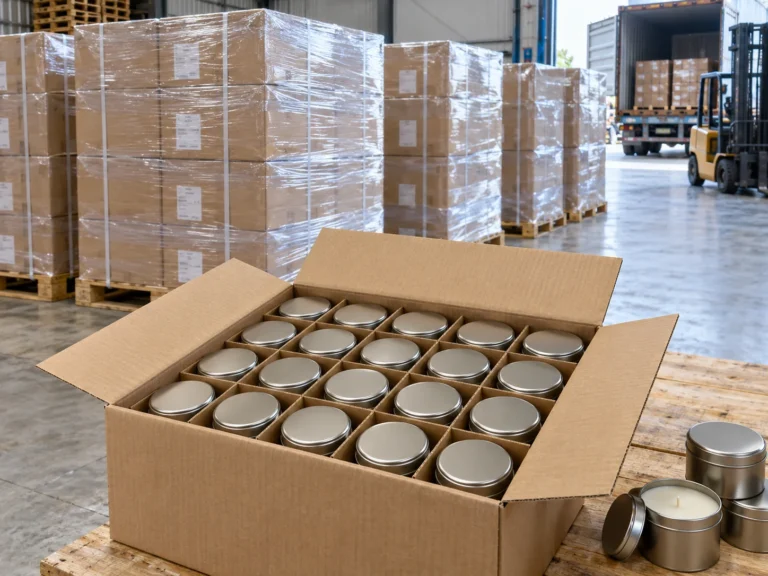
Packing for candle tins is planned from the real product shape, weight, decoration and accessory set. Prevent body deformation by controlling stacking pressure and using separators where decorated tins could rub. Pack lids so edges and coated surfaces are not scratched or distorted before assembly. For branded programs, retail boxes or inserts should be sized from the approved assembled product. Master-carton quantity and pallet pattern should be confirmed against actual unit weight and transit…
Prevent body deformation by controlling stacking pressure and using separators where decorated tins could rub.
Pack lids so edges and coated surfaces are not scratched or distorted before assembly.
Use the actual finished tin diameter and lid height to avoid a tight sleeve or carton that…
Use compression-resistant outer cartons and stable pallet stacking because thin metal walls can deform under excessive load.
Applications & Buyer Programs
Choose the sourcing path that best matches your product, channel and customization requirements.
Explore products and selection considerations for this application.
Explore →Explore products and selection considerations for this application.
Explore →Explore products and selection considerations for this application.
Explore →Manufacturing & Quality
Manufacturing and QC focus on the points that can change fit, function, appearance or export performance for candle tins. Key controls include body dimensions, lid fit, surface / print quality and final packing verification. Production is released against the approved sample, component set and artwork rather than appearance…




Buyer Guide
Review the key criteria before sampling or quotation. The information is grouped by decision stage so buyers can scan what matters without reading a wall of text.
Discuss Specifications →Confirm internal depth/diameter on the actual tin, not nominal ounces only.
Approve lid retention and assembled dimensions on samples.
Define color, gloss and abrasion expectation before decoration.
Confirm divider, sleeve or inner-box design around the finished tin.
From 2,000 pcs on selected standard candle-tin programs. Confirm the exact model, decoration, accessory set and packing before locking the final MOQ and schedule.
Use the real inside dimensions to calculate wax fill and wick layout.
Confirm actual wax weight at the chosen fill line rather than relying on nominal oz naming alone.
Approve slip, screw or specialty lid fit and finished height on the exact tin.
Confirm coating type, color, gloss and abrasion expectation before direct print or labels.
Check final tin dimensions and stacking pressure so sleeves or boxes do not dent the body.
FAQ
Quick answers to the questions that most often affect product selection, sampling and quotation.
Candle tins may use slip lids, screw lids, hinged lids, window lids or other model-specific closures. The correct option depends on the tin construction, intended candle format, required opening feel and retail presentation.
Decoration can include colored or printed surfaces, labels, screen printing, embossing and coordinated outer packaging where suitable. Approve the body and lid together, then check finish consistency, wax-filling conditions, wick layout and packing before bulk production.
Glass provides wax visibility and a broad range of shapes and decoration options. Ceramic provides an opaque, tactile and often more sculptural presentation. Metal tins are lightweight and practical for travel, gift and compact candle formats.
The choice should be based on the finished candle system, not appearance alone. Compare usable fill, heat behavior, dimensions, wick layout, lid or closure, decoration, packing and the testing required for the intended candle formula.
Export packing is selected according to product shape, weight, finish, accessories and shipping method. Common protection includes partitions, molded trays, inner bags or wraps, cartons, corner protection, pallet wrapping and extra separation for decorated surfaces.
Heavy, shaped or protruding products need different protection from simple round containers. Final packing should be approved with the actual product and component set rather than copied from another model.
Wax melts can be packed in clamshells, glass jars, metal tins, paper boxes, pouches or coordinated gift sets depending on the melt format, filling process and retail channel.
Compare fragrance compatibility, filling temperature, usable fill or cavity size, closure or seal integrity, label area, consumer opening, stacking and shipping protection. If jars or tins are used, also confirm lid fit and internal protection on the finished pack.
Request a Quote
Share the size or capacity, style, finish, closure, branding or packaging requirements you already know. We can recommend suitable existing models and the next sampling or customization step.
We can narrow existing models before you spend time comparing every option.
Decoration, color, closure and packaging can be reviewed together with the selected container.
Confirm appearance, fit and decoration on samples before bulk production.