From Approved Specification
to Packing-Ready Glass
Bright Glassware manages the production sequence that turns an approved bottle or jar specification into finished packaging ready for protective packing and export delivery. The exact route changes by product, decoration and component configuration, but the handoff between each stage remains controlled and traceable.
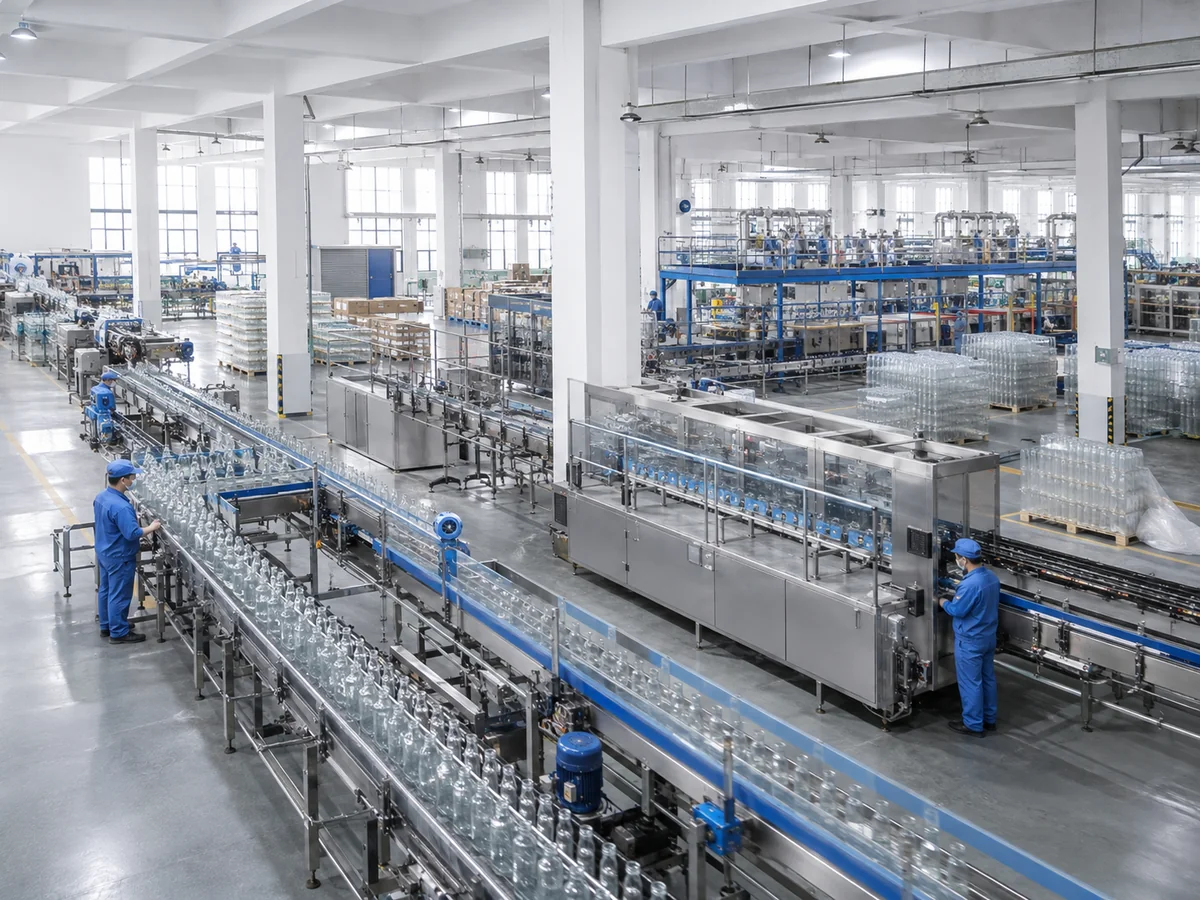
Eight Stages From Glass Batch to Packing
This is the production route for a typical glass packaging project after the product specification has been approved for manufacturing.
Raw Material
Prepare the glass batch for the required production run.
→Melting
Convert the prepared batch into workable molten glass.
→Forming
Shape the glass into the approved bottle or jar geometry.
→Annealing
Stabilize the newly formed container through controlled cooling.
→Process Check
Confirm production output before downstream processing.
→Decoration
Apply approved coating, frosting, printing or branding work.
→Component Matching
Coordinate caps, lids, pumps, sprayers or other accessories.
→Packing
Prepare the completed configuration for protective packing.
Release the Right Specification Into Manufacturing
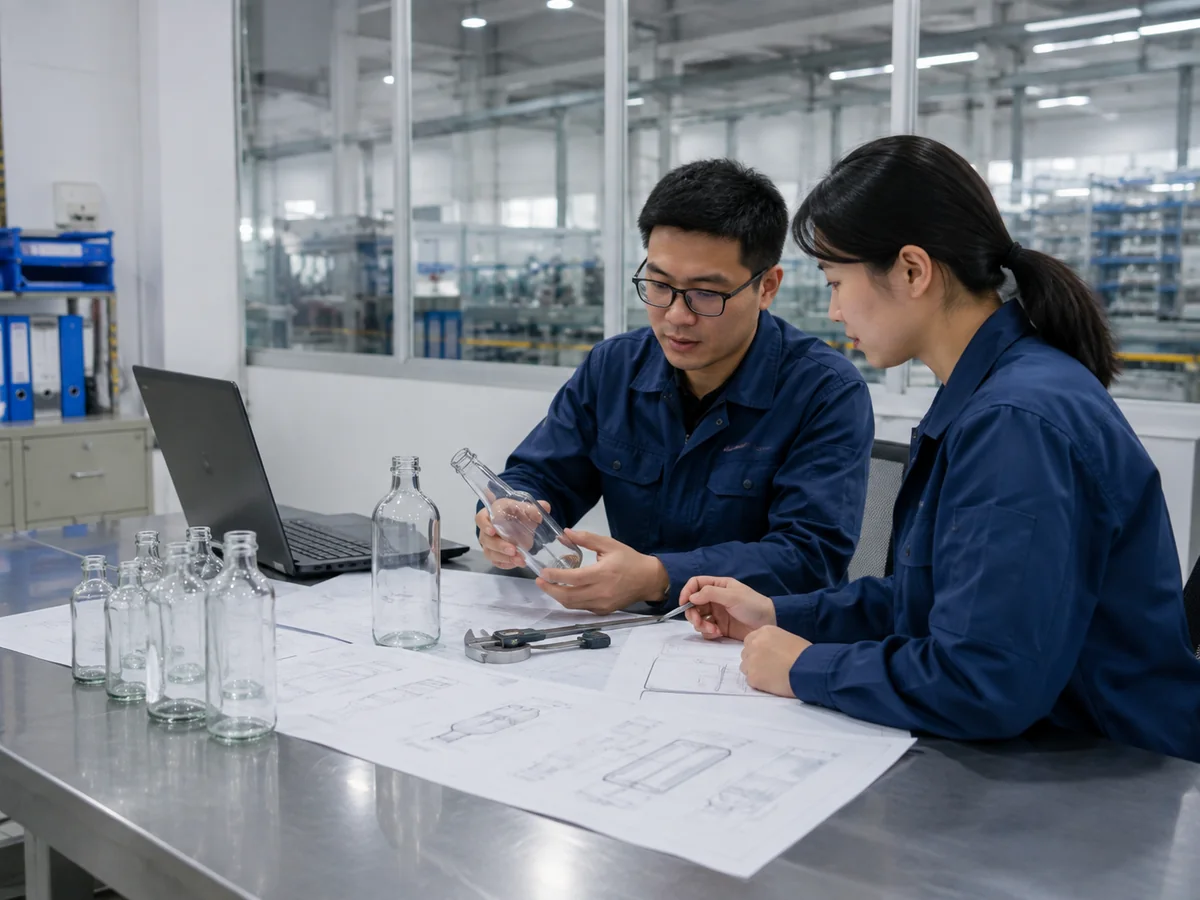
A production line can only reproduce what has been clearly approved. Before formal manufacturing begins, the project requirements need to be converted into an executable production package.
Lock the Product Specification
Confirm the selected bottle or jar, capacity, dimensional requirements and the approved production reference before release.
Confirm Tooling Readiness
Standard models move through existing production tooling. Approved custom designs move forward only after formal tooling is ready for production.
Define Downstream Operations
Confirm whether the order requires coating, frosting, printing, component matching or additional packaging work after the base glass is produced.
Plan the Production Sequence
Arrange the manufacturing order so base glass production, secondary processing, component readiness and packing can hand off without unnecessary rework.
Build the Base Container Before Any Decoration Is Added
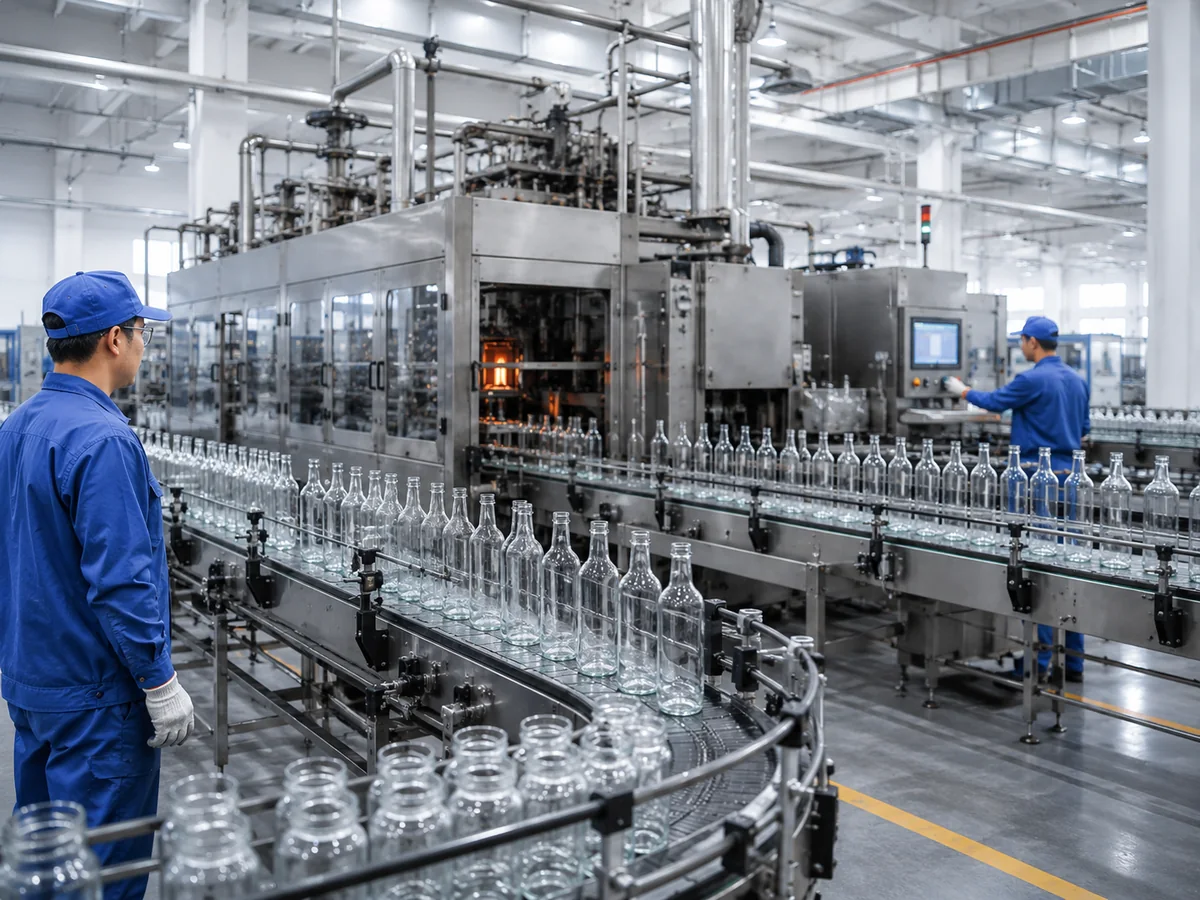
The first manufacturing sequence creates the undecorated glass bottle or jar. This stage is about producing the correct physical container before the project moves into decoration, component integration and packing.
Raw Material Preparation
Prepare the glass batch for the required production program.
Melting
Heat the batch until it reaches the condition needed for forming.
Forming
Create the approved bottle or jar geometry using production tooling.
Annealing
Stabilize the formed glass through a controlled cooling stage.
Continue the Order Beyond the Empty Glass Container
Once the base glass is ready, the production route shifts from forming the container to creating the finished packaging configuration the buyer actually ordered.
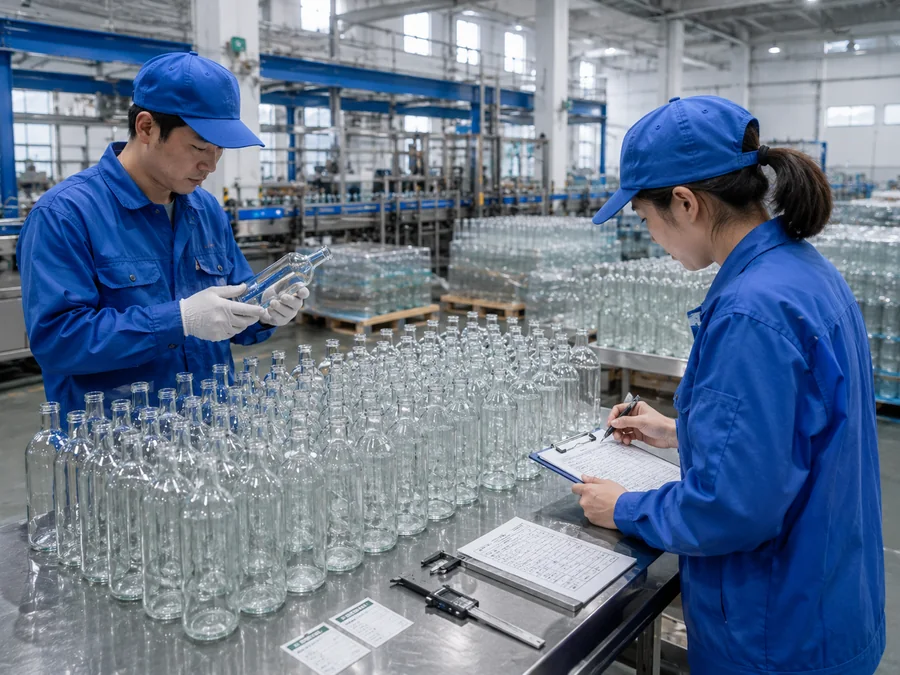
Production Handoff Check
Confirm the base container is ready to proceed before decoration or component integration. Detailed inspection methods and acceptance standards remain on the Quality Control page.
See Quality Control →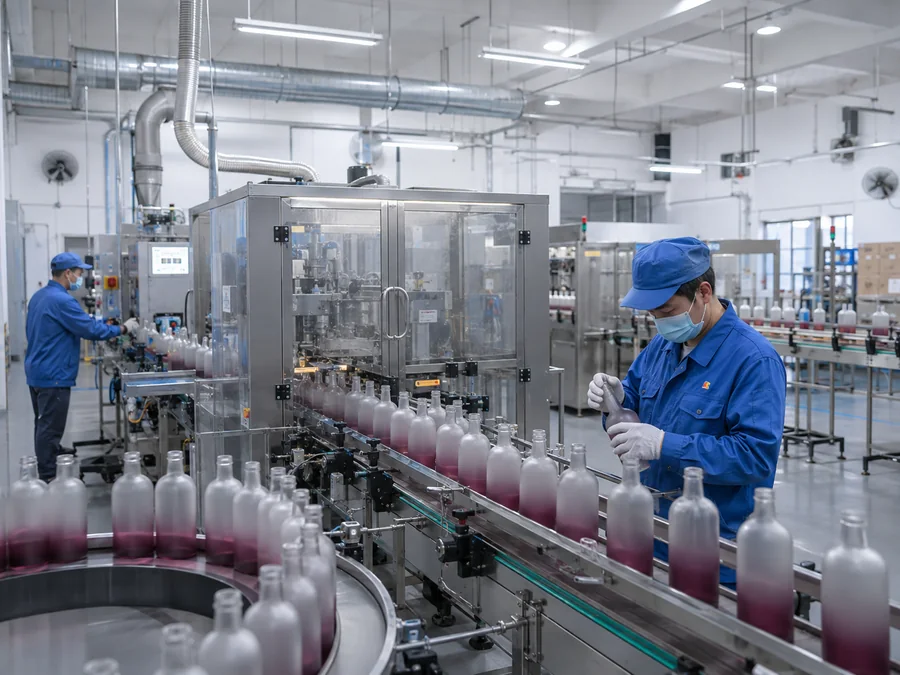
Decoration & Branding
Move approved blank glass into the required finishing route, such as color coating, frosting, printing, logo application or selected decorative treatments.
Explore Decoration →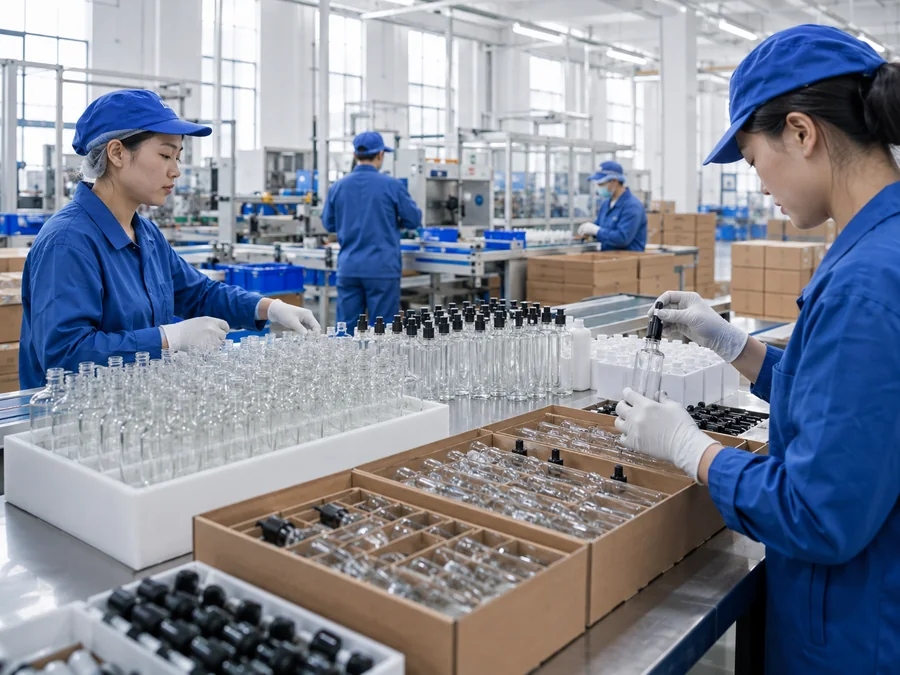
Component Matching & Packing
Bring together the finished glass with lids, caps, pumps, sprayers, collars or other approved components, then prepare the completed configuration for protective packing.
See Export Packing Support →The Final Manufacturing Output Is the Approved Packaging Configuration
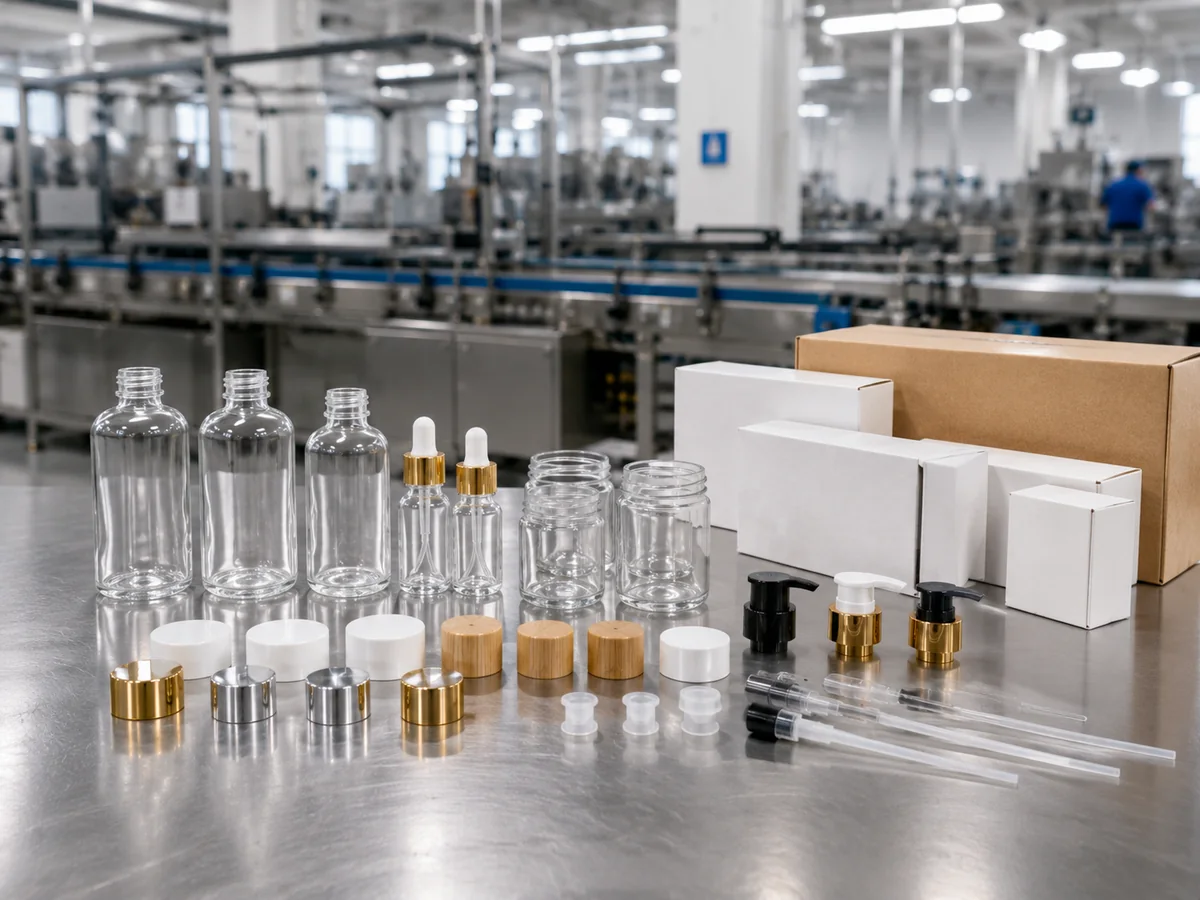
For many B2B projects, the manufacturing target is not a bare glass bottle or jar. The real output is the approved combination of container, surface finish, closure, accessory and packing arrangement that can move into delivery.
Manufacturing Capability Also Means Managing the Handoffs
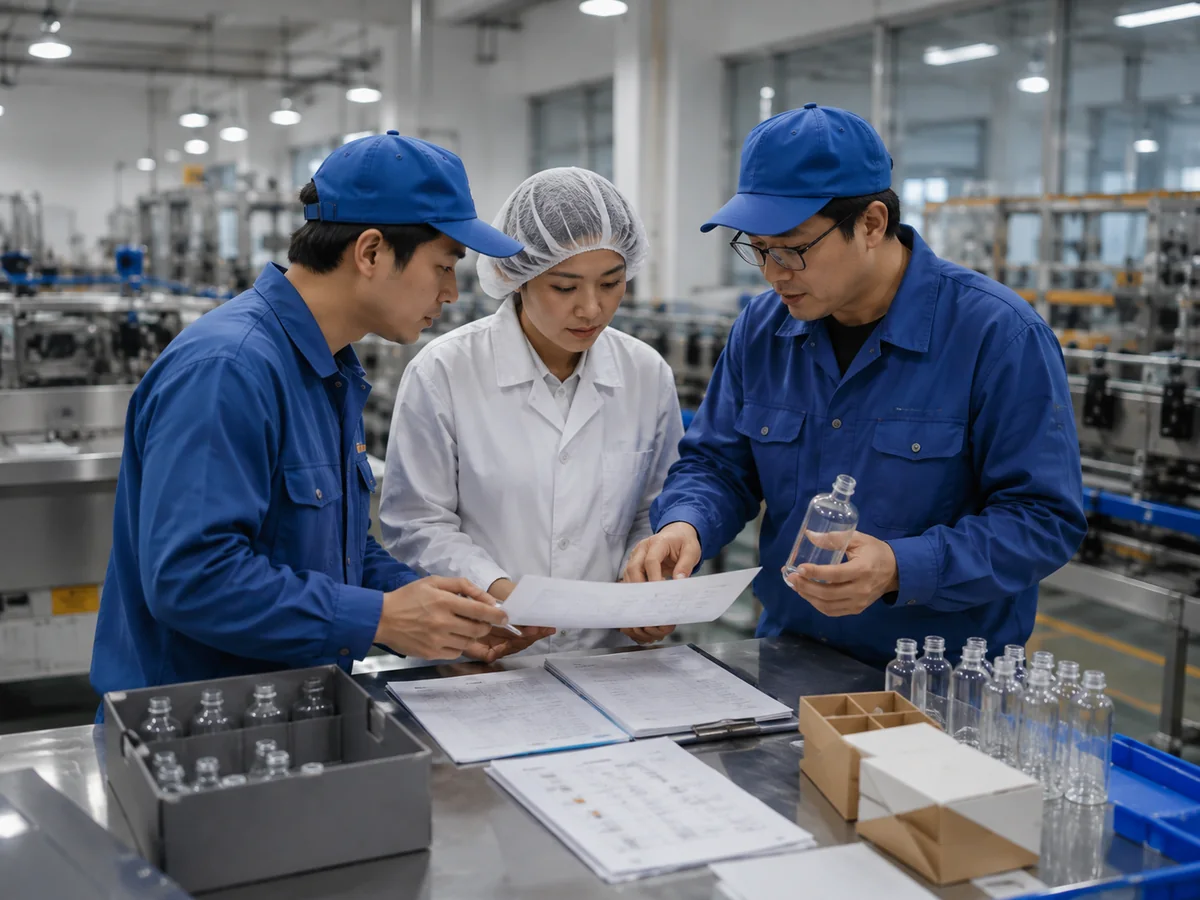
A B2B order moves across multiple operations. The manufacturing system must keep the approved specification, downstream work and component readiness aligned as the order advances.
Sequence the Required Operations
Organize base glass production, secondary processing and packing preparation in the correct order.
Move Approved Output Forward
Each completed stage should provide the correct input for the next manufacturing operation.
Coordinate Packaging Readiness
Align bottles or jars with closures, accessories and other components required by the approved configuration.
Prepare the Finished Order for Packing
Once manufacturing and component matching are complete, the order moves into protective export packing.
Standard Products and Custom Projects Enter the System Differently
The production process is not identical for every buyer. The route depends on how much of the packaging has already been validated before formal manufacturing begins.
Use an Existing Glass Container
Choose an approved standard bottle or jar, confirm the required decoration and components, then release the configured product into production.
View Product Options →Validate With a Sample or Prototype
When the product, finish or physical result still needs confirmation, validate it first and only move into formal manufacturing after approval.
See Samples & Prototyping →Develop Tooling for an Exclusive Design
A custom bottle or jar enters mass production only after the design is approved, production tooling is developed and the result is validated.
See Custom Mold Development →Move Into Manufacturing at the Right Point
Use these pages when the project still needs validation, tooling, quality-control detail or export-delivery support outside the manufacturing sequence itself.
Rapid Samples & Prototyping
Validate the concept, drawing, finish or physical sample before formal production release.
Validate first →Custom Mold Development
Convert an approved exclusive bottle or jar design into production tooling.
Develop tooling →Quality Control
Review the inspection methods, checkpoints and acceptance standards used for order quality.
See QC standards →Packing, Shipping & Export Support
Protect the finished order and coordinate shipment preparation and delivery support.
See delivery support →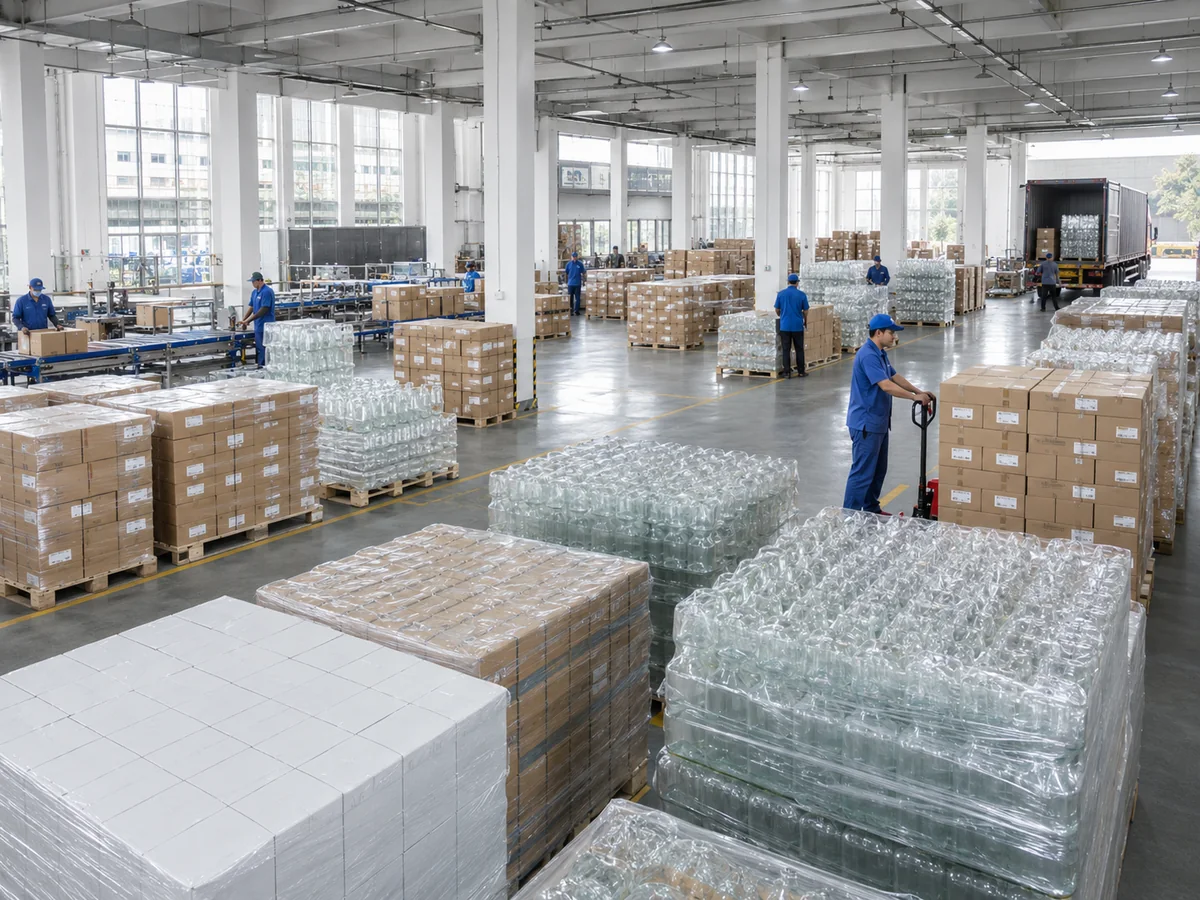
Ready to Define the Manufacturing Route for Your Packaging?
Send the product type, capacity, expected quantity, decoration requirements and component configuration. We can review where your project should enter the manufacturing process.