
Borosilicate Glass · Wholesale & Project Sourcing
Borosilicate Glass Cups and Mugs Wholesale
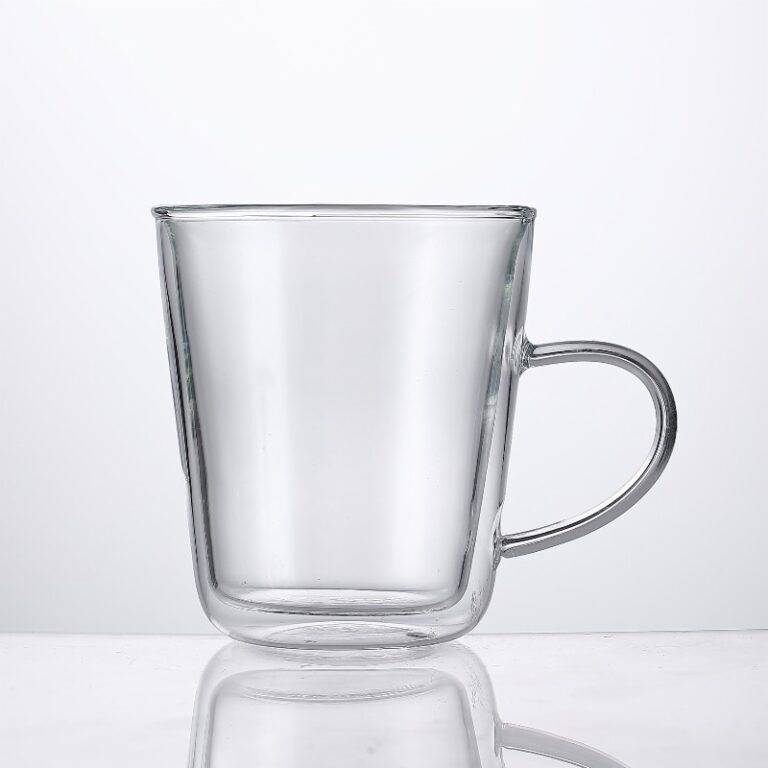
A cup should fit the drink and the way it is served. Compare the useful pour, rim, handle space and overall height before choosing a size family. Espresso, tea and a larger milk drink do not ask the same things of the glass.
For cafés, homeware brands and gift buyers, a clear cup brief connects appearance with daily handling. Include the intended serving routine, any equipment clearance and the number of pieces in a retail set.
Explore Borosilicate Glass Cups & Mugs
Use published model details to compare the stated dimensions and construction. For a new cup or mug format, send a serving reference and the features that matter to your project.

Need Help Choosing the Right Option?
Tell us the drink, useful serving size, handle preference, equipment or shelf limits, set quantity and artwork requirements.
Choose the Cup Around the Served Drink
Working pour
State the normal drink volume and the headspace above it. A nominal capacity alone does not show how a finished beverage will sit in the cup.
Handle and grip
Consider finger clearance and balance with the cup filled. A handle is a functional part of the assembly, not only a decorative detail.
Service and storage
Share machine, tray, shelf or dishwasher-rack constraints where relevant. Outside height and width matter alongside the useful drink space.
Bulk Glass Cups for Café, Retail and Gift Collections

Build a size family with a purpose
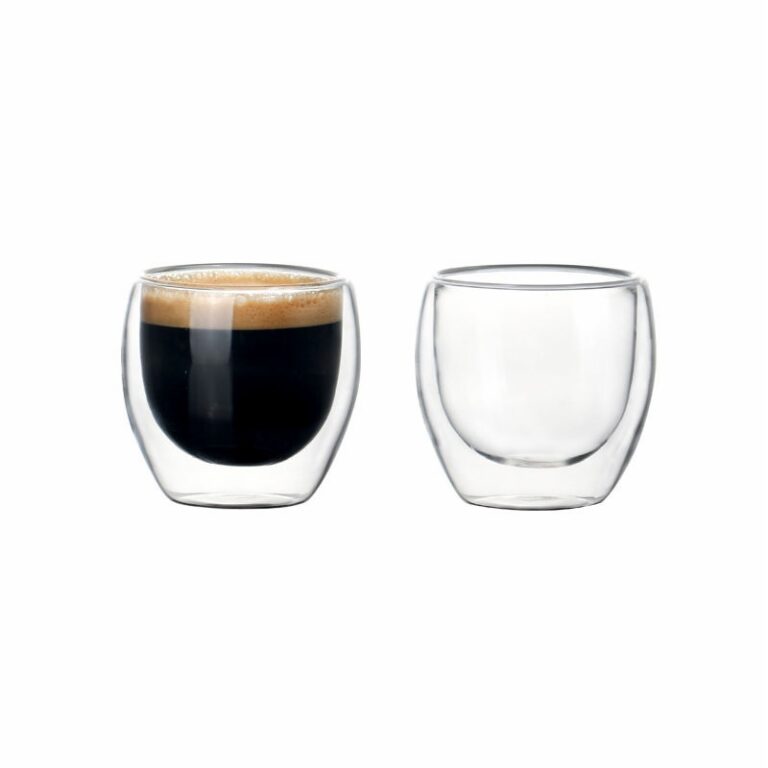
Choose each size for a drink or service role. A compact espresso cup and a larger tea mug should have clear reasons to sit together rather than simply being scaled versions of one photograph.
Review the Specification →Compare the rim and opening
The opening affects drinking feel, pouring and cleaning access. Look at the rim profile and the visual balance of the cup with the intended drink, especially when a broad top is part of the design.
Review the Specification →Give handles enough attention
Review the grip and the space between handle and body on a filled sample. Include any equipment or packing width limit, since the handle can determine the overall envelope more than the cup diameter.
Review the Specification →Separate wall construction from size
Single-wall and double-wall cups can have similar outside dimensions but different useful cavities. Keep the construction and working fill visible in the specification instead of choosing by outer height alone.
Review the Specification →Plan saucers and lids as fitted items
Where a saucer or cover belongs in the project, identify its contact and seating arrangement with the chosen cup. Similar diameters do not show whether the parts make a practical matched set.
Review the Specification →Use decoration with the drink in view
Transparent cups change appearance when filled. Assess the mark from the normal serving angle, allowing room for the handle and any surface features rather than forcing a large graphic onto every available area.
Review the Specification →Keep the Cup and Its Accessories Identifiable
A mug with a lid and a cup-and-saucer set are different purchasing configurations. List the parts included in each version and measure the complete assembly. If a component is optional, show that clearly in the quote so an accessory does not disappear between sample review and order discussion.
Discuss Your Requirements →Explore Customization & Artwork Review →Develop a Branded Cup Range
Share the logo file, intended print position and the drink presentation you want the customer to see. A handle, rib or double-wall cavity may affect where artwork reads clearly. Review decoration on the selected cup, and plan any set box around the actual assortment rather than a generic mug insert.
Sample Review & Production Planning
- Serving size: State the normal drink pour and intended headspace, separately from the nominal body capacity.
- Cup envelope: Record rim diameter, body height and overall width including the handle.
- Construction: Identify single-wall or double-wall geometry and the useful internal cavity.
- Accessories: List saucer, lid or other fitted items, with their selected references.
RequirementsUse, quantity and destination
SelectionBody, components and appearance
Sample ReviewFunction, handling and packing
Order DefinitionAgreed model and specification
Final ReviewIdentification and delivery scope
From Selection to an Agreed Specification
| Specification | What to Review | Buyer Approval / Output |
|---|---|---|
| Serving size | State the normal drink pour and intended headspace, separately from the nominal body capacity. | Serving reference |
| Cup envelope | Record rim diameter, body height and overall width including the handle. | Dimension schedule |
| Construction | Identify single-wall or double-wall geometry and the useful internal cavity. | Construction record |
| Accessories | List saucer, lid or other fitted items, with their selected references. | Set configuration |
| Service and retail pack | Include equipment clearance, pieces per selling unit and the artwork position. | Service and packing brief |
Plan Your Borosilicate Glass Cups & Mugs Project
Tell us the drink, useful serving size, handle preference, equipment or shelf limits, set quantity and artwork requirements.
Request a Project Quote →Packing & Delivery Planning for Borosilicate Glass Cups & Mugs
Cup packing needs to protect rims and handles while keeping any saucers or lids from moving against the glass during transit.

Support the handle clearance
Plan the insert around the handle and body together. A tight opening around the cylinder alone may leave the most exposed part unsupported.
Keep rims apart
Separate neighbouring cups and avoid arrangements that put hard contact on the drinking edges during normal packed handling.
Give saucers and lids their own space
A matched set needs defined positions for its separate parts. Do not rely on loose accessories resting against the cup.
Identify mixed-size sets
Show the arrangement and piece count for each retail unit so small and large cups are not confused during packing or receiving.
Plan Your Packing & Delivery
Share your order quantity, destination and retail or export packing requirements.
Discuss Packing & Shipping →Use Instructions Must Follow the Selected Cup
The material name does not establish microwave, dishwasher or hot-drink suitability for every cup and decoration. Request the information relevant to the exact construction, handle and fitted accessories. Where the cup is intended for commercial service, include that routine in the sample review instead of borrowing instructions from another model.
Borosilicate Glass Cups & Mugs for Different Buying Programs
A café serving family
Choose cups around the menu, machine clearance and tray arrangement, with each size tied to a recognisable drink or service role.
A homeware retail set
Make the assortment easy to understand through useful size differences, clear piece counts and a pack that shows what the customer receives.
A branded gift cup
Balance logo visibility with comfortable handling and the unboxing arrangement, including any lid, saucer or printed care information.
Define MOQ, Samples & Production Around the Brief
Include equipment clearance, pieces per selling unit and the artwork position.
ModelNamed configuration and use
SampleAssembly to review
ArtworkFile, colour and position
PackingRetail and outer-carton scope
A Clearer Buying Brief for Borosilicate Glass Cups & Mugs
Start with the drink
A serving reference gives capacity and shape decisions a useful context for the buyer and product reviewer.
Compare overall handle width
The handle affects storage, equipment clearance and pack size even when the cup body is compact.
Review filled balance
Use the intended pour when assessing the grip and the way the cup rests on a surface.
Keep construction explicit
Do not use the outside outline as a substitute for identifying single-wall or double-wall geometry.
Show the set contents
Cup, saucer, lid and box should be listed clearly rather than implied by a styled photograph.
Retain the artwork position
Keep the approved mark size and orientation relative to the handle for consistent repeat-order discussions.
Questions About Borosilicate Glass Cups & Mugs
How do I choose a capacity for a coffee or tea cup?
Begin with the normal served drink, including milk or foam where relevant, and leave the intended headspace clear. Then compare the cup's useful fill, proportions and overall dimensions.
Are cups and double-wall glasses the same category?
There is some overlap in use, but wall construction is a separate choice. Use the double-wall collection when the inner and outer cavity relationship is central to the project, and keep the selected construction explicit.
Can a cup be ordered with a lid or saucer?
Include the required set configuration and reference. The parts need their own availability and fit review with the selected cup; a similar diameter is not enough to establish a matched assembly.
Can every borosilicate mug go in a microwave or dishwasher?
Do not assume this. Model construction, decoration and fitted parts can affect the applicable instructions. Ask for information for the exact configuration and intended cleaning or service routine.
What should a wholesale cup enquiry contain?
Send the drink and useful pour, cup or mug reference, handle preference, dimensions, quantities, artwork and set contents. Include any equipment clearance and retail-pack requirements that constrain the design.
Still Have a Product Question?
Send your requirements or a reference so our team can review your project.
Ask Our Packaging Team →
Choose a range by serving roles
A collection becomes easier to buy when every size has a clear job. Start with the drinks you expect to serve or sell, then consider whether each proposed cup adds a useful distinction.
Look beyond the front-view photograph
Handle clearance, rim profile and base proportions can be hard to judge from one image. Review several views and the actual sample before deciding that two cups are equivalent.
Include storage in the brief
If cups must fit a particular shelf or rack, record that space. Do not assume they can be stacked simply because their bodies look tapered or similar.
Keep the complete cup reference
A repeat purchase needs the chosen body, construction, accessories and artwork orientation. A short specification beside the approved sample avoids relying on a familiar-looking outline alone.
Browse Borosilicate Glass Product Categories
Drinkware & Tea
Borosilicate Glass Drinkware →Borosilicate Glass Water Bottles →Borosilicate Glass Tea Infuser Bottles →Borosilicate Glass Cups & Mugs →Double-Wall Borosilicate Glasses →Borosilicate Glass Tumblers →Borosilicate Glass Wine Glasses →Borosilicate Glass Straws →Borosilicate Glass Baby Bottles →Borosilicate Glass Teapots →Borosilicate Glass Tea Kettles →Borosilicate Glass Electric Kettles →Borosilicate Glass Pitchers & Carafes →Borosilicate Glass French Presses →Borosilicate Glass Coffee Makers →Borosilicate Glass Tea Infusers →

Storage & Kitchen
Borosilicate Glass Food Storage Containers →Borosilicate Glass Storage Jars →Borosilicate Glass Cookware & Kitchenware →Borosilicate Glass Cooking Pots & Pans →Borosilicate Glass Bakeware →Borosilicate Glass Bowls →Borosilicate Glass Measuring Cups →Borosilicate Glass Plates & Tableware →Borosilicate Glass Oil Dispensers →Borosilicate Glass Food Covers →Borosilicate Glass Popcorn Makers →Borosilicate Appliance Glass →Borosilicate Glass Air Fryer Dishes →

Bottles, Home & Custom Projects
Request a Quote
Talk to Our Packaging Team
Share the model, capacity, color, closure, decoration, packaging and estimated quantity you need. We can review the options with you.
Category: Borosilicate Glass Cups & Mugs