Borosilicate Glass · Wholesale & Project Sourcing
Borosilicate Glass Baby Bottles Wholesale
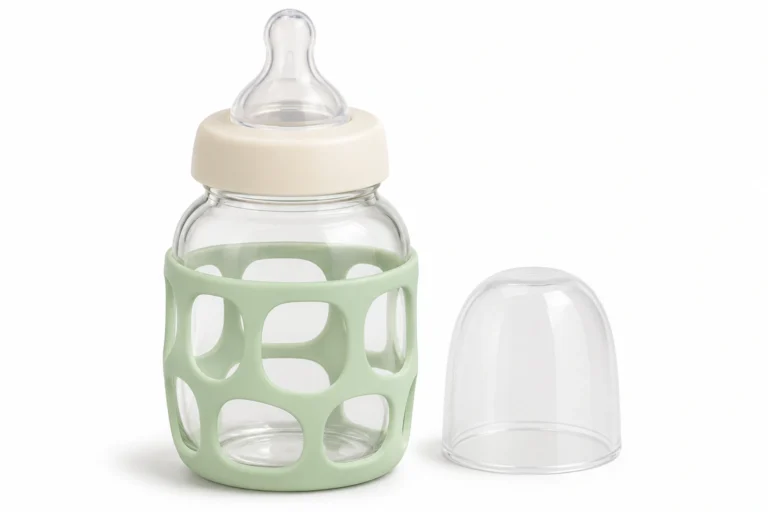
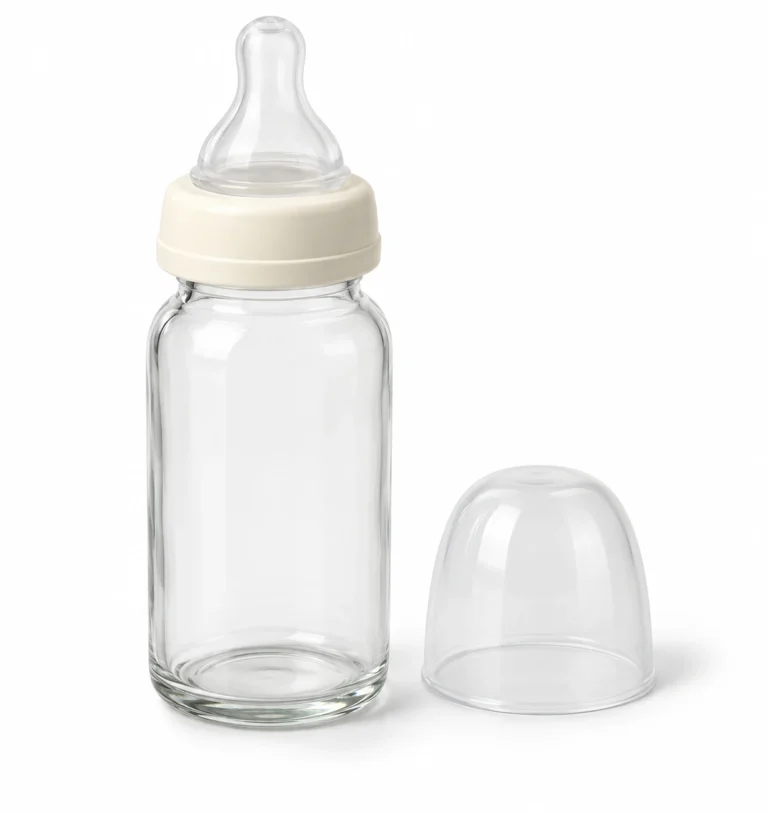
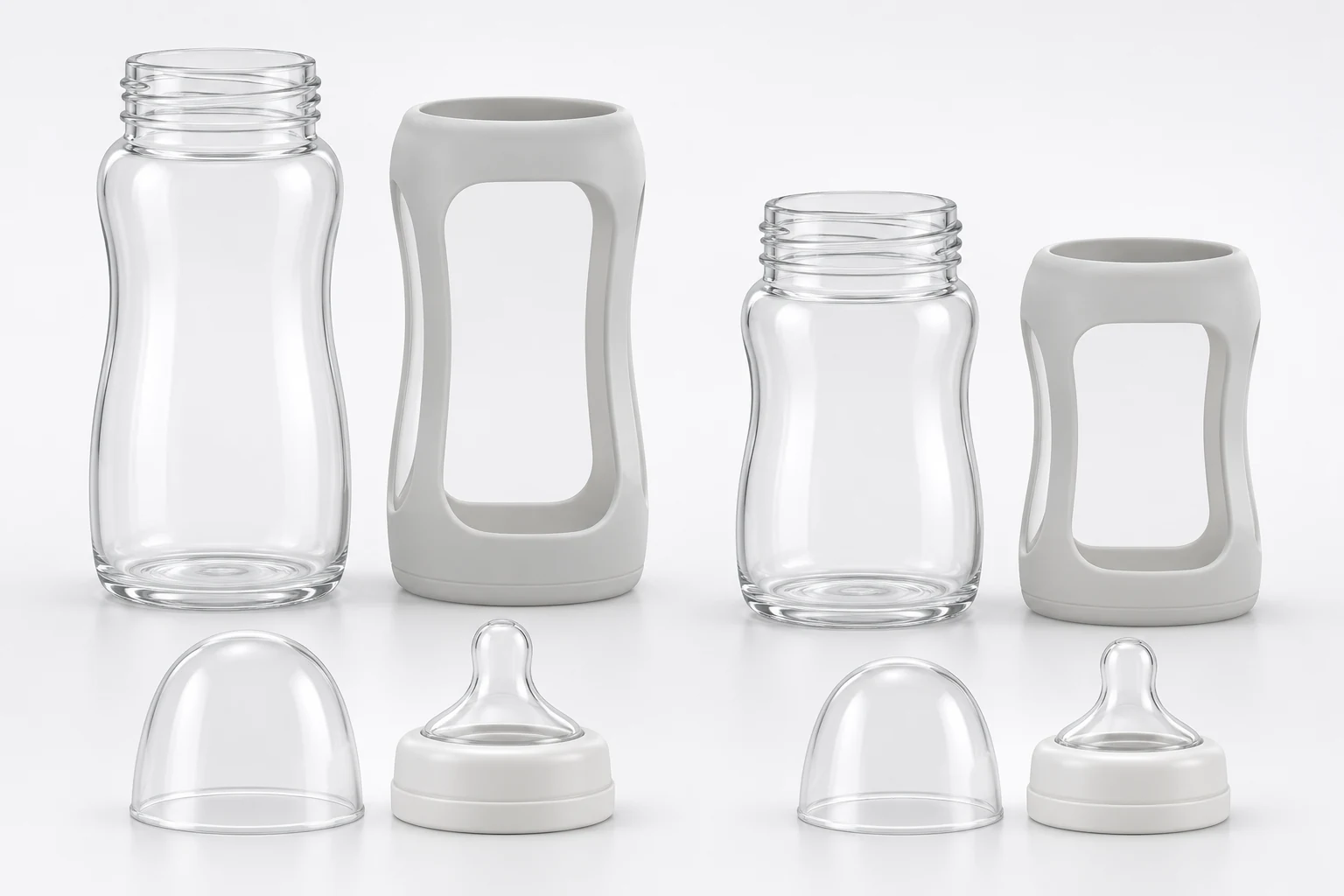
A baby-bottle project needs a complete feeding system, not just a glass body. Specify the nipple and collar assembly, marking brief and destination requirements so the product can be reviewed as a whole.
Infant-product brands and specialist importers need a product-level review. A glass body is only one component; the feeding parts, instructions and target-market requirements belong in the same development brief.
Explore Borosilicate Glass Baby Bottles
Begin with the complete intended feeding system and the market where it will be sold. Product availability and supporting documents need to be established for the proposed model.
Need Help Choosing the Right Option?
Send the bottle and feeding-part references, target market, marking brief, required documents, estimated quantity and retail-pack scope.
Define the Entire Feeding Product
Bottle and feeding parts
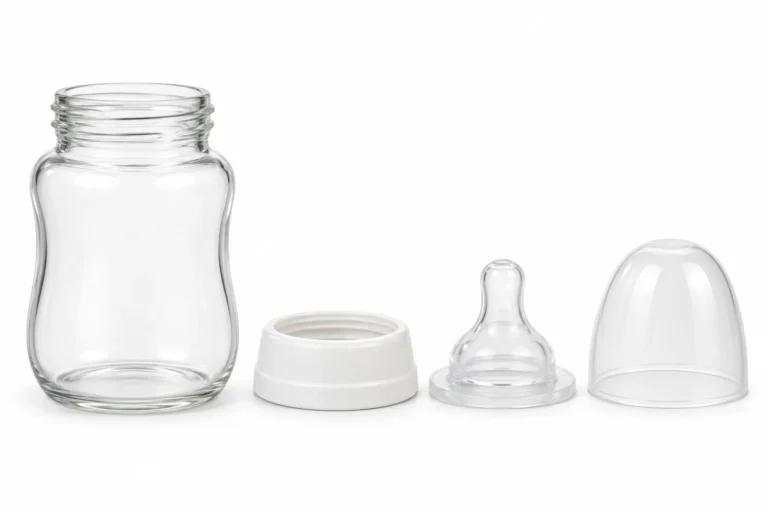
Identify the glass body, nipple, collar and cap together. Parts from different ranges should not be treated as interchangeable because their visible dimensions seem similar.
Information and instructions
Keep the capacity markings, care information and product identification tied to the exact assembly. Generic instructions from another bottle are not a substitute.
Destination and documentation
State the intended sales market and relevant product requirements at the start. A material name does not establish the status of a finished infant-feeding product.
Decisions for a Baby-Bottle Development Brief
The glass body
Establish the material and model identity for the actual proposed bottle. A general glass-bottle image does not define an infant-feeding product.
Review the Specification →The nipple and collar
Use exact component references and review the matched assembly. Do not presume compatibility with a familiar brand or another product range.
Review the Specification →The protective cap
Specify the cap and any associated parts. Include them when reviewing assembled dimensions and the complete retail unit.
Review the Specification →The markings
Define the units, graduation layout and product identification needed for the intended market, with the relevant verification considered for the selected model.
Review the Specification →The care information
Request instructions for the actual glass and feeding parts. Different components may have different cleaning or sterilising conditions.
Review the Specification →The packaged product
List every included piece and the intended product information. The retail presentation should describe the assembly supplied, without unsupported feeding or health claims.
Review the Specification →Approve Components as One Defined Assembly
Keep the glass, nipple, collar, cap and any additional parts linked by clear references. Compatibility belongs to the exact combination. A glass-body sample or a similar neck appearance is not enough to establish that feeding parts can be exchanged between products.
Discuss Your Requirements →Explore Customization & Artwork Review →Private-Label Baby-Bottle Enquiries
Provide the intended market and complete product brief before artwork development. Separate graphic changes from structural or component changes. Markings, instructions and pack descriptions should follow the reviewed assembly, with any requested performance or suitability statements supported for that specific product rather than borrowed from a material description.
Sample Review & Production Planning
- Assembly identity: Record the glass and every feeding component, including versions or revisions where relevant to the complete product.
- Target market: Identify the destination and requested product documents so the review addresses the intended retail project.
- Markings: Specify units, positions and identification information, and distinguish the artwork layout from measurement verification.
- Care information: Keep cleaning and sterilising instructions specific to the actual bottle and each included component.
RequirementsUse, quantity and destination
SelectionBody, components and appearance
Sample ReviewFunction, handling and packing
Order DefinitionAgreed model and specification
Final ReviewIdentification and delivery scope
From Selection to an Agreed Specification
| Specification | What to Review | Buyer Approval / Output |
|---|---|---|
| Assembly identity | Record the glass and every feeding component, including versions or revisions where relevant to the complete product. | Component record |
| Target market | Identify the destination and requested product documents so the review addresses the intended retail project. | Market brief |
| Markings | Specify units, positions and identification information, and distinguish the artwork layout from measurement verification. | Marking review |
| Care information | Keep cleaning and sterilising instructions specific to the actual bottle and each included component. | Model instructions |
| Retail scope | List the included pieces, product information and protection for one complete selling unit. | Pack contents |
Plan Your Borosilicate Glass Baby Bottles Project
Send the bottle and feeding-part references, target market, marking brief, required documents, estimated quantity and retail-pack scope.
Request a Project Quote →Packing & Delivery Planning for Borosilicate Glass Baby Bottles
The pack should keep the glass protected and the feeding parts identifiable. Review the complete retail unit, including product information, so components are not mixed across different assemblies.

Protect the glass body
Use separation and support suitable for the actual bottle shape, keeping the rim and base clear of hard contact.
Keep components together
Identify the nipple, collar and cap as part of the same model configuration instead of mixing similar-looking parts.
Match the product information
Keep the intended instructions and market version with the correct assembly throughout packing and distribution.
Check the selling unit
Review every included piece and its position before fixing carton quantities or the final retail presentation.
Plan Your Packing & Delivery
Share your order quantity, destination and retail or export packing requirements.
Discuss Packing & Shipping →Material Does Not Define Feeding Suitability
Borosilicate identifies a glass family, not the complete status of an infant-feeding product. Review the actual bottle, feeding parts, markings, instructions and relevant market documents together. Do not transfer compatibility or feeding claims from another brand, model or component combination.
Borosilicate Glass Baby Bottles for Different Buying Programs
Infant-product brand projects
Begin with a defined assembly and destination requirements, keeping product information and component compatibility central to the development brief.
Specialist import programmes
List the exact models, document requirements and retail units being considered so the sourcing review addresses the intended market.
Coordinated bottle sets
Specify each bottle size and the feeding components supplied with it. Shared branding does not establish that every part is interchangeable.
Define MOQ, Samples & Production Around the Brief
List the included pieces, product information and protection for one complete selling unit.
ModelNamed configuration and use
SampleAssembly to review
ArtworkFile, colour and position
PackingRetail and outer-carton scope
A Clearer Buying Brief for Borosilicate Glass Baby Bottles
Identify every feeding part
Keep the nipple, collar and cap references attached to the glass bottle throughout the project.
State the market early
Give the intended destination before product information and packaging are finalised.
Separate artwork and verification
A readable graduation design and an established measurement claim are different review tasks.
Keep instructions model-specific
Use care information for the actual assembly rather than transferring directions from a visually similar bottle.
Avoid borrowed claims
Treat feeding features and component compatibility as product-specific statements that need their own support.
Preserve the approved configuration
Record revisions so later changes to a component or marking remain visible in the product history.
Questions About Borosilicate Glass Baby Bottles
Can an ordinary glass bottle be used as a baby bottle?
A glass body alone does not establish infant-feeding suitability. The complete feeding assembly, product information and relevant market requirements need to be reviewed for the actual proposed model.
Are nipples and collars interchangeable between brands?
Do not assume compatibility from appearance or nominal size. Use the exact component references and the relevant assembly information. A combination established for one product range does not define the fit of another range.
What is needed to begin a wholesale project review?
Provide the intended market, bottle and feeding-part references, required product documents, marking brief, quantity and retail scope. Identify any undecided components so the project is not treated as an already defined assembly.
Can cleaning instructions be copied from another glass bottle?
Use the instructions relevant to the actual bottle and feeding components. Glass, nipples, collars and caps can have different requirements, so a general material description or another model's directions should not be substituted.
Can a private-label logo be discussed before launch?
Artwork can be part of the development brief, but the final marking and pack information should follow the reviewed product. A branding change does not establish feeding performance, compatibility or compliance for the assembly.
Still Have a Product Question?
Send your requirements or a reference so our team can review your project.
Ask Our Packaging Team →
Start with a product, not a material claim
The word borosilicate does not describe the nipple, collar, markings or instructions. Keeping those elements visible turns a broad bottle enquiry into a defined infant-product project without overstating what the material establishes.
Keep component changes visible
A collar or nipple revision may matter even when the glass stays unchanged. Retain references for the approved combination and make later changes explicit rather than allowing a familiar bottle shape to stand in for the whole specification.
Make the retail unit unambiguous
State whether a pack contains one bottle, extra feeding parts or a coordinated size set. The product information should match those contents so the buyer and the final retail presentation describe the same item.
Use the destination to frame the document request
The intended sales market belongs at the beginning of the brief. Ask for the relevant model-specific information rather than treating a general supplier certificate as proof for every finished infant-feeding configuration.
Browse Borosilicate Glass Product Categories

Drinkware & Tea
Borosilicate Glass Drinkware →Borosilicate Glass Water Bottles →Borosilicate Glass Tea Infuser Bottles →Borosilicate Glass Cups & Mugs →Double-Wall Borosilicate Glasses →Borosilicate Glass Tumblers →Borosilicate Glass Wine Glasses →Borosilicate Glass Straws →Borosilicate Glass Baby Bottles →Borosilicate Glass Teapots →Borosilicate Glass Tea Kettles →Borosilicate Glass Electric Kettles →Borosilicate Glass Pitchers & Carafes →Borosilicate Glass French Presses →Borosilicate Glass Coffee Makers →Borosilicate Glass Tea Infusers →

Storage & Kitchen
Borosilicate Glass Food Storage Containers →Borosilicate Glass Storage Jars →Borosilicate Glass Cookware & Kitchenware →Borosilicate Glass Cooking Pots & Pans →Borosilicate Glass Bakeware →Borosilicate Glass Bowls →Borosilicate Glass Measuring Cups →Borosilicate Glass Plates & Tableware →Borosilicate Glass Oil Dispensers →Borosilicate Glass Food Covers →Borosilicate Glass Popcorn Makers →Borosilicate Appliance Glass →Borosilicate Glass Air Fryer Dishes →

Bottles, Home & Custom Projects
Request a Quote
Talk to Our Packaging Team
Share the model, capacity, color, closure, decoration, packaging and estimated quantity you need. We can review the options with you.
Category: Borosilicate Glass Baby Bottles