Borosilicate Glass · Wholesale & Project Sourcing
Borosilicate Glass Electric Kettles Wholesale
A glass kettle purchase involves more than the vessel. For a wholesale programme, the body, heater, lid, controls and power connection need to be reviewed as one product before a price comparison becomes useful.
This category supports sourcing enquiries from appliance brands, distributors and retail buyers. Start with your selling market and intended use so the discussion can distinguish a replacement glass body from a complete electric kettle.
Explore Borosilicate Glass Electric Kettles
Send a reference drawing or appliance brief for model availability review. Glass-body sourcing and complete-appliance sourcing require different specifications; a photograph alone cannot establish electrical compliance, operating limits or a suitable assembly.
Need Help Choosing the Right Option?
Include destination market, plug and voltage requirements, working capacity, base arrangement, annual demand and whether you need a glass component or a finished appliance.
Define the appliance before choosing its appearance
Glass component or complete kettle
Make the purchasing boundary explicit. A vessel made for an appliance does not establish that the assembled kettle meets the requirements of your market.
Everyday filling routine
Describe how users fill, lift and empty the kettle. Lid access and handle clearance deserve attention alongside the visual outline of the glass body.
Retail document requirements
List the records your compliance team will need before approving a model, rather than treating a generic material description as complete product documentation.
Questions that shape a bulk kettle enquiry
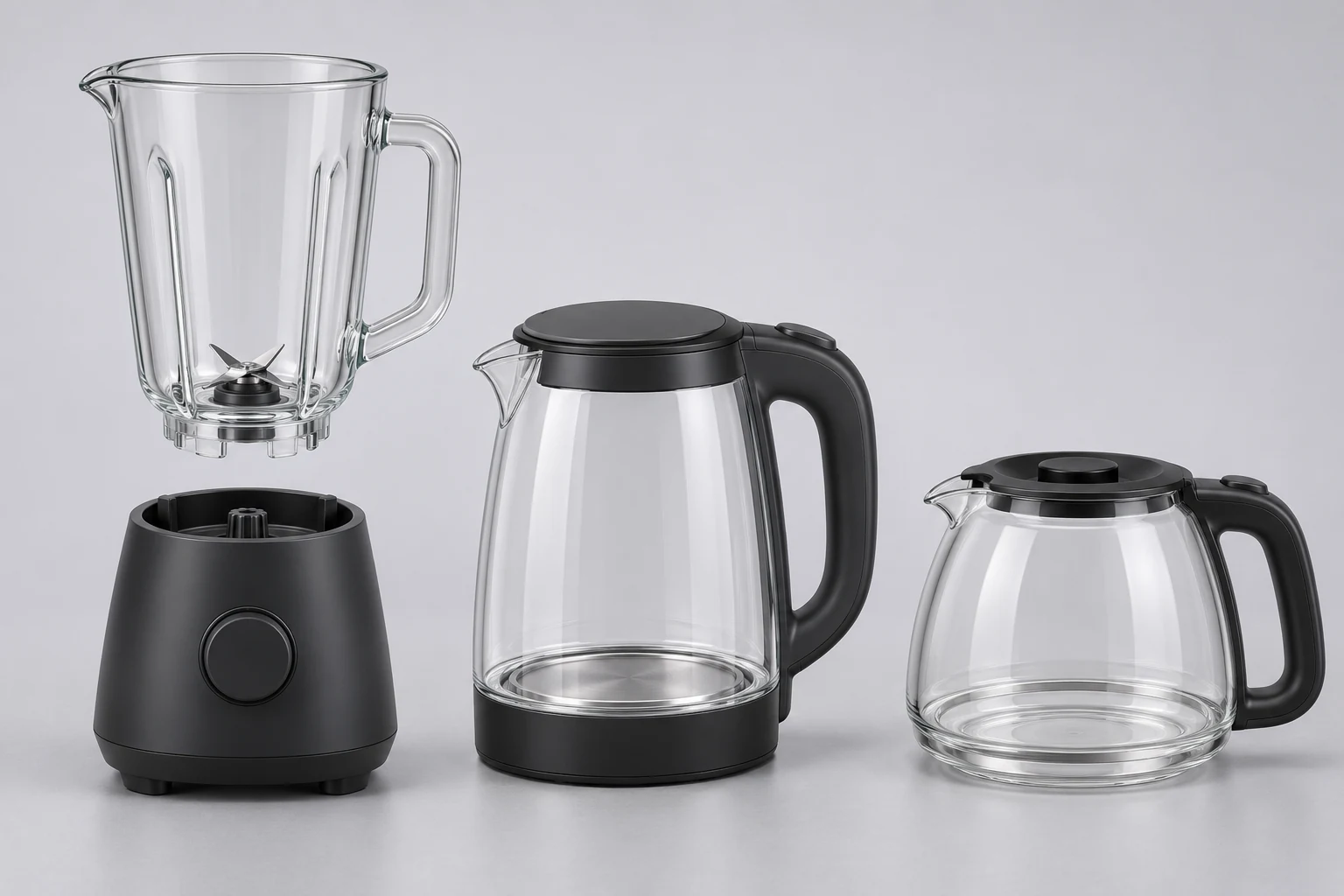
Body and heater interface
Provide the relevant drawing and attachment method. The dimensions around the base connection matter as much as overall height when a glass body must fit an existing appliance platform.
Review the Specification →Filling marks and useful volume
Separate the intended working fill from the volume to the rim. Mark placement should be reviewed with the complete kettle, including the lid and heating arrangement.
Review the Specification →Handle and lid movement
Ask to assess the assembled sample through filling and pouring. Product images rarely show finger clearance, lid resistance or how the centre of gravity changes during use.
Review the Specification →Power-market variants
Keep market-specific configurations in separate lines of the enquiry. A shared glass outline should not lead to mixed plugs, ratings or labels in one retail order.
Review the Specification →Care information
Prepare instructions around the actual model and approved use. Descaling access, filter removal and care wording need a component-level review before artwork is finalised.
Review the Specification →Replacement strategy
Decide whether replacement bodies, lids or bases form part of the programme. Matching a future spare requires a controlled model reference, not a rough visual resemblance.
Review the Specification →Review the complete assembly
The heater junction, lid, handle and base determine how the vessel works in practice. Ask for a complete sample appropriate to the intended market and have the relevant technical team review it before approving retail claims.
Discuss Your Requirements →Explore Customization & Artwork Review →Custom branding for a defined appliance
A custom kettle enquiry should separate changes to the glass from changes to the electrical assembly. Identify proposed logos, fill marks, colours and packaging first; each alteration can then be checked for model suitability, artwork space and any effect on the approval process.
Sample Review & Production Planning
- Purchase boundary: Specify glass body, replacement component or assembled electric kettle.
- Interface dimensions: Provide the controlled drawing for base, heater and handle attachment areas.
- Working fill: State the intended fill range and marking positions for the assembled model.
- Market configuration: Identify destination, electrical specification and required documentation for review.
RequirementsUse, quantity and destination
SelectionBody, components and appearance
Sample ReviewFunction, handling and packing
Order DefinitionAgreed model and specification
Final ReviewIdentification and delivery scope
From Selection to an Agreed Specification
| Specification | What to Review | Buyer Approval / Output |
|---|---|---|
| Purchase boundary | Specify glass body, replacement component or assembled electric kettle. | Written scope |
| Interface dimensions | Provide the controlled drawing for base, heater and handle attachment areas. | Drawing revision |
| Working fill | State the intended fill range and marking positions for the assembled model. | Approved marks |
| Market configuration | Identify destination, electrical specification and required documentation for review. | Market checklist |
| Retail unit | Define the complete contents, instructions and accessories in each selling unit. | Packing list |
Plan Your Borosilicate Glass Electric Kettles Project
Include destination market, plug and voltage requirements, working capacity, base arrangement, annual demand and whether you need a glass component or a finished appliance.
Request a Project Quote →Packing & Delivery Planning for Borosilicate Glass Electric Kettles
Kettle cartons need to protect the glass and keep the electrical parts correctly identified. Plan the complete retail unit before calculating transport quantities.

Protect the connection area
Avoid packaging pressure on the heater junction or other vulnerable interfaces. Confirm protection using the actual assembled sample.
Keep variants separate
Give each electrical and artwork version a clear carton identifier so similar-looking units remain distinguishable during receiving.
Contain loose components
Specify where filters, cables and removable lids sit so they cannot strike the vessel during shipment.
Check the packed sample
Review opening sequence and product removal as well as transport protection; difficult unboxing can damage an otherwise sound unit.
Plan Your Packing & Delivery
Share your order quantity, destination and retail or export packing requirements.
Discuss Packing & Shipping →A material name is not an appliance approval
Borosilicate glass describes part of a potential construction. It does not, by itself, establish the safety or compliance of a complete electric kettle. Model-specific documents, markings and the finished assembly should be assessed for the market in which you intend to sell.
Borosilicate Glass Electric Kettles for Different Buying Programs
Appliance brand development
Use a structured model brief to connect industrial design, component sourcing and the market requirements owned by your technical team.
Retail range planning
Compare the complete selling unit, including instructions and packaging, so a visually similar kettle does not hide a different configuration.
Replacement-body programmes
Work from the original interface drawing and model reference when investigating a glass spare for an existing appliance.
Define MOQ, Samples & Production Around the Brief
Define the complete contents, instructions and accessories in each selling unit.
ModelNamed configuration and use
SampleAssembly to review
ArtworkFile, colour and position
PackingRetail and outer-carton scope
A Clearer Buying Brief for Borosilicate Glass Electric Kettles
Clarify supply scope
Identify the exact component or complete assembly before comparing quotations.
Record a model reference
Tie drawings, documents and sample comments to one recognisable revision.
Separate market variants
Keep electrical configurations and retail artwork distinguishable throughout the order.
Review fill marks
Approve their location on a complete sample rather than an isolated drawing.
Assess the carton
Include the assembled kettle and every loose accessory in the packing review.
Agree the evidence
List the documentation your own approval process requires before commercial release.
Questions About Borosilicate Glass Electric Kettles
Can I enquire about the glass body alone?
Yes. State that the request is for a component and provide the interface drawing. Availability and suitability need review against that drawing; a body with similar capacity may not fit the same heater or base.
Does borosilicate glass mean a kettle is certified?
No. The material designation is not a certification of the assembled appliance. Ask for the documents relevant to the exact proposed model and have them reviewed against the requirements of your selling market.
Can one design serve several countries?
Possibly, but each electrical and labelling configuration needs its own review. List target countries at the start so the enquiry does not assume that one plug, voltage or instruction pack covers every destination.
What should a first quotation include?
Define the purchase boundary, working fill, proposed configuration, demand and packing contents. This gives a meaningful basis for discussing availability and price without filling gaps with assumptions.
Can I add my logo and volume marks?
Submit artwork and preferred positions for assessment. The review should consider the available glass area, readability and the final assembly. Do not approve a mark position solely from a flat artwork file.
Still Have a Product Question?
Send your requirements or a reference so our team can review your project.
Ask Our Packaging Team →
Compare quotations on the same boundary
A price for a bare glass vessel cannot be compared directly with one for a retail-ready kettle. Put the supplied components beside each quotation and resolve omissions before selecting a proposal.
Keep the technical review early
Retail artwork often moves quickly once a design is selected. Collect model details and required evidence before that stage so a late document issue does not force a packaging change.
Use the sample as an assembly check
Inspect how the lid opens, how water enters and how the kettle rests on its base. These observations complement the technical review; they do not replace formal product assessment.
Prepare for the next order
Archive the approved model, glass drawing, electrical variant and carton artwork together. A reorder should refer to that set rather than relying on the commercial name alone.
Browse Borosilicate Glass Product Categories

Drinkware & Tea
Borosilicate Glass Drinkware →Borosilicate Glass Water Bottles →Borosilicate Glass Tea Infuser Bottles →Borosilicate Glass Cups & Mugs →Double-Wall Borosilicate Glasses →Borosilicate Glass Tumblers →Borosilicate Glass Wine Glasses →Borosilicate Glass Straws →Borosilicate Glass Baby Bottles →Borosilicate Glass Teapots →Borosilicate Glass Tea Kettles →Borosilicate Glass Electric Kettles →Borosilicate Glass Pitchers & Carafes →Borosilicate Glass French Presses →Borosilicate Glass Coffee Makers →Borosilicate Glass Tea Infusers →

Storage & Kitchen
Borosilicate Glass Food Storage Containers →Borosilicate Glass Storage Jars →Borosilicate Glass Cookware & Kitchenware →Borosilicate Glass Cooking Pots & Pans →Borosilicate Glass Bakeware →Borosilicate Glass Bowls →Borosilicate Glass Measuring Cups →Borosilicate Glass Plates & Tableware →Borosilicate Glass Oil Dispensers →Borosilicate Glass Food Covers →Borosilicate Glass Popcorn Makers →Borosilicate Appliance Glass →Borosilicate Glass Air Fryer Dishes →

Bottles, Home & Custom Projects
Request a Quote
Talk to Our Packaging Team
Share the model, capacity, color, closure, decoration, packaging and estimated quantity you need. We can review the options with you.
Category: Borosilicate Glass Electric Kettles