
Borosilicate Glass · Wholesale & Project Sourcing
Borosilicate Glass Food Covers Wholesale
A food cover has to fit the plate and the appliance. Compare the internal clearance, overall height and ventilation arrangement, then review the model for the intended reheating routine.
Kitchen-accessory buyers need to know what the cover will fit and how it is lifted. A clear shape alone does not describe the clearance above food or inside an appliance.
Explore Borosilicate Glass Food Covers
Begin with the plate and intended appliance. Include a reference image or drawing so cover diameter, internal height and handling space can be considered together.
Need Help Choosing the Right Option?
Share plate dimensions, appliance space, desired clearance, handle and vent references, quantity and destination.
Fit the Cover to the Whole Setup
Plate coverage
Measure the outside of the plate and the support surface for the cover. A stated diameter should make clear which part is being measured.
Clearance above food
The centre height, side profile and handle all affect usable space. Include the intended food or serving shape when describing the project.
Lifting and ventilation
Specify how the cover is lifted and where steam should escape. A food cover should not be described as a sealed heating container.
Glass Food Covers for Defined Kitchen Applications

The lower rim
Compare the rim with the plate or work surface. The contact area matters when deciding whether the cover is a serving dome or an appliance accessory.
Review the Specification →The internal profile
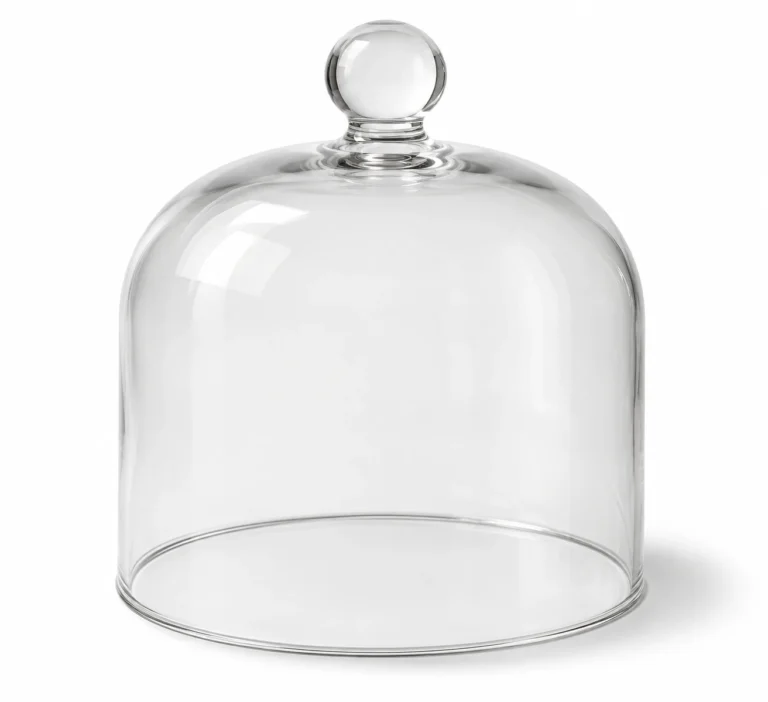
A domed and a shallow cover can share the same outside diameter but leave different space above the food. Request the relevant internal dimensions.
Review the Specification →The handle
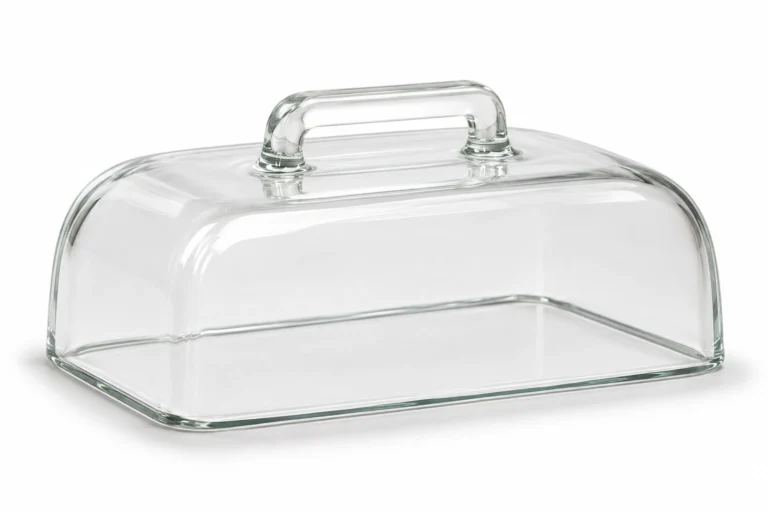
Include the handle in the assembled height and check the intended lifting method. A photograph does not establish how the handle behaves in use.
Review the Specification →The vent arrangement
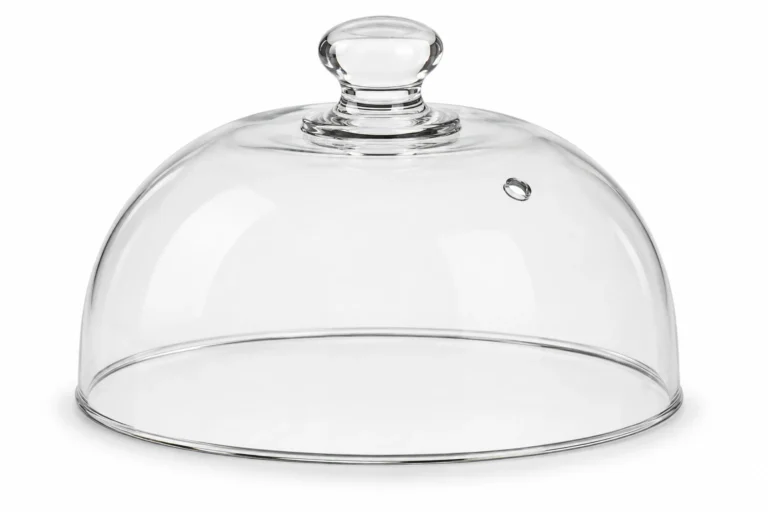
Identify any opening and its position. The proposed appliance and operating instructions should govern the design review, rather than a blanket microwave claim.
Review the Specification →The view of the food
For display or serving briefs, consider the visible area and proportions with the actual plate. Keep decorative and heating uses clearly identified.
Review the Specification →The storage footprint
A kitchen accessory must also be put away. Compare the overall shape and proposed pack without assuming that covers may be stacked directly together.
Review the Specification →Specify the Rim, Handle and Vent
A cover is a complete shaped piece, not just a diameter. Record how it sits, how it is lifted and how the proposed use allows ventilation. If the design includes separate fittings, include them in the model and care review.
Discuss Your Requirements →Explore Customization & Artwork Review →Custom Food Cover Enquiries
A drawing is useful when the cover must fit a particular plate or appliance. Mark the lower rim, internal clearance and overall height, including the handle. Decoration should be considered with visibility and cleaning; any proposed change to the form or fittings needs its own feasibility review.
Sample Review & Production Planning
- Lower diameter: State whether the figure describes the inside clearance, contact rim or outside size so fit is not left ambiguous.
- Internal height: Measure usable space underneath the cover, allowing for the centre and sloping sides rather than only the tallest point.
- Overall height: Include the handle or knob and any fitting when checking appliance and storage space.
- Vent details: Identify the opening arrangement and intended operating conditions in the product brief.
RequirementsUse, quantity and destination
SelectionBody, components and appearance
Sample ReviewFunction, handling and packing
Order DefinitionAgreed model and specification
Final ReviewIdentification and delivery scope
From Selection to an Agreed Specification
| Specification | What to Review | Buyer Approval / Output |
|---|---|---|
| Lower diameter | State whether the figure describes the inside clearance, contact rim or outside size so fit is not left ambiguous. | Dimensioned section |
| Internal height | Measure usable space underneath the cover, allowing for the centre and sloping sides rather than only the tallest point. | Clearance drawing |
| Overall height | Include the handle or knob and any fitting when checking appliance and storage space. | Assembled dimensions |
| Vent details | Identify the opening arrangement and intended operating conditions in the product brief. | Use review |
| Packing scope | Record individual protection, retail presentation and quantity per outer carton for the selected shape. | Pack layout |
Plan Your Borosilicate Glass Food Covers Project
Share plate dimensions, appliance space, desired clearance, handle and vent references, quantity and destination.
Request a Project Quote →Packing & Delivery Planning for Borosilicate Glass Food Covers
The rim and handle need protection from concentrated pressure. Review the pack in the orientation the cover will travel, with any nested arrangement supported by an actual packing trial.

Protect the rim
Keep the lower edge from direct contact with neighbouring glass or carton surfaces that can concentrate handling loads.
Allow handle space
Do not let the top of the knob become a load-bearing point. The insert should account for the full height.
Avoid unreviewed nesting
Similar shapes do not establish safe stacking. Review separation and movement if several covers are packed in one carton.
Identify the matching plate
If supplied as a set, keep the cover and plate references together and protect the two pieces from contact.
Plan Your Packing & Delivery
Share your order quantity, destination and retail or export packing requirements.
Discuss Packing & Shipping →Check the Cover and Appliance Instructions
A fit check needs the appliance opening, usable internal space and room for lifting. Material identity does not establish microwave or other heating suitability for a finished cover. Review the exact item, fittings and instructions for the proposed use before a use claim is printed.
Borosilicate Glass Food Covers for Different Buying Programs
Kitchen accessory ranges
Use a defined plate size and appliance brief to distinguish a reheating accessory from a general-purpose serving cover.
Table and food display
For a serving dome, review the food clearance and proportions with the plate or stand, including the handling arrangement.
Plate-and-cover sets
Approve both pieces as an assembly and include their identification, protective separation and final retail pack in the order scope.
Define MOQ, Samples & Production Around the Brief
Record individual protection, retail presentation and quantity per outer carton for the selected shape.
ModelNamed configuration and use
SampleAssembly to review
ArtworkFile, colour and position
PackingRetail and outer-carton scope
A Clearer Buying Brief for Borosilicate Glass Food Covers
Draw the profile
A simple section communicates useful internal clearance better than a single outside diameter.
State the use
Identify display, serving or a specified appliance application before discussing the form.
Include the handle
Measure the whole cover so the appliance and packing checks use the correct height.
Keep vents visible
Show the vent arrangement in the reference rather than treating it as an unspecified small detail.
Review the support rim
Check where the cover meets the plate and how that contact is protected in transport.
Separate body and fitting care
Record any different instructions for glass, knob, gasket or other assembled parts.
Questions About Borosilicate Glass Food Covers
Is the listed diameter enough to check fit?
Usually it is only a starting point. Clarify whether it is an inside or outside measurement and include the plate rim, internal food clearance and overall height in the comparison.
Are all glass food covers suitable for microwave use?
That should be established for the exact product and its fittings, with the intended appliance and instructions considered. The word borosilicate by itself does not define a finished cover's permitted use.
Should a microwave cover seal the plate?
Do not assume a sealed arrangement. Describe the ventilation and use conditions required by the intended product and appliance. A food cover and a sealed storage lid are different purchasing briefs.
Can a cover be quoted with a plate?
Identify both components and the way they should fit. Include the matching references, dimensions and packing scope so a set quotation is not confused with a price for the cover alone.
Can several covers be nested for shipping?
Treat nesting as a packing proposal to review, rather than a property inferred from the shape. Separation, rim support and movement within the carton need to be considered for the actual pieces.
Still Have a Product Question?
Send your requirements or a reference so our team can review your project.
Ask Our Packaging Team →
Internal and external size
Outside dimensions help with the appliance and carton. Internal dimensions explain what fits underneath. Keeping both in the brief avoids a cover that fits the shelf but not the plate or food.
A handle changes the brief
The handle adds height and creates a point that must be protected. Review the chosen lifting arrangement with the whole cover rather than considering it only as a decorative detail.
Name the product accurately
A serving dome, a splash cover and a storage lid are not interchangeable names. Choose the description that matches the verified model and the intended use, then keep that description consistent across the pack and listing.
Build the set before the box
For a plate-and-cover project, establish the fitted dimensions first. The retail box should follow that assembly, including separation between pieces, rather than forcing a late change to the glass.
Browse Borosilicate Glass Product Categories

Drinkware & Tea
Borosilicate Glass Drinkware →Borosilicate Glass Water Bottles →Borosilicate Glass Tea Infuser Bottles →Borosilicate Glass Cups & Mugs →Double-Wall Borosilicate Glasses →Borosilicate Glass Tumblers →Borosilicate Glass Wine Glasses →Borosilicate Glass Straws →Borosilicate Glass Baby Bottles →Borosilicate Glass Teapots →Borosilicate Glass Tea Kettles →Borosilicate Glass Electric Kettles →Borosilicate Glass Pitchers & Carafes →Borosilicate Glass French Presses →Borosilicate Glass Coffee Makers →Borosilicate Glass Tea Infusers →

Storage & Kitchen
Borosilicate Glass Food Storage Containers →Borosilicate Glass Storage Jars →Borosilicate Glass Cookware & Kitchenware →Borosilicate Glass Cooking Pots & Pans →Borosilicate Glass Bakeware →Borosilicate Glass Bowls →Borosilicate Glass Measuring Cups →Borosilicate Glass Plates & Tableware →Borosilicate Glass Oil Dispensers →Borosilicate Glass Food Covers →Borosilicate Glass Popcorn Makers →Borosilicate Appliance Glass →Borosilicate Glass Air Fryer Dishes →

Bottles, Home & Custom Projects
Request a Quote
Talk to Our Packaging Team
Share the model, capacity, color, closure, decoration, packaging and estimated quantity you need. We can review the options with you.
Category: Borosilicate Glass Food Covers