
Borosilicate Glass · Wholesale & Project Sourcing
Double-Wall Borosilicate Glasses Wholesale
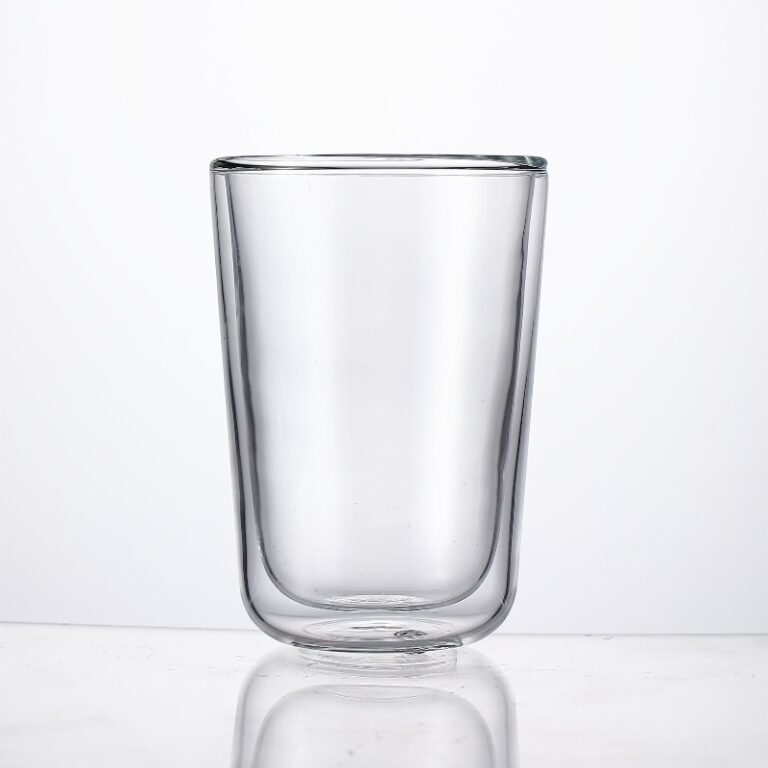
A double-wall glass has two shapes to consider: the cavity holding the drink and the outer body held by the user. Compare both before choosing a size. The space between them is part of the appearance, not extra beverage capacity.
For coffee shops, homeware brands and gift ranges, start with the served drink and the intended handling routine. Then assess the rim, base and any handle as parts of the selected construction.
Explore Double-Wall Borosilicate Glasses
Read any published model dimensions alongside its stated useful fill. A new outline or size needs its own construction and availability review.
Need Help Choosing the Right Option?
Send the drink portion, inner profile, outside size limits, handle preference, quantity and set-box requirements.
Compare the Inner Cup and Outer Envelope
Useful drink space
Use the inner cavity to plan the serving. A broad outer silhouette can hold less than a narrower single-wall reference.
Hand contact and balance
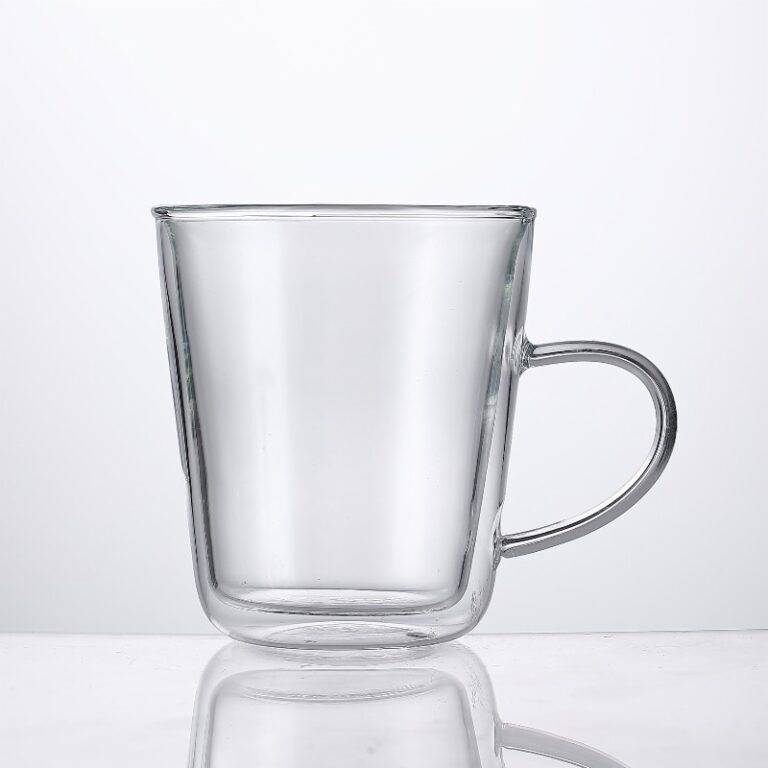
Look at where the user grips the glass and how it rests when filled. Assess the complete sample rather than the transparent outline alone.
Care and storage
Describe washing and storage conditions early. A visually nested shape does not establish that glasses may be stacked.
Double-Wall Glassware for Beverage and Retail Collections

The drink presentation
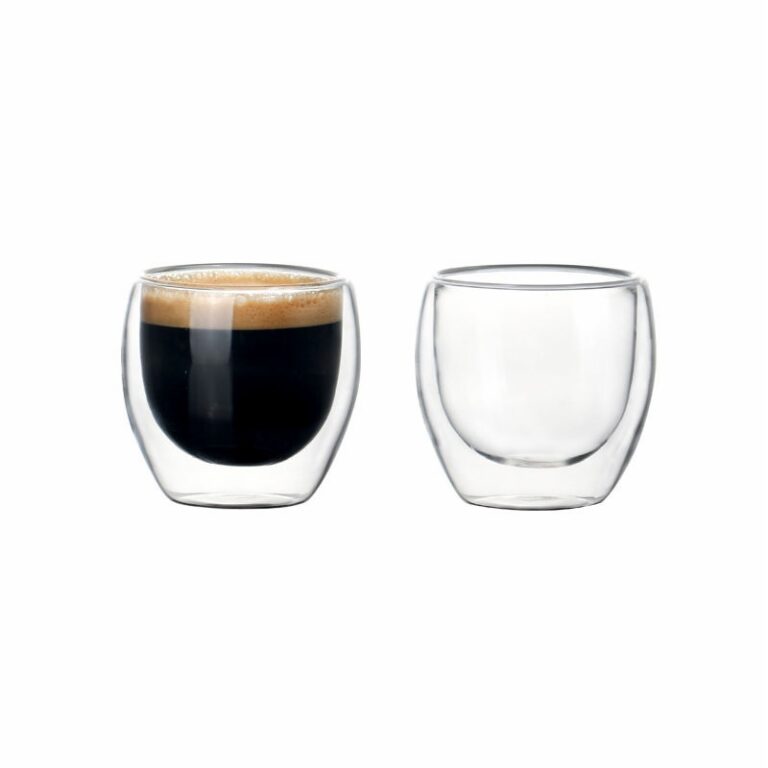
The inner profile frames espresso, tea or a layered drink. Choose its proportions around the intended pour and headspace, rather than selecting only a striking outside shape.
Review the Specification →The outer grip
Compare the widest point, base and any waist in the body. These dimensions influence handling and shelf space even when useful beverage volumes are similar.
Review the Specification →The drinking rim
Look closely at the transition between inner and outer walls at the opening. Review the rim and normal drinking action on the selected sample.
Review the Specification →The base and visible joins
Transparent construction makes the lower profile and joins part of the presentation. Include these areas in the appearance reference instead of approving only a front-view image.
Review the Specification →Handles and complete width
A handled double-wall mug needs a separate overall-width check. Finger clearance, body proportions and packaging space should be considered together.
Review the Specification →Branding without hiding the form
A small mark may leave the inner profile easier to see than a large wraparound graphic. Compare proposed artwork with the glass filled and empty.
Review the Specification →Specify Construction with the Serving Size
Keep inner capacity, outside dimensions and wall construction in one record. If a lid, saucer or handle belongs to the design, show it with the glass. This avoids comparing a body-only reference with an assembled mug or set.
Discuss Your Requirements →Explore Customization & Artwork Review →Develop the Artwork on the Chosen Form
Share a logo proof showing physical size and orientation. Transparent layers and curved surfaces affect how a mark appears from normal viewing angles. Review any proposed colour or decoration on the exact construction; an attractive mock-up does not establish a finished production method.
Sample Review & Production Planning
- Drink portion: Define the normal pour and headspace inside the inner cavity.
- Inner profile: Show the useful cavity and its shape rather than relying on the outer silhouette.
- Outside size: Record overall height, widest point and handle width where applicable.
- Construction details: Identify the rim, base and visible joins included in appearance review.
RequirementsUse, quantity and destination
SelectionBody, components and appearance
Sample ReviewFunction, handling and packing
Order DefinitionAgreed model and specification
Final ReviewIdentification and delivery scope
From Selection to an Agreed Specification
| Specification | What to Review | Buyer Approval / Output |
|---|---|---|
| Drink portion | Define the normal pour and headspace inside the inner cavity. | Serving reference |
| Inner profile | Show the useful cavity and its shape rather than relying on the outer silhouette. | Cavity drawing |
| Outside size | Record overall height, widest point and handle width where applicable. | External dimensions |
| Construction details | Identify the rim, base and visible joins included in appearance review. | Sample reference |
| Use and care | State intended beverage, cleaning routine and storage arrangement. | Model-specific requirements |
Plan Your Double-Wall Borosilicate Glasses Project
Send the drink portion, inner profile, outside size limits, handle preference, quantity and set-box requirements.
Request a Project Quote →Packing & Delivery Planning for Double-Wall Borosilicate Glasses
The outside form determines the insert, while rims, handles and the lower construction need protection from contact with adjacent pieces.

Separate the bodies
Keep neighbouring glasses from touching directly, especially where the outer profile is broad or rounded.
Leave handle clearance
Allow room for the full handled outline rather than cutting an insert around the main body only.
Review the contact points
Identify where the pack supports the glass so pressure is not concentrated on an exposed rim or detail.
Mark the size family
Label similar outside forms by their exact serving size and construction to avoid mixing versions.
Plan Your Packing & Delivery
Share your order quantity, destination and retail or export packing requirements.
Discuss Packing & Shipping →Do Not Turn the Air Space into a Performance Promise
Double-wall construction describes geometry. It does not by itself establish insulation duration, external-touch temperature or resistance to thermal changes. Any required performance needs model-specific information and an agreed evaluation. The chosen drink, cleaning routine and fitted parts belong in that review.
Double-Wall Borosilicate Glasses for Different Buying Programs
A coffee presentation range
Use the inner silhouette and pour level to make the drink readable while keeping handling practical for the service routine.
A retail size family
Give each capacity a clear role and keep the useful fill distinct from the outside dimensions shown on packaging.
A design-led gift set
Present the transparent construction clearly, with protection and care information suited to the selected pieces.
Define MOQ, Samples & Production Around the Brief
State intended beverage, cleaning routine and storage arrangement.
ModelNamed configuration and use
SampleAssembly to review
ArtworkFile, colour and position
PackingRetail and outer-carton scope
A Clearer Buying Brief for Double-Wall Borosilicate Glasses
Use the inner volume
Outside dimensions cannot substitute for the useful cavity when planning a drink portion.
Look through several angles
Check the inner profile, rim and base rather than judging only the floating appearance.
Handle the filled sample
Grip and balance deserve review with the intended drink portion in place.
Keep wall types distinct
A similar-looking single-wall cup is a different construction and needs its own reference.
Define the storage routine
Do not assume stacking from the shape; obtain instructions for the selected model.
Retain the exact version
Keep serving size, construction and artwork together for repeat-order discussions.
Questions About Double-Wall Borosilicate Glasses
Does double-wall glass hold more than a single-wall cup of the same size?
Not necessarily. The inner cavity determines useful drink space. Compare working fill separately from the outside height and diameter.
Are double-wall borosilicate glasses insulated for a fixed time?
No fixed duration follows from the construction name. A specific retention requirement needs a defined evaluation of the selected product and use conditions.
Can these glasses be stacked?
Do not assume so from a tapered outline. Ask for the selected model's storage instructions and assess the intended arrangement before planning a shelf or retail display.
How should a logo be positioned?
Show the proposed size and orientation on the chosen body. View it filled and empty, since the transparent layers can change its appearance.
What is needed for a wholesale enquiry?
Send the drink portion, construction reference, outside limits, quantities, artwork and pack format. Include any required use or care documentation.
Still Have a Product Question?
Send your requirements or a reference so our team can review your project.
Ask Our Packaging Team →
Choose the inner profile first
A design may look spacious outside while holding a compact serving inside. Relate the cavity to the drink, then judge whether the outer proportions suit the hand and setting.
Review the base in the same light
The lower form can look different when filled. Include a normal tabletop view in the appearance review rather than relying on a dramatic display photograph.
Keep handling claims separate from appearance
A floating visual effect is easy to see; touch temperature and other performance need their own evidence. Write the product description from the selected model's established information.
Make size identification easy
Related glasses may look similar in a carton. Retain useful fill and model references with the pack labels so receiving and repeat purchasing remain straightforward.
Browse Borosilicate Glass Product Categories
Drinkware & Tea
Borosilicate Glass Drinkware →Borosilicate Glass Water Bottles →Borosilicate Glass Tea Infuser Bottles →Borosilicate Glass Cups & Mugs →Double-Wall Borosilicate Glasses →Borosilicate Glass Tumblers →Borosilicate Glass Wine Glasses →Borosilicate Glass Straws →Borosilicate Glass Baby Bottles →Borosilicate Glass Teapots →Borosilicate Glass Tea Kettles →Borosilicate Glass Electric Kettles →Borosilicate Glass Pitchers & Carafes →Borosilicate Glass French Presses →Borosilicate Glass Coffee Makers →Borosilicate Glass Tea Infusers →

Storage & Kitchen
Borosilicate Glass Food Storage Containers →Borosilicate Glass Storage Jars →Borosilicate Glass Cookware & Kitchenware →Borosilicate Glass Cooking Pots & Pans →Borosilicate Glass Bakeware →Borosilicate Glass Bowls →Borosilicate Glass Measuring Cups →Borosilicate Glass Plates & Tableware →Borosilicate Glass Oil Dispensers →Borosilicate Glass Food Covers →Borosilicate Glass Popcorn Makers →Borosilicate Appliance Glass →Borosilicate Glass Air Fryer Dishes →

Bottles, Home & Custom Projects
Request a Quote
Talk to Our Packaging Team
Share the model, capacity, color, closure, decoration, packaging and estimated quantity you need. We can review the options with you.
Category: Double-Wall Borosilicate Glasses