Borosilicate Glass · Wholesale & Project Sourcing
Borosilicate Glass Wine Glasses Wholesale
Define a wine-glass profile around the bowl, rim and intended serving level. For stemware, add the stem and foot; for a stemless form, define the bowl grip and resting base. Keep that complete outline with the actual venue or retail-set brief.
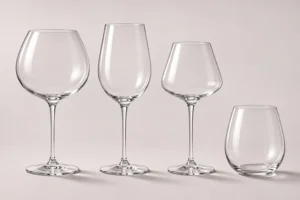
Wine merchants, tableware retailers and hospitality teams can compare stemless, goblet and flute references. Confirm actual model availability, material and sample information for the selected version, with the normal pour, full dimensions and storage clearances recorded together.
Explore Borosilicate Glass Wine Glasses
Review a rounded stemless supplier reference alongside stemmed goblet and flute design references. Specify the intended service and pour, then confirm the selected physical model, material, dimensions and supplied count before planning the retail or hospitality pack.

Need Help Choosing the Right Option?
Send the chosen stemless, goblet or flute reference, intended pour and bowl profile. Include rim and widest-bowl dimensions, total height, stem and foot where present, rack or tray limits, sample requirements and boxed quantities.
Define the Complete Wine-Glass Profile
Bowl and serving level
Show the normal pour inside the bowl, leaving the intended space above it. Total capacity alone does not explain the desired presentation.
Stem, foot and balance
For stemware, compare how the stem is held and how the foot rests. Include overall width and height in the review.
Service space
Provide rack, shelf, tray or table-space limits. These practical constraints can rule out an otherwise attractive profile.
Wine Glass Procurement for Hospitality and Design-Led Retail
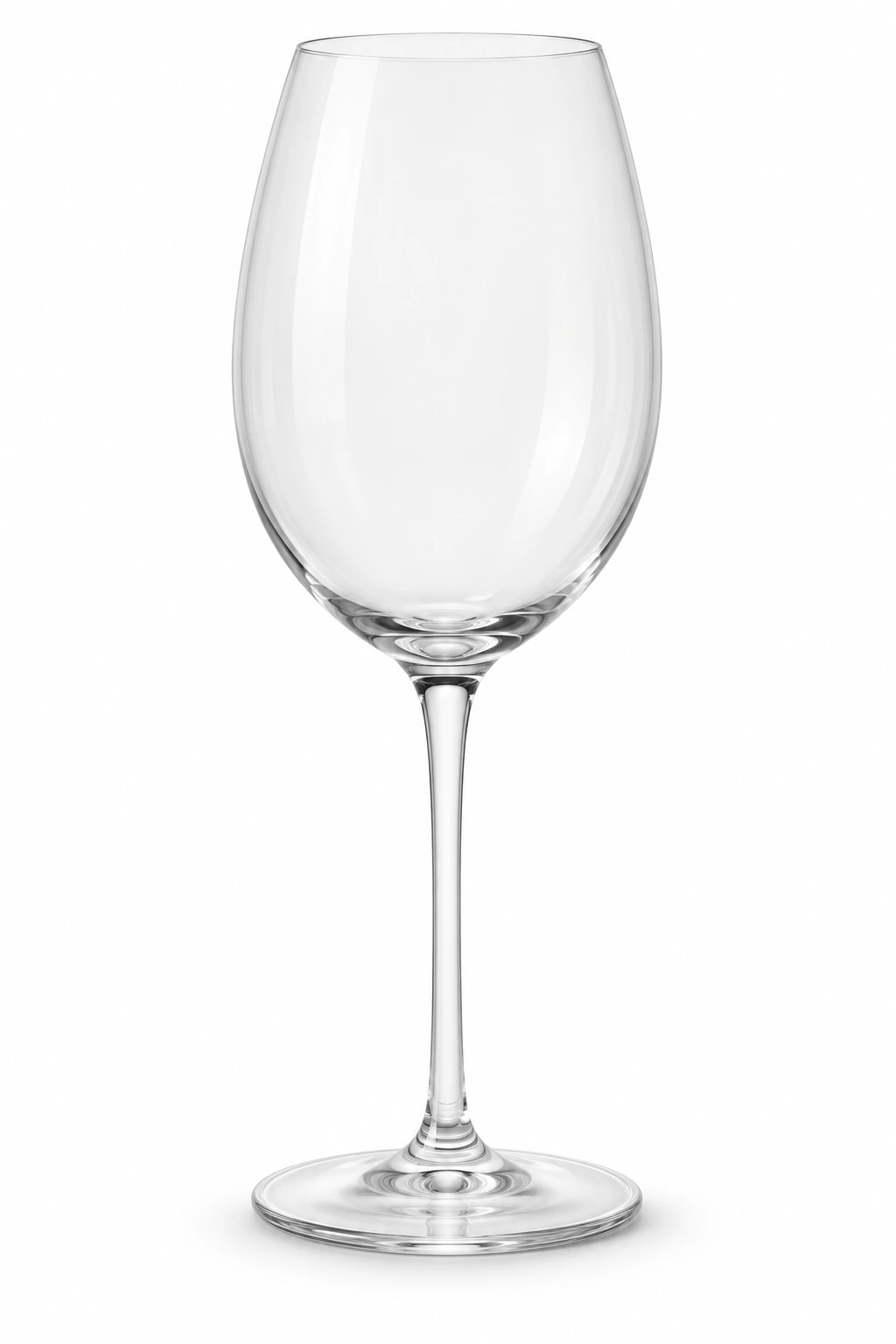
Choose the bowl deliberately
For the rounded stemless, oval goblet or tapered flute proposal, show the actual working pour and headspace within the selected bowl. Keep any nominal size label as a separate reference and confirm the physical dimensions and serving-level record on the sample.
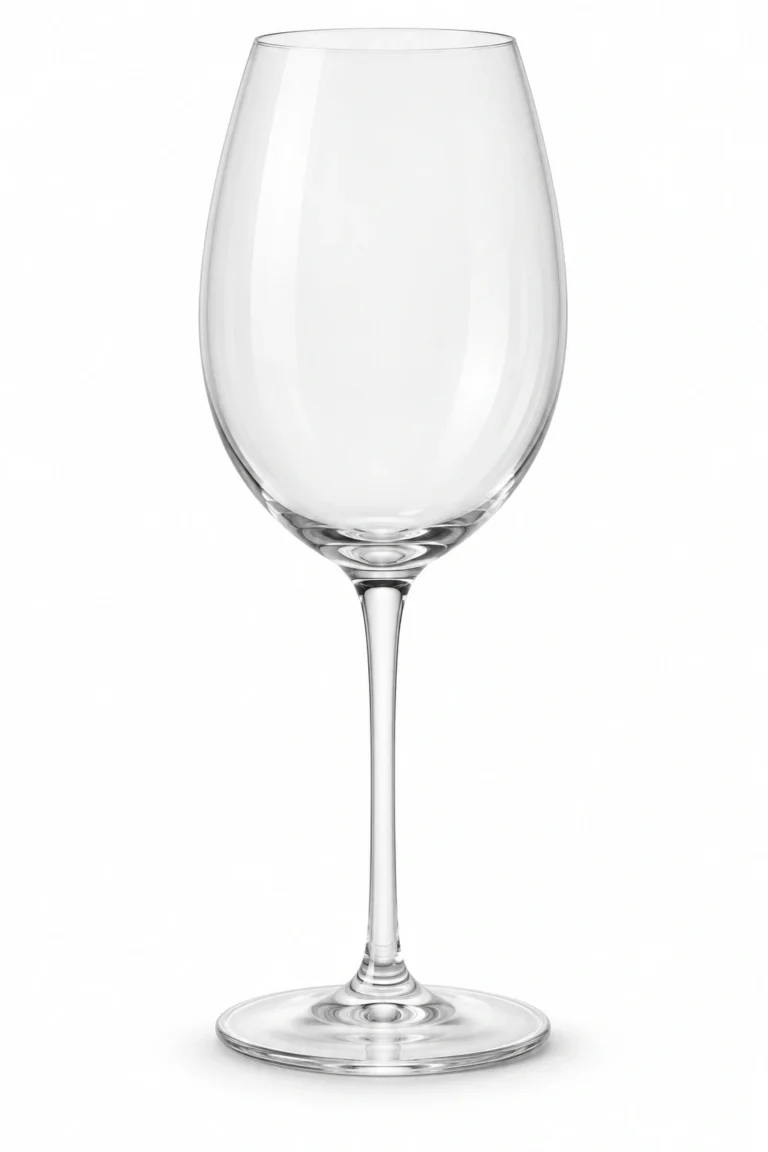
Review the Specification →Design reference for the oval-bowl goblet. Request a physical sample to confirm the bowl, opening, stem, foot and intended pour.
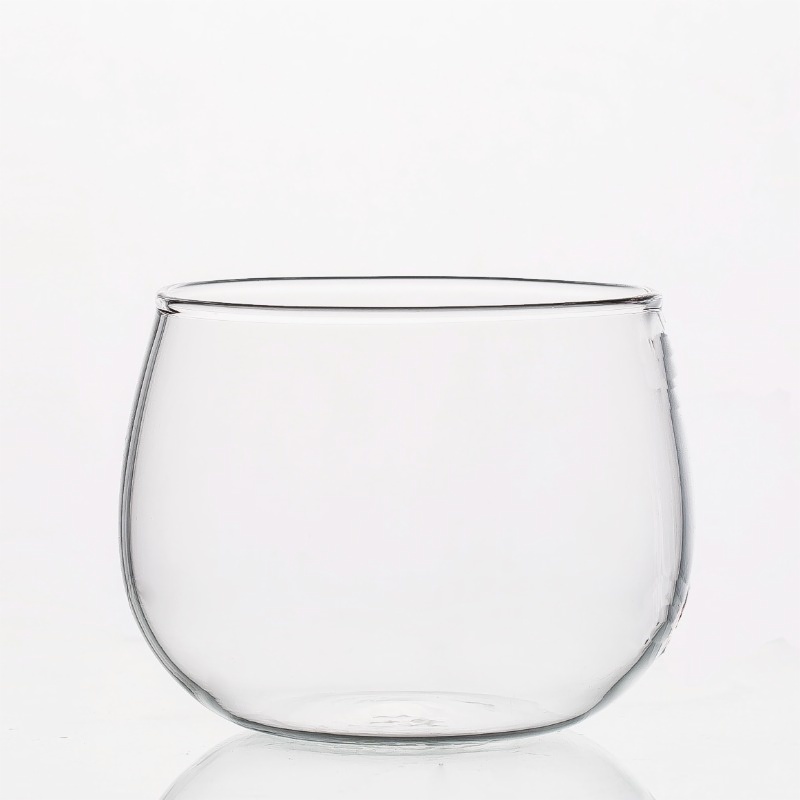
Distinguish stemmed and stemless forms
These formats change grip, table presentation and packing. Identify the desired type rather than using wine glass as a label for any clear drinking vessel.
Review the Specification →Supplier reference showing a rounded stemless glass. Confirm the selected material, useful pour and dimensions on the proposed sample.
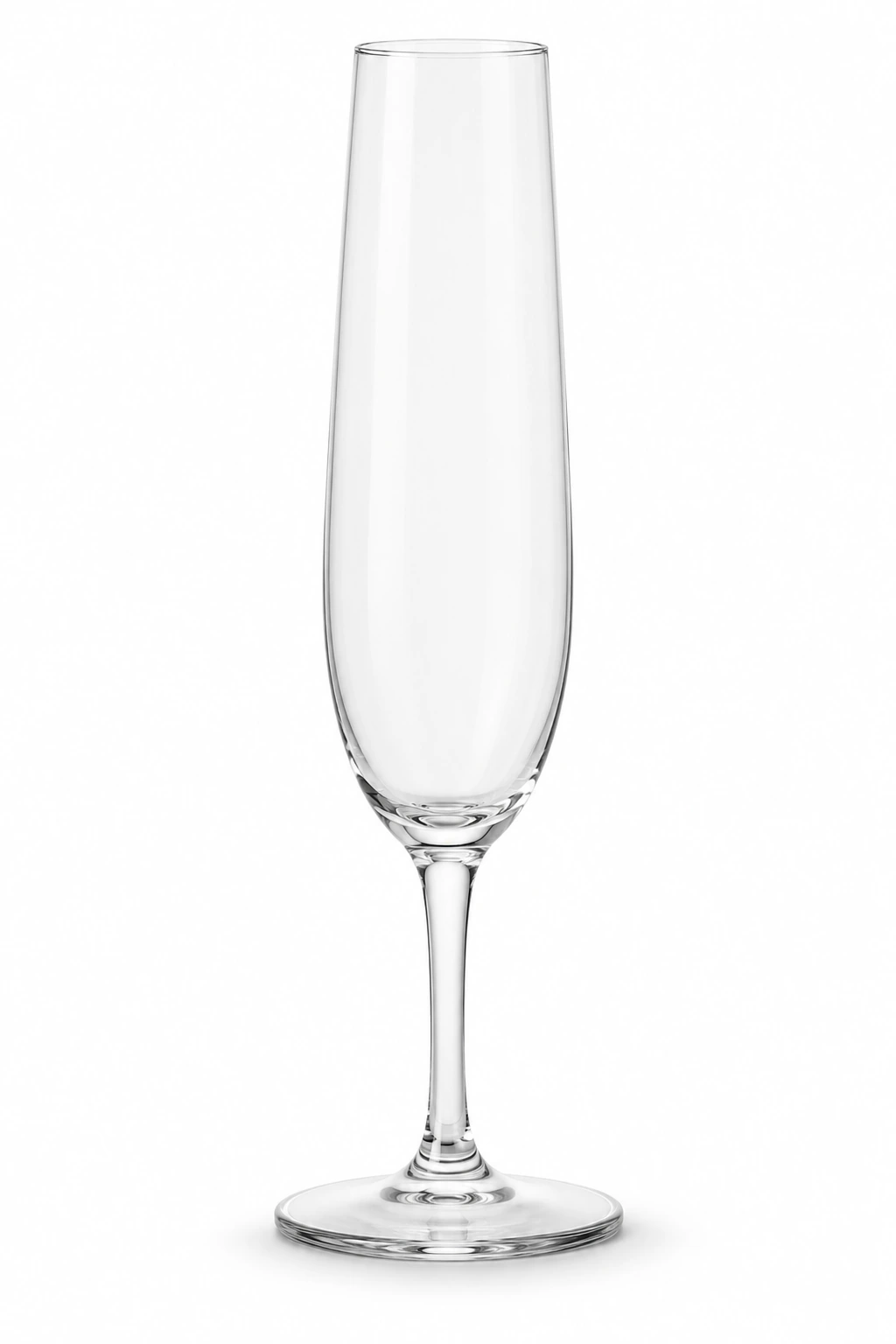
Review the stem connection
On a stemmed design, include the transitions between bowl, stem and foot in the visual review. A complete side profile is more useful than a cropped image of the bowl.
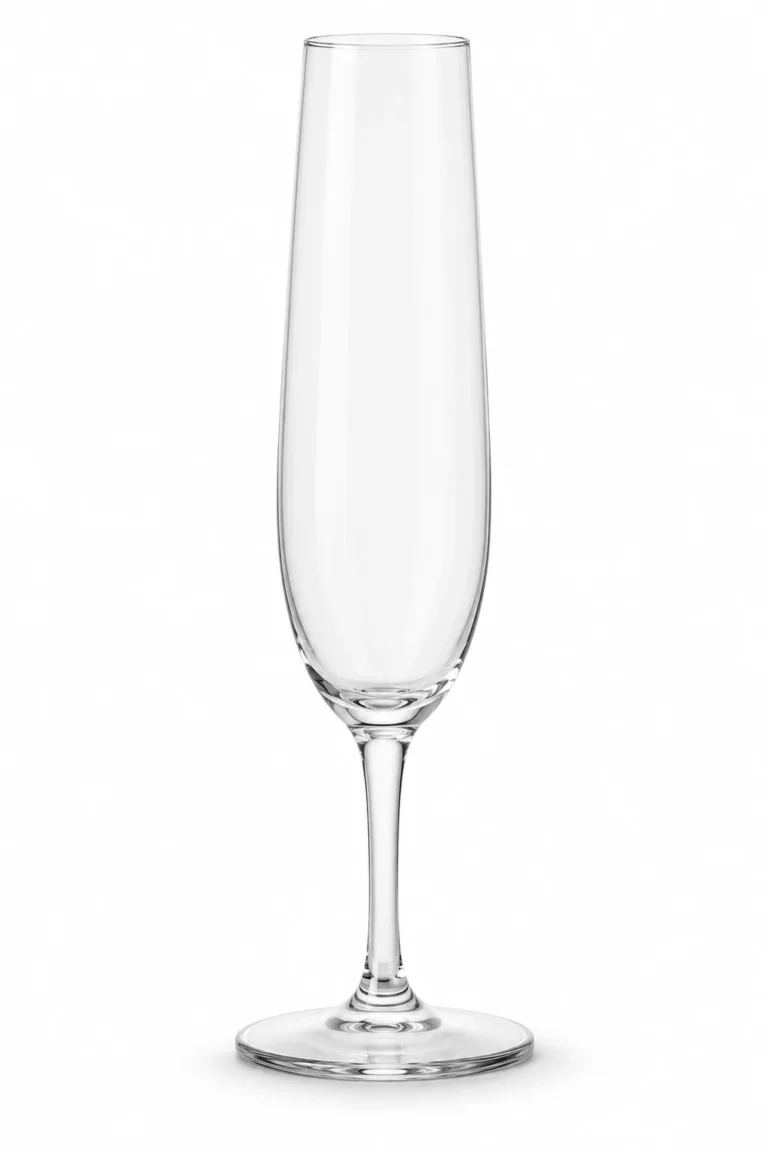
Review the Specification →Design reference for the slender flute outline. Confirm the actual bowl, stem, foot and complete height before specifying the retail or service version.
Measure the complete table footprint
Actual foot or resting base · widest bowl · table and tray spacing · complete physical sample.
Allow for the foot
For the goblet and flute, record foot diameter, full height and the stem position relevant to your rack. Provide the actual rail or shelf clearances and tray layout for sample review. The stemless reference needs its own resting footprint and bowl-grip space.
Review the Specification →Approve the mark at its finished size
Chosen bowl or other agreed marking area · viewing direction · intended pour line · decorated appearance reference.
Keep branding restrained and readable
Choose whether a mark belongs on the bowl or another suitable area. Assess its scale on the exact form so it does not obscure the intended drink presentation.
Review the Specification →Record the rack and handling routine
Full glass height and widest span · rack spacing · handling and care requirements · selected sample and use information.
Plan storage with the service team
Rack clearance and handling routines belong in the purchasing brief. Do not assume a delicate-looking design or familiar profile can follow another glass's washing and storage instructions.
Review the Specification →Treat Stemware as a Complete Form
Keep bowl, stem and foot dimensions together. If a stemless version is also proposed, give it a separate reference and pack layout. Similar bowl shapes do not make the two configurations interchangeable for service, artwork or transit protection.
Discuss Your Requirements →Explore Customization & Artwork Review →Separate the stemmed and stemless offers
Selected outline · complete dimensions · glasses per retail unit · sample and packaging approval.
Develop the Range Around the Setting
Share the intended table setting or retail assortment, along with the preferred profile and logo treatment. New shapes and decoration need review on the chosen construction. For a set, define the piece count and box orientation before final artwork is released.
Send a complete wine-glass specification
Bowl and rim profile · stem and foot where applicable · target pour · material, appearance and care requirements.
Sample Review & Production Planning
- Bowl profile: Provide the preferred outline, opening and normal serving level.
- Stem or stemless: Identify the format and any critical grip or height requirement.
- Overall envelope: Record total height, bowl width and foot diameter where applicable.
- Service constraints: Show rack, tray, shelf and washing requirements relevant to the venue.
RequirementsUse, quantity and destination
SelectionBody, components and appearance
Sample ReviewFunction, handling and packing
Order DefinitionAgreed model and specification
Final ReviewIdentification and delivery scope
From Selection to an Agreed Specification
| Specification | What to Review | Buyer Approval / Output |
|---|---|---|
| Bowl profile | Provide the preferred outline, opening and normal serving level. | Bowl reference |
| Stem or stemless | Identify the format and any critical grip or height requirement. | Form specification |
| Overall envelope | Record total height, bowl width and foot diameter where applicable. | Complete dimensions |
| Service constraints | Show rack, tray, shelf and washing requirements relevant to the venue. | Service brief |
| Retail unit | State set quantity, artwork and required presentation arrangement. | Set-pack specification |
Plan Your Borosilicate Glass Wine Glasses Project
Quote the selected wine-glass version with actual model and sample requirements, intended pour and full profile dimensions. State glass count per selling unit and total units, artwork, rack or venue constraints and the protective pack required for that form.
Request a Project Quote →Packing & Delivery Planning for Borosilicate Glass Wine Glasses
Stemware protection should keep the bowl, stem and foot from taking concentrated contact, with enough clearance around the complete shape.

Support the whole profile
Review the insert against the assembled glass instead of protecting the bowl while leaving the stem or foot exposed.
General packing concept showing a tumbler. Develop a separate insert for the actual wine-glass bowl, stem and foot where present, then approve the complete packed unit.
Keep stems and feet separated
Actual glass outline · contact-free spacing between pieces · protection during removal · complete packed sample.
Keep stems apart
Allow separation between neighbouring stems and feet so handling does not bring hard surfaces into direct contact.
Check the packed direction and removal
Chosen orientation · accessible grip position · insert contact points · buyer removal sequence.
Check the box orientation
Choose the packed direction around the actual shape, then assess how the buyer removes each piece.
Identify each retail-set version
Stemmed or stemless member · exact size and artwork revision · piece counts · unit and case labels.
Identify set versions
Keep stemmed, stemless and size variants clearly labelled to prevent an incorrect assortment reaching the retail box.
Plan Your Packing & Delivery
Share your order quantity, destination and retail or export packing requirements.
Discuss Packing & Shipping →Require Evidence for the Chosen Wine Glass
A borosilicate material description does not establish a particular stem construction, impact performance or commercial washing suitability. Request information for the exact proposed wine glass and service routine. Approval of an attractive concept image should remain separate from the physical model and its applicable use instructions.
Borosilicate Glass Wine Glasses for Different Buying Programs
Build the venue assortment around service
Intended wine and pour · glass quantities by role · table, tray and rack clearances · sample review.
A hospitality table range
Start with the venue's pouring and handling routine, then compare proportions against table and rack space.
Define the design-led retail set
Selected outlines and size mix · individual glass availability · set counts and carton dimensions · assembled pack sample.
A design-led retail set
Present a clear form and piece count, with packaging that supports the complete glass rather than just its bowl.
Plan a branded event collection
Event quantities · approved mark and position · handling and storage routine · protective receiving units.
A branded event collection
Consider mark visibility, service handling and the way the glasses are transported and stored between uses.
Define MOQ, Samples & Production Around the Brief
State set quantity, artwork and required presentation arrangement.
ModelNamed configuration and use
SampleAssembly to review
ArtworkFile, colour and position
PackingRetail and outer-carton scope
Bright Glassware Support for Wine-Glass Enquiries
A defined form for the enquiry
Bright Glassware can help develop a glass sourcing brief around the chosen stemless, goblet or flute proposal. We keep the actual model, material requirements and supplied unit clear in the availability and quotation discussion.
The full profile in one record
We support selected-model sample enquiries that include the bowl, rim and complete resting outline. Provide stem and foot dimensions where present, with your actual rack, tray and table-setting constraints.
Artwork on the selected glass
Logo and decoration proposals can be discussed for suitable glass. Show the intended bowl or foot position at its actual size, with the pour level and normal viewing direction included in the review.
A clear sample assessment brief
Specify the appearance, dimensional and service observations your team needs for the proposed model. We keep those requirements attached to the selected reference and sample, together with the requested use and care information.
Packing for stemmed or stemless sets
We can coordinate boxes and inserts around the complete glass form and count. Review bowl and foot support, stem clearance and separation between pieces on the proposed packed sample.
Counted versions for repeat enquiries
Our quotations can distinguish model, decoration and retail-pack configuration. Retain the approved profile, sample reference and piece count with the order lines for later range extensions or another purchase.
Questions About Borosilicate Glass Wine Glasses
How should I define the normal wine pour?
State the volume normally served and show the intended level inside the bowl. Keep that working pour and the desired headspace separate from the glass's total capacity.
Can I enquire about stemless wine glasses?
Yes, state the preferred form and use. Stemless and stemmed references need separate review because their handling, dimensions and packing requirements differ.
Which dimensions matter most for a wine-glass brief?
Include bowl profile and opening, total height, widest bowl dimension and foot diameter for stemware. Add the normal pour and any rack or table-space limits.
Can these glasses be used in a commercial dishwasher?
That requires information for the exact glass and decoration. Share the intended cleaning routine and obtain applicable model-specific instructions before planning service use.
What is needed for a wholesale quotation?
Provide a model or drawing, desired form, dimensions, quantities, artwork and set format. Availability and construction need review before commercial terms can be established.
Still Have a Product Question?
Send your requirements or a reference so our team can review your project.
Ask Our Packaging Team →Related Collections & Project Resources
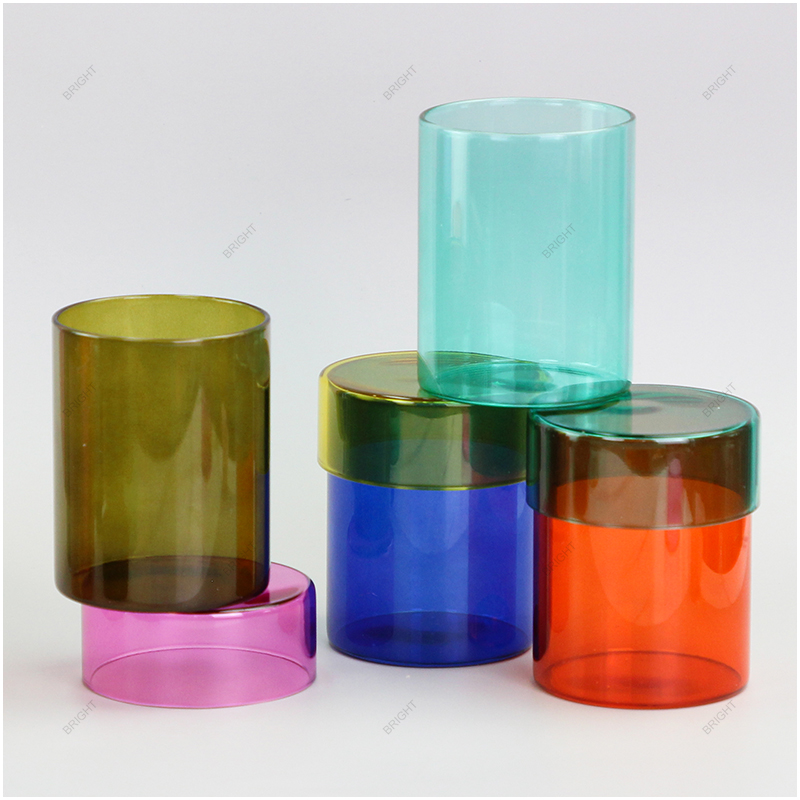
Borosilicate Glass Products
Explore Collection →Candle-jar example from the broader borosilicate collection. Wine-glass material, appearance and intended conditions need their own agreed samples.
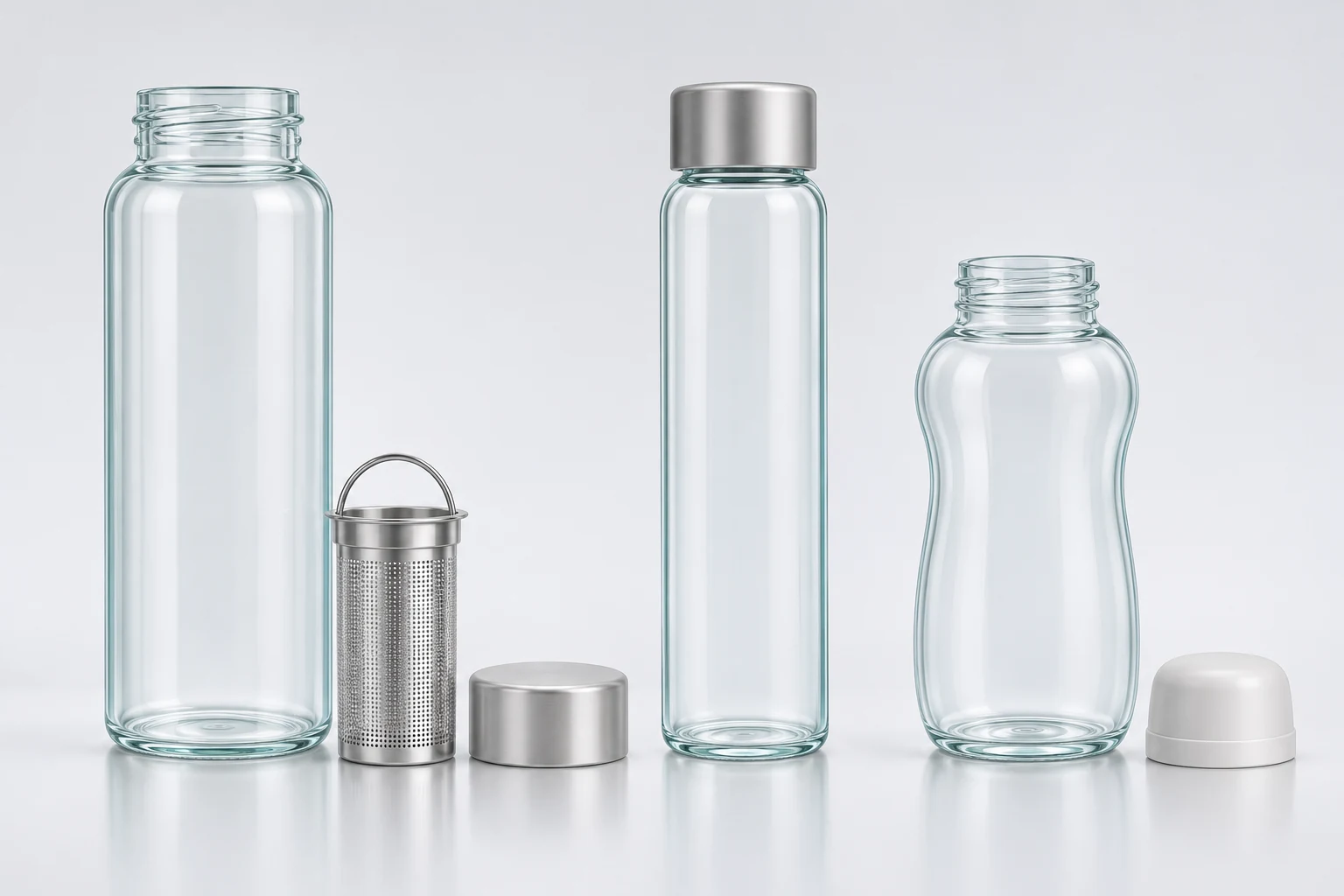
Borosilicate Glass Water Bottles
Explore Collection →Concept illustration for the separate water-bottle collection. Confirm the chosen body, closure and any accessories independently.
Specify the separate tea-bottle assembly
Chosen bottle and infusion arrangement · leaf separation and cleaning access · material and use information · complete sample.
Borosilicate Glass Tea Infuser Bottles
Explore Collection →Review the wine-glass pack as a unit
Bowl, stem and foot where present · separator contact positions · counted set · complete packed sample.
Custom Packaging & Inserts
View Resource →Start from the table, not the catalogue silhouette
A wine glass sits among plates, bottles and other stemware. Give the reviewer enough context to judge whether its height and footprint fit the intended setting.
Distinguish appearance from verified availability
A design illustration can communicate the desired profile, but it is not a stock or production record. Establish the proposed model before assigning product specifications to it.
Make the rack part of the brief
Storage clearances and handling space can be overlooked until samples arrive. Record them early so a form is not selected on visual appeal alone.
Keep the set decision separate from the glass decision
A practical individual glass may still need a different box arrangement for a multi-piece gift. Review protection and unboxing after choosing the complete form.
Browse Borosilicate Glass Product Categories

Drinkware & Tea
Borosilicate Glass Drinkware →Borosilicate Glass Water Bottles →Borosilicate Glass Tea Infuser Bottles →Borosilicate Glass Cups & Mugs →Double-Wall Borosilicate Glasses →Borosilicate Glass Tumblers →Borosilicate Glass Wine Glasses →Borosilicate Glass Straws →Borosilicate Glass Baby Bottles →Borosilicate Glass Teapots →Borosilicate Glass Tea Kettles →Borosilicate Glass Electric Kettles →Borosilicate Glass Pitchers & Carafes →Borosilicate Glass French Presses →Borosilicate Glass Coffee Makers →Borosilicate Glass Tea Infusers →

Storage & Kitchen
Borosilicate Glass Food Storage Containers →Borosilicate Glass Storage Jars →Borosilicate Glass Cookware & Kitchenware →Borosilicate Glass Cooking Pots & Pans →Borosilicate Glass Bakeware →Borosilicate Glass Bowls →Borosilicate Glass Measuring Cups →Borosilicate Glass Plates & Tableware →Borosilicate Glass Oil Dispensers →Borosilicate Glass Food Covers →Borosilicate Glass Popcorn Makers →Borosilicate Appliance Glass →Borosilicate Glass Air Fryer Dishes →

Bottles, Home & Custom Projects
Request a Quote
Talk to Our Packaging Team
Share the model, capacity, color, closure, decoration, packaging and estimated quantity you need. We can review the options with you.
Category: Borosilicate Glass Wine Glasses