Borosilicate Glass · Wholesale & Project Sourcing
Borosilicate Appliance Glass Wholesale
For appliance glass, an exact reference matters more than a similar silhouette. Identify the appliance or assembly, provide the interface dimensions, and define whether the request covers a glass part or a complete product.
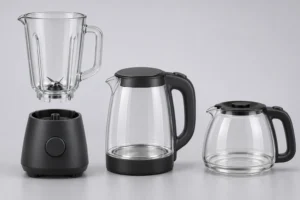
Appliance brands, service-parts distributors and OEM buyers can use these illustrated jug, bowl and carafe forms as design references. Confirm the proposed material and supplied configuration, then request a physical sample against the named machine and drawing revision.
Explore Borosilicate Appliance Glass
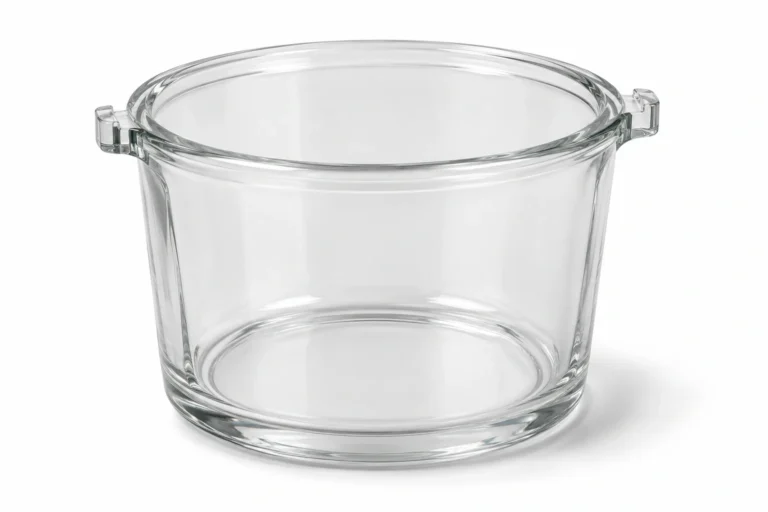
Review design references for a blender jug, a chopper bowl and a coffee-maker carafe. Provide the exact appliance model and component drawings, then define the proposed glass, lid, collar and any other requested parts individually for sample and supply review.
Need Help Choosing the Right Option?
Send the appliance model, original part number and revision, interface drawings and images of the mating parts. Include the requested glass and fittings, operating requirements, sample checks, quantity by version, packing and destination.
Start at the Interface with the Appliance
Define the supplied part
A glass body, a fitted jug and a complete appliance are different order scopes. Name the requested item before comparing dimensions or price.
Identify the connection
Mark the actual lower mount, rim seat, locating features and any proposed seal on the appliance-owner drawing. Include the required tolerances and mating components so the sample review follows the complete interface.
Retain the assembly reference
Keep the appliance and component references together through enquiry, sampling and repeat orders. An apparently minor revision can change the fit.
Appliance Glass Details That Need an Exact Reference
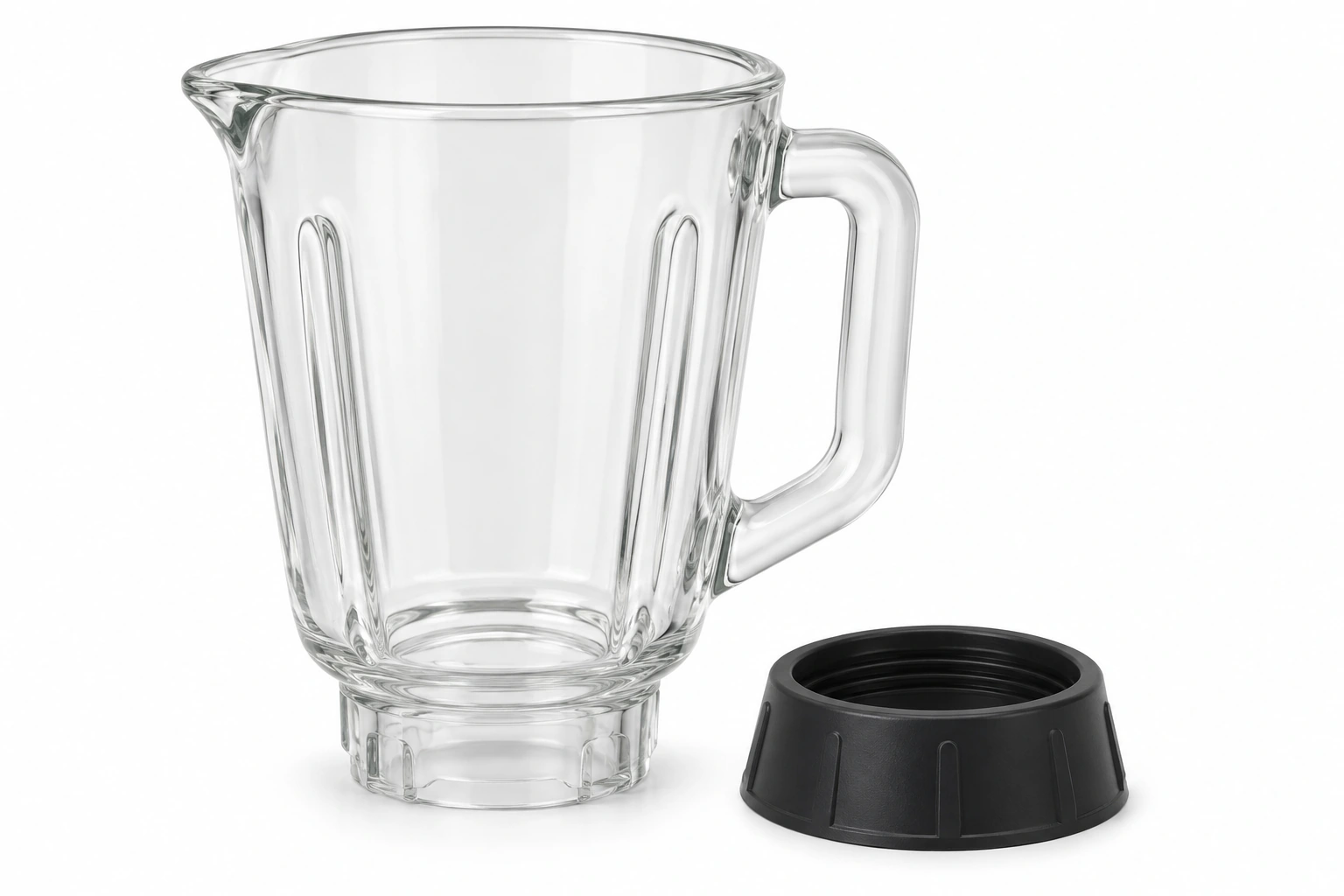
The base interface
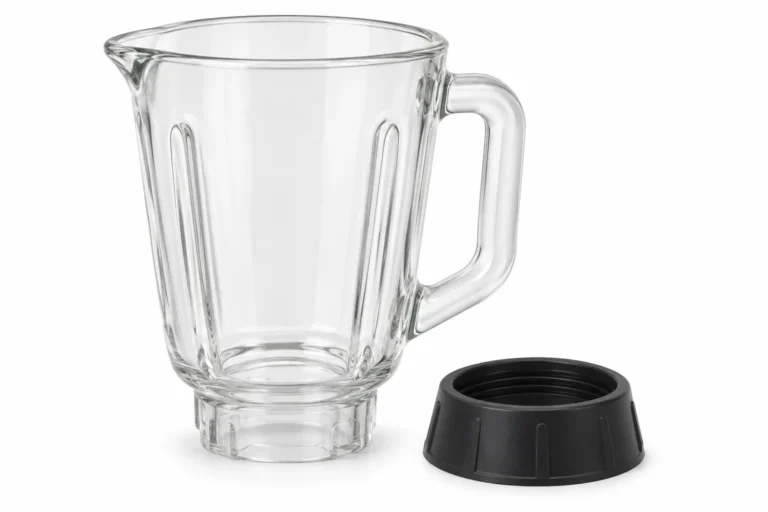
For a blender-jug proposal, supply the lower-mount and collar drawings. For a chopper bowl, show the locating-lug positions and relevant clearances. For a coffee carafe, record the receiving footprint on the named machine.
Review the Specification →Design reference for a blender-jug component and separate collar. Define the actual mounting profile and included parts against the selected machine drawing and physical samples.
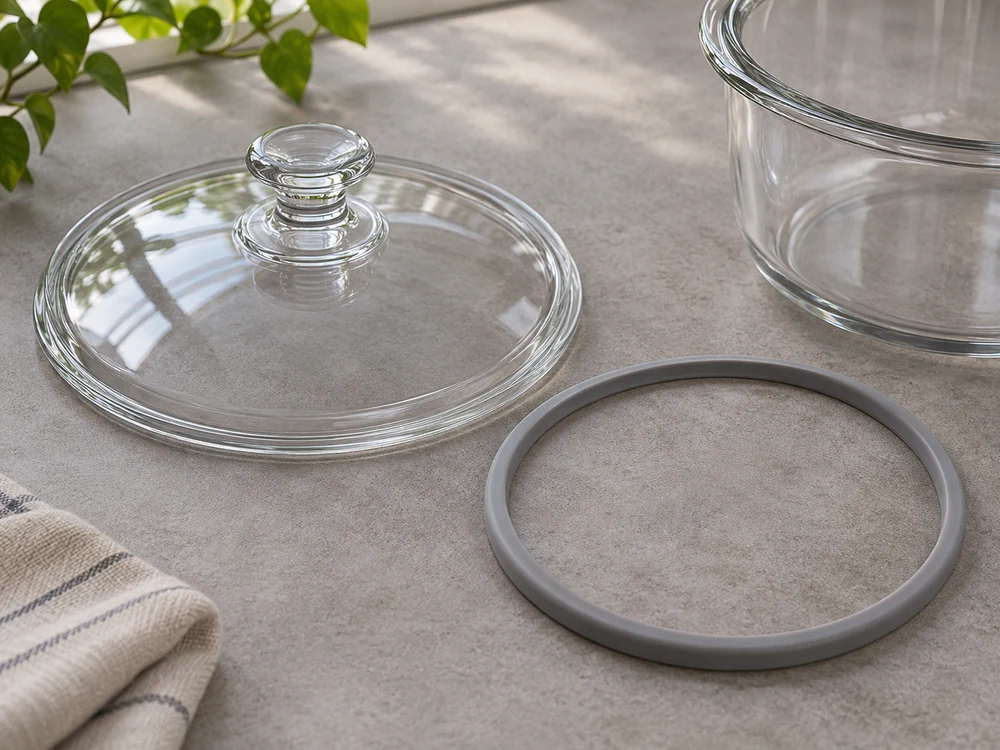
The sealing arrangement
Identify any proposed seal, retaining part and mating surface in the appliance-owner drawing. Confirm each component and its position on the sample assembly, with the required operating conditions provided by your team.
Review the Specification →Specify the proposed mating lid, any seal/contact parts and their dimensions separately.
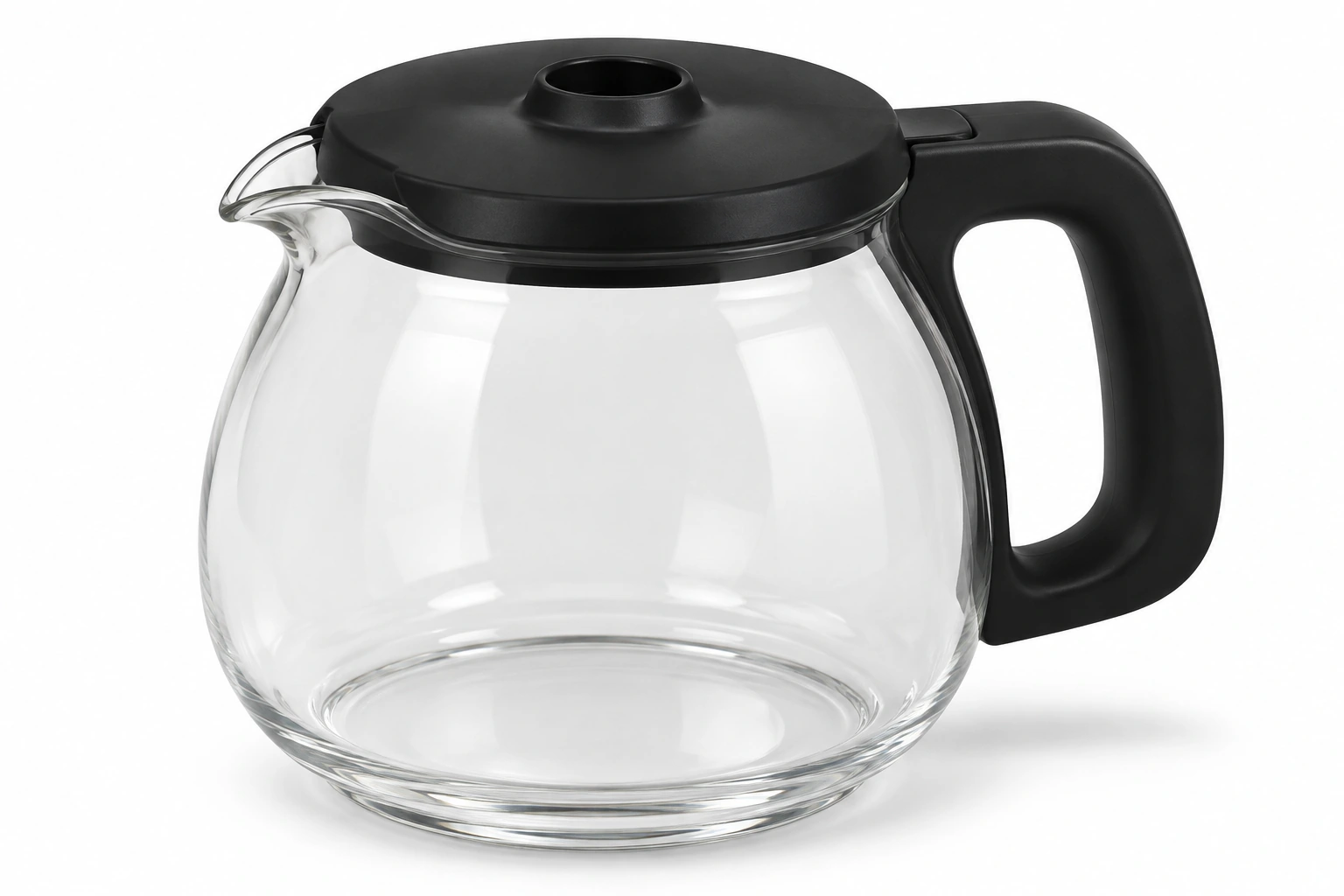
The lid
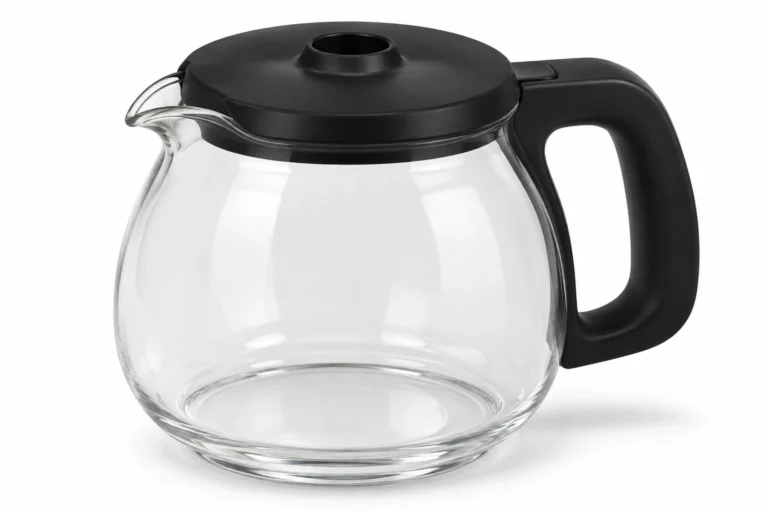
For a coffee-carafe proposal, locate the lid seat and inlet relative to the machine outlet. Supply any required contact or actuation detail from the appliance-owner drawing, then review that exact assembly on a physical sample.
Review the Specification →Design reference for a coffee-maker carafe and lid profile. Confirm the actual seating, inlet position, handle clearance and machine revision on the assembled sample.
Define the complete handle arrangement
Chosen glass body and handle version · fixing or contact details · machine and lid clearance · actual assembled sample.
The handle
Record handle clearance and overall width. These dimensions can affect the appliance envelope, handling and protective pack.
Review the Specification →Approve markings and orientation
Machine-facing reference direction · units and artwork if requested · lid, handle and base relationship · approved drawing and sample.
Markings and orientation
Show the intended scales, graphics and front-facing direction relative to the interface. This matters where the jug has a fixed fitted position.
Review the Specification →Record the replacement identity
Exact appliance model and revision · old-part reference or drawing · critical interface requirements · approved replacement sample and order code.
The replacement identity
If the brief concerns a spare part, use the exact model and revision reference. Do not replace that information with a broad brand or capacity description.
Review the Specification →Glass, Base and Seals Are One Fit Review
A complete jug may include more than the visible glass. Identify the base, gasket, lid and any locking details, and state which parts are supplied. Compatibility should follow the exact drawings and assembly review, not a claim of universal replacement.
Discuss Your Requirements →Explore Customization & Artwork Review →Specify every contact interface
Actual base, rim and any external feature · proposed collar, lid or seal · critical dimensions · supplied-part list and assembly sample.
Custom Appliance Glass Briefs
Provide the design drawing and explain which interfaces must remain unchanged. Keep cosmetic requests separate from changes to the base, seal or locking area. If the project includes an electrical appliance, its electrical and market requirements need a separate defined scope rather than being inferred from the glass component.
Prepare the component brief
Machine and part revision · physical mating parts or drawings · critical contact dimensions · feasibility and assembled-sample review.
Sample Review & Production Planning
- Part identity: Record the appliance model, component reference and revision so the proposed item has an unambiguous identity.
- Interface: Provide dimensioned sections and the appliance-owner tolerances for each mating interface. Identify the actual components used in the fit assessment and record the drawing revision with the agreed sample review.
- Assembly scope: List the glass, lid, gasket, base and other included parts rather than describing them as an unspecified jug.
- Markings: Specify units, graphic position and orientation relative to the fitted position of the part.
RequirementsUse, quantity and destination
SelectionBody, components and appearance
Sample ReviewFunction, handling and packing
Order DefinitionAgreed model and specification
Final ReviewIdentification and delivery scope
From Selection to an Agreed Specification
| Specification | What to Review | Buyer Approval / Output |
|---|---|---|
| Part identity | Record the appliance model, component reference and revision so the proposed item has an unambiguous identity. | Reference record |
| Interface | Provide dimensioned sections and the appliance-owner tolerances for each mating interface. Identify the actual components used in the fit assessment and record the drawing revision with the agreed sample review. | Engineering drawing |
| Assembly scope | List the glass, lid, gasket, base and other included parts rather than describing them as an unspecified jug. | Bill of parts |
| Markings | Specify units, graphic position and orientation relative to the fitted position of the part. | Artwork drawing |
| Order and pack | State the quantity per part version, individual protection and destination for the same defined assembly. | Quotation scope |
Plan Your Borosilicate Appliance Glass Project
Request the glass part or list the exact lid, collar, seal and other components required with it. Include the appliance and drawing revision, sample assessment, quantities by version, artwork orientation, packing and destination.
Request a Project Quote →Packing & Delivery Planning for Borosilicate Appliance Glass
Appliance glass may have a heavy fitted base or projecting handle. The protective pack should account for the part as supplied and keep separate fittings identified throughout transit.

Support the supplied assembly
Plan the insert around the actual weight and shape of the part, including any fitted base or handle.
Packing concept illustration. Protect the actual glass interfaces, handle and quoted components, then approve the packed receiving unit.
Protect the connection areas
Actual lower interface and rim · external feature or handle clearance · protected receiving position · approved packed sample.
Protect connection areas
Keep the interface and sealing surfaces away from loose components and neighbouring pieces during handling.
Identify each revision
Exact glass and component versions · machine/model reference · per-version quantities · individual and case labels.
Identify revisions
Label part versions clearly so similar bodies with different interfaces are not mixed in a shipment.
Separate the quoted fittings
Actual included collar, lid or other proposed part · fitted or loose delivery · protected positions · matched receiving counts.
Separate loose fittings
List and protect lids, seals and bases that travel separately, keeping them tied to the correct glass reference.
Plan Your Packing & Delivery
Share your order quantity, destination and retail or export packing requirements.
Discuss Packing & Shipping →Fit Is Not Established by a Silhouette
Use the exact appliance reference, drawings and relevant assembly evaluation when considering replacement glass. Matching capacity or appearance does not establish fit, sealing or operating suitability. A glass component review also does not establish the electrical conformity of a complete appliance.
Borosilicate Appliance Glass for Different Buying Programs
Prepare the appliance-development sample
Actual machine and mating parts · selected glass-body direction · interface and assembly criteria · agreed evidence and sample scope.
Appliance development
Provide the appliance-owner drawing for the glass interfaces, tolerances and operating conditions. Keep styling and markings attached to the same revision, with prototype and intended-use evaluation requirements defined for the proposed assembly.
Define the replacement requirement
Original appliance identity and revision · existing part or drawing · critical fit and supplied-component scope · approved replacement sample.
Replacement-part sourcing
Use the exact appliance model, original part number and revision. Identify mating parts that your team will reuse, then agree the sample and assembly assessment for that complete combination.
Approve the private-label component unit
Exact glass and proposed accessories · artwork and revision control · documented intended conditions · complete receiving sample.
Private-label assemblies
Keep the glass, fitted parts and graphic orientation connected so the supplied configuration follows the same approved product reference.
Define MOQ, Samples & Production Around the Brief
State the quantity per part version, individual protection and destination for the same defined assembly.
ModelNamed configuration and use
SampleAssembly to review
ArtworkFile, colour and position
PackingRetail and outer-carton scope
Bright Glassware Support for Appliance-Part Enquiries
Drawing-led enquiries
Bright Glassware supports glass sourcing and customization projects. We help turn the appliance model, component drawings and requested parts into a defined enquiry for feasibility and quotation.
A clear parts list
We can coordinate proposed lids, collars and relevant fittings with the selected glass project. Identify every requested component and confirm its availability and inclusion for that specific version.
Artwork in the fitted position
Logo and marking proposals can be discussed for suitable glass. Supply the required units, front-facing direction and keep-clear areas relative to the installed part, with the use requirements included.
Samples against your brief
We support selection and sampling around the proposed configuration. Provide the mating components, material requirements and dimensional or operating assessments your team needs before approval.
Packing around the connection
We can coordinate inserts and cartons around the supplied glass or assembly. Review the handle, locating features, connection surfaces and any separate parts on the proposed packed sample.
References for repeat orders
We help keep the selected glass, components, artwork and packing visible in the quotation. Retain the appliance model and approved drawing and sample revisions for subsequent enquiries.
Questions About Borosilicate Appliance Glass
Can a similar-looking jug replace an existing appliance part?
Appearance is not a fit specification. Use the exact appliance and part reference, interface drawings and relevant assembly review. Two jugs with similar capacity and outlines may have different bases, seals or locking details.
Does an appliance-glass enquiry include the blade base?
Only when it is stated in the scope. List each included part, including the base, gasket and lid, so the quotation distinguishes a glass body from a complete jug assembly.
What information is most useful for a replacement-part request?
Provide the model, part number or revision, dimensioned interface views and clear images of the mating components. Identify any parts that will be reused, since their condition and dimensions affect the assembly review.
Can markings be added to a glass body?
Submit the desired units, artwork and orientation for review against the proposed model. Markings should follow the fitted position and intended use, without implying a measurement accuracy that has not been established.
Does the glass material establish suitability for an electrical appliance?
No single material label defines the finished assembly. Component fit, operating requirements and the separate electrical scope must be considered for the exact product rather than inferred from the appearance or composition of the glass.
Still Have a Product Question?
Send your requirements or a reference so our team can review your project.
Ask Our Packaging Team →Related Collections & Project Resources
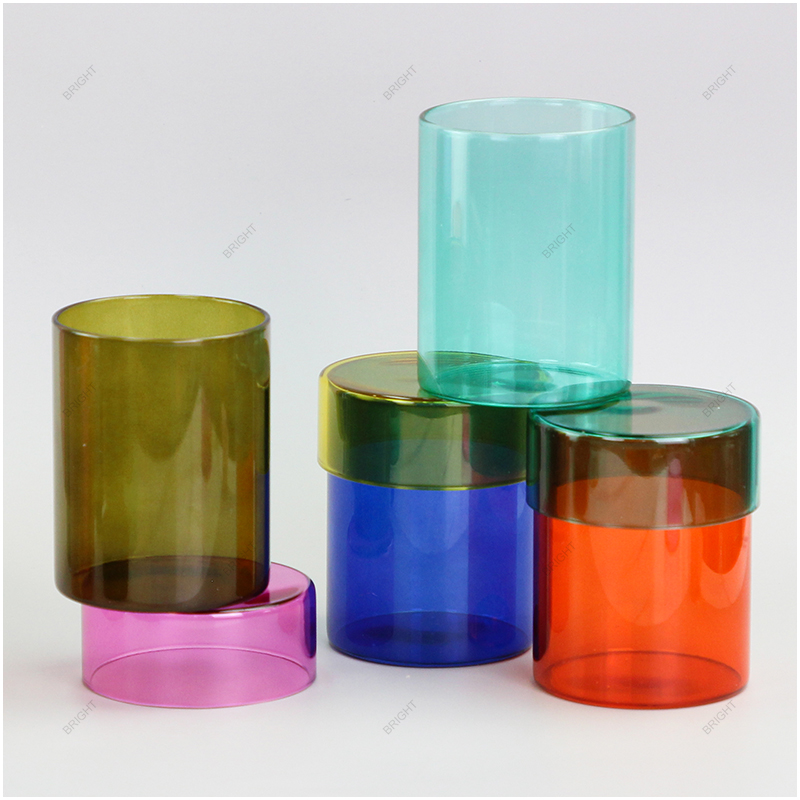
Borosilicate Glass Products
Explore Collection →Candle-jar example from the broader borosilicate collection. Appliance-glass material, interfaces and intended conditions need their own agreed samples.

Borosilicate Glass Cooking Pots & Pans
Explore Collection →Concept illustration for the separate cooking-pot collection. Specify each body, handle and lid configuration with its own intended-use requirements.
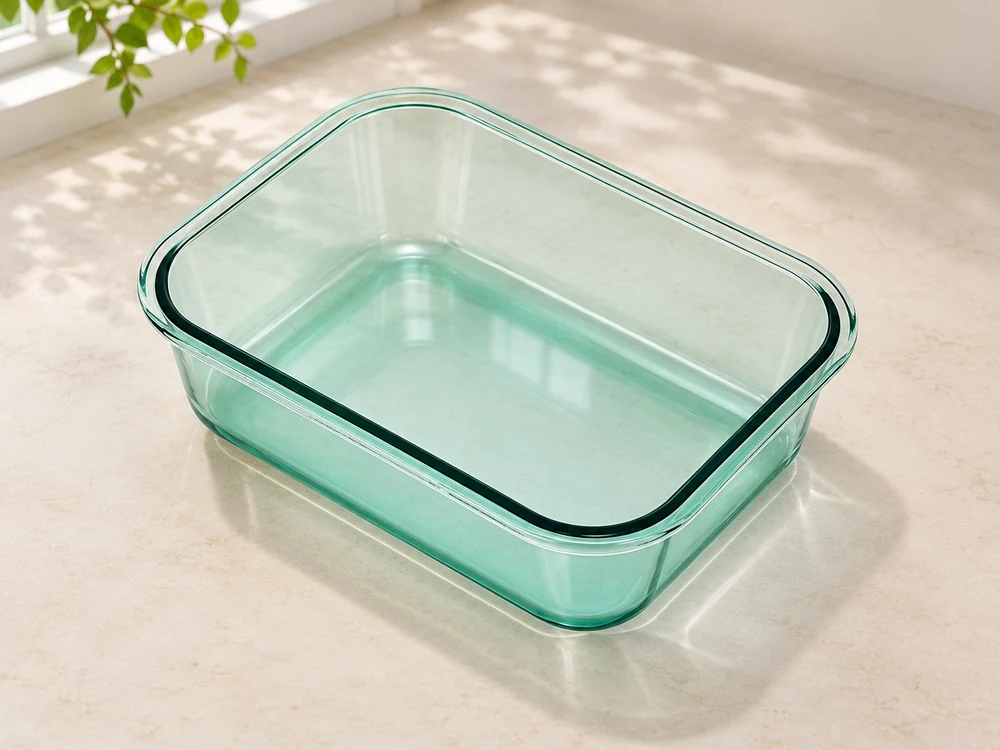
Specify the separate bakeware profile
Actual dish outline and useful fill · rim access · intended conditions · selected sample and supporting evidence.
Borosilicate Glass Bakeware
Explore Collection →
Custom Packaging & Inserts
View Resource →A replacement needs a revision
An appliance name can cover multiple versions. Retaining the part number or drawing revision helps distinguish changes in the base, lid and other interfaces that may be difficult to see in a catalogue photograph.
Draw the connection first
The most useful drawing often starts where the glass meets another part. Include the relevant sections and sealing details before refining external styling, because those interfaces define the assembly brief.
Define what arrives in the carton
A glass-only component and a fitted jug can require different protection and assembly work at destination. Keep that distinction visible in both the quotation and packing list.
Artwork belongs to the fitted position
A scale or logo may need to face a particular direction when the part is installed. Mark that orientation on the drawing so decoration is reviewed with the actual assembly rather than a loose glass body.
Browse Borosilicate Glass Product Categories

Drinkware & Tea
Borosilicate Glass Drinkware →Borosilicate Glass Water Bottles →Borosilicate Glass Tea Infuser Bottles →Borosilicate Glass Cups & Mugs →Double-Wall Borosilicate Glasses →Borosilicate Glass Tumblers →Borosilicate Glass Wine Glasses →Borosilicate Glass Straws →Borosilicate Glass Baby Bottles →Borosilicate Glass Teapots →Borosilicate Glass Tea Kettles →Borosilicate Glass Electric Kettles →Borosilicate Glass Pitchers & Carafes →Borosilicate Glass French Presses →Borosilicate Glass Coffee Makers →Borosilicate Glass Tea Infusers →

Storage & Kitchen
Borosilicate Glass Food Storage Containers →Borosilicate Glass Storage Jars →Borosilicate Glass Cookware & Kitchenware →Borosilicate Glass Cooking Pots & Pans →Borosilicate Glass Bakeware →Borosilicate Glass Bowls →Borosilicate Glass Measuring Cups →Borosilicate Glass Plates & Tableware →Borosilicate Glass Oil Dispensers →Borosilicate Glass Food Covers →Borosilicate Glass Popcorn Makers →Borosilicate Appliance Glass →Borosilicate Glass Air Fryer Dishes →

Bottles, Home & Custom Projects
Request a Quote
Talk to Our Packaging Team
Share the model, capacity, color, closure, decoration, packaging and estimated quantity you need. We can review the options with you.
Category: Borosilicate Appliance Glass