
The way colored glass bottles are made affects more than their appearance. For a candle buyer, perfume founder, or cosmetics quality team, it changes which finish needs approval, how the package should be evaluated, and what must stay consistent on the next order.
Start with body-colored glass when an available shade and bottle meet your design and product requirements, and you want color without an added decorative color film. Start with spray-coated glass when a particular brand shade, matte or soft-touch finish, opaque appearance, or gradient is essential. Then qualify the complete package for its contents and use.
A useful comparison should tell you which route deserves a sample, which risks need checking, and what information the supplier needs for a meaningful quotation.
Body-Colored or Spray-Coated Glass: Which Should You Choose?
Body-colored glass has its color within the glass material. Spray-coated glass gains a decorative layer after the bottle or jar has been formed. Both routes can produce attractive packaging, but they solve different buying problems.
If an existing amber, blue, or green bottle gives you the appearance you need, body color is a sensible first option. There is no separate decorative color film to qualify for adhesion. The glass, printed logo, closure, and finished product still need their own checks.
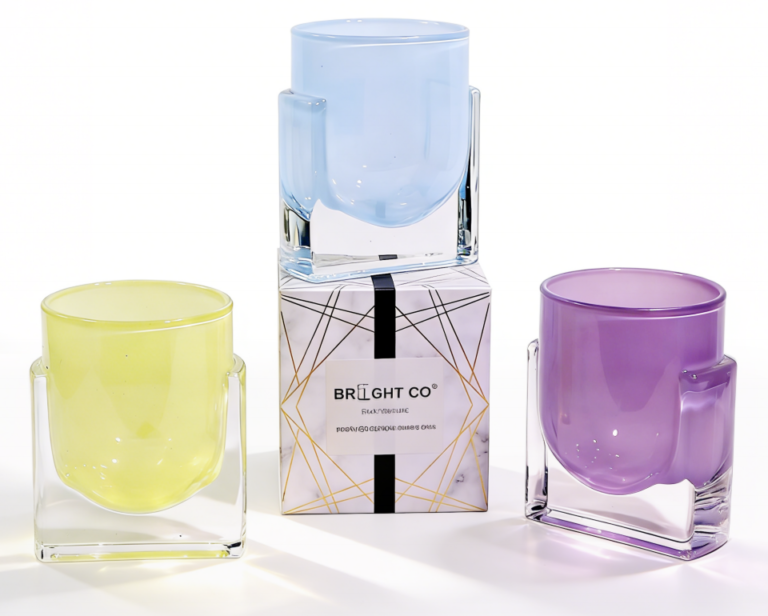
If the package must express a specific brand color or surface effect, compare a coated version of a suitable base bottle. Spraying lets the brief address color, transparency, gloss, touch, and gradient layout separately. The selected coating then becomes part of the product specification.
| Your main priority | A practical starting point | What decides the purchase |
|---|---|---|
| An available translucent amber, blue, or green appearance | Body-colored glass | The actual shade, bottle design, closure fit, and application requirements. |
| A specific brand shade, matte feel, or gradient | Spray-coated glass | The approved finished sample and the coating's performance in use. |
| Fewer exterior color-layer requirements | Body-colored glass without an added color coating | Whether the available appearance meets the brief; other decoration still needs approval. |
| Protection for a light-sensitive formulation | Compare packages with relevant transmission evidence | The formulation's needs and the actual package's performance. |
| Several color variants on one bottle design | Compare a common base bottle with different coatings | Base-bottle availability, each finish's approval, and the cost of holding decorated stock. |
| A candle vessel | Qualify the jar and finished candle, then choose the color route | Container suitability, decoration coverage, and the completed candle's evaluation. |
This is a starting order for sampling. A color route alone does not establish a durability grade, formula compatibility, or candle suitability.
How Are the Two Types of Colored Glass Made?
Body-Colored Glass: Color Before Forming
The glassmaker introduces a controlled coloring system into the glass before the container is formed. The Glass Packaging Institute explains glass coloring, including coloring during melting and suitable forehearth processes.1 An unfamiliar shade therefore does not automatically mean a whole furnace must be dedicated to your order.
The broad sequence is batch preparation, melting and conditioning, forming, annealing, and inspection. O-I's glassmaking overview and Bucher Emhart Glass's container-forming guide explain these stages.23
For procurement, the important question is whether you are selecting an existing bottle in an existing glass color or requesting a new bottle or color program. Those are different quotation and supply situations.
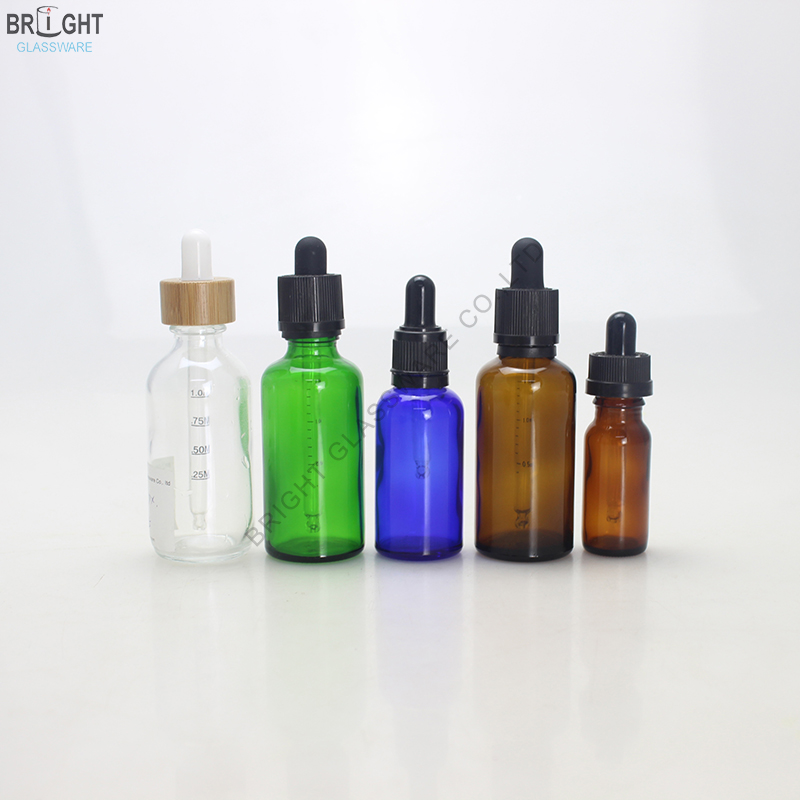
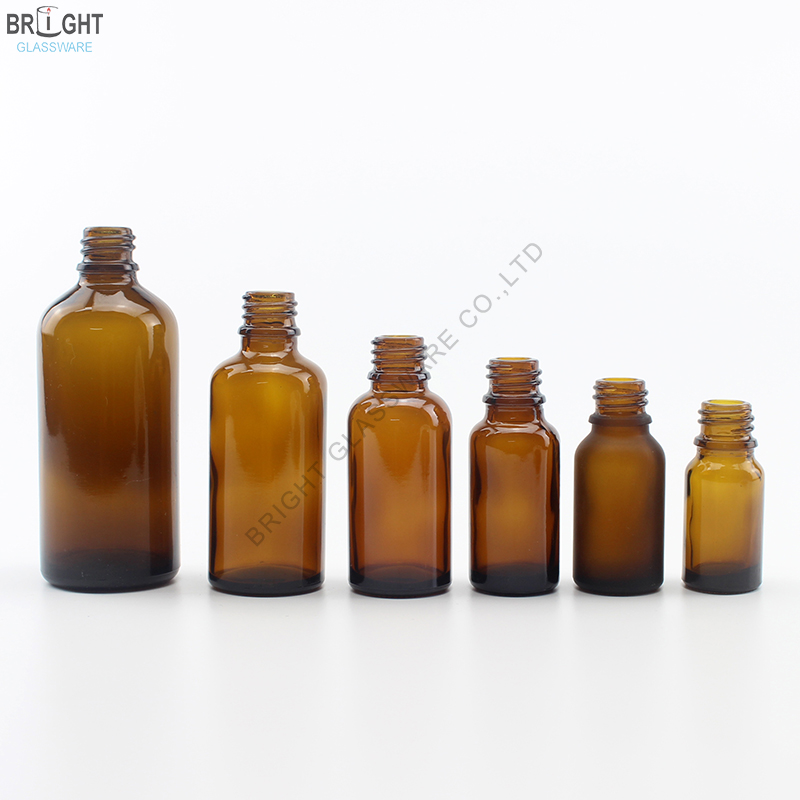
Bright Glassware's supplied amber, blue, and green bottle series are body-colored products. Compare the actual bottle and shade available for your project.
Spray-Coated Glass: Color After Forming
A suitable formed bottle is inspected, cleaned, prepared, coated, and cured using the selected material system. The underlying glass still matters: a glossy finish can make ripples, mold lines, or other surface irregularities more noticeable.
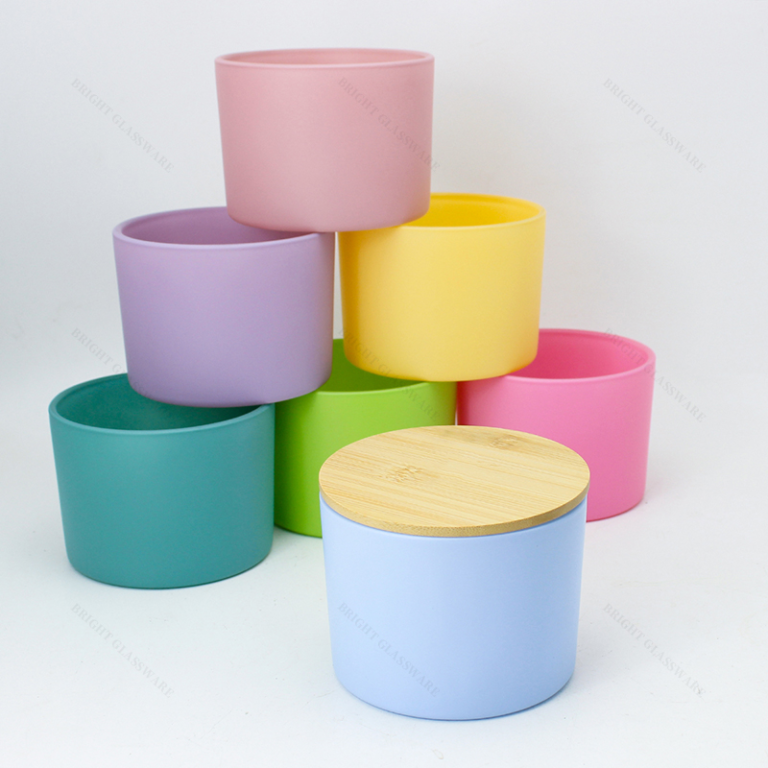
At Bright Glassware, our process options include ionized-air dust removal, surface cleaning, automated multi-axis spraying, and thermal or UV curing appropriate to the coating. Our decorative options include translucent colors, opaque-looking solid colors, matte or soft-touch effects, and two- or three-color gradients.
The buying implication is straightforward: approve the base bottle and the finished decoration together. A color code alone leaves transparency, gloss, coverage, and feel unresolved. A metallic-looking design also needs its actual decoration route identified; a mirror appearance does not establish that it was spray-coated or electroplated.
What Should Candle Procurement Teams Prioritize?
For a core candle range with an acceptable existing translucent shade, body-colored glass deserves an early sample comparison. It provides the color without adding a decorative color film. For a collection built around matte black, an opaque brand color, soft touch, or a seasonal gradient, an exterior coating may better meet the visual brief.
Choose between qualified candle containers. A perfume bottle or general-purpose jar does not become a suitable candle vessel because its color is inside the glass.
The US Consumer Product Safety Commission's candle guidance lists separate industry consensus standards for candle glass containers and candle fire safety.4 This distinction matters when reviewing supplier evidence: a container assessment and a completed candle assessment answer different questions.
When comparing glass candle jars, ask for samples that let your team assess:
- The vessel: The selected glass, dimensions, condition, and evidence relevant to the intended candle application.
- The decoration: Coverage boundaries, appearance after the intended filling and candle-use conditions, and any relevant handling or rubbing checks.
- The finished candle: The actual jar, wax, wick, fragrance, and decoration combination under your agreed evaluation procedure.
- The presentation: The jar with its lid, label or print, and protective packaging.
For sprayed candle containers, Bright Glassware uses rim and interior masking to control the coating area. Put the agreed boundary into the sample approval and check the actual rim and inside. Masking is one manufacturing control; it does not replace evaluation of the completed candle.
The commercial decision is to buy the finish that supports the range after these requirements are met. There is little reason to add a color coating solely to reproduce an available body-colored appearance unless it provides another required benefit. There is also little reason to compromise a distinctive matte or gradient design solely to avoid a coating that can meet the project's criteria.
How Should Perfume and Cosmetics Buyers Compare the Options?
For a Perfume Founder: Balance Brand Identity With Exposure in Use
Body-colored glass is a useful starting point when an available translucent shade supports the design. A spray finish deserves comparison when the brief calls for a particular shade, a gradient, an opaque appearance, or a tactile surface.
Review the bottle filled and assembled with the intended pump and cap. The liquid's color, the bottle's transparency, the spray hardware, and the closure can change the final appearance. A satisfactory empty-bottle color is only part of that approval.
For coated bottles, distinguish two requirements:
- Exterior resistance: What happens when the finished perfume spills, drips, or is wiped from the decorated surface?
- Product compatibility: How do the formulation and the complete contact system behave together, including glass, pump, dip tube, seals, and any other contact components?
An exterior coating does not automatically contact the contents. Confirm where it is applied, especially around the neck and opening. Conversely, body-colored glass still needs the selected formulation and dispensing system evaluated.
Coatings developed for fragrance exposure do exist. For example, Sherwin-Williams describes cosmetic glass-coating systems with perfume and ethanol resistance.5 That is evidence that performance depends on the material system, rather than a reason to assume every sprayed bottle performs alike. It does not identify the coating used by Bright Glassware.
Compare the proposed glass perfume bottle as a complete pack. Use the actual fragrance for relevant exposure checks; an unspecified alcohol wipe cannot settle every perfume formulation's effect on a finish.
For Cosmetics Quality Teams: Separate Protection, Compatibility, and Appearance
For a serum, oil, or cream, first establish what the formulation needs from the package. Ask your formulator and quality team about light exposure, product-contact materials, storage, dispensing, and expected consumer handling. These requirements should guide the color choice.
If light protection matters, amber body-colored glass is a reasonable candidate to investigate. GPI describes the shorter-wavelength absorption of common amber glass.1 The purchase decision still needs evidence for the actual container and the formulation's relevant exposure. A blue shade, a dark color, or an opaque-looking coating is not a measured protection specification.
Define three separate approvals: protection of the contents, compatibility of the filled package, and durability of its exterior. A finish can look unchanged while the formulation changes; a stable formulation can also sit in packaging whose exterior marks during handling.
Cosmetics Europe's stability guidance considers both the product's stability and interactions between the contents and packaging.6 ISO/TR 18811 likewise leaves the choice and justification of stability protocols to the manufacturer for the particular product and conditions.7
Ask the responsible team to define the relevant checks on the intended filled pack. Buying body-colored glass removes one decorative color layer from the assessment; it does not remove the need to assess the glass, closure, liner, dropper, or dispenser selected for that product.
Which Route Gives You Better Cost and Reorder Control?
Compare Equivalent Supply Options
Separate these quotation scenarios:
- An existing bottle in an existing body color.
- A new bottle or newly developed body color.
- An available base bottle with a selected spray finish.
Comparing a standard amber bottle with a newly developed coated design will tell you about those two proposals. It will not establish that one coloring route is always cheaper.
Compare the cost of the accepted finished pack: bottle, decoration, sampling or tooling, printing, closure, protective packaging, inspection, and delivery. Ask what is included and what changes if the order is split across several colors.
A common base bottle may be useful for a fragrance or candle collection with multiple finishes, where its availability and component fit are confirmed. However, each decoration still needs approval, and finished color variants create their own inventory decisions. Ask where stock would be held before treating this as a lead-time or working-capital benefit.
Make Reorders Repeatable
Body color still needs an approved shade and viewing conditions. Coating needs an approved color, transparency, gloss, feel, and coverage. Neither route should be reordered from a screen image alone.
At Bright Glassware, we use a color reference together with a physical sample to confirm custom color. For repeat orders, identify that sample and the bottle, closure, print, and finish it represents. Review the walls, shoulder, and base, and agree whether comparison is made empty or filled.
Ask the supplier to notify you before a relevant change to the base bottle, color material, coating system, decoration sequence, or processing route. Your team can then decide what needs reapproval. This is more useful than an unsupported promise of identical color forever.
What Should You Approve Before Placing a Bulk Order?
Turn the preferred route into a written purchasing specification:
- Container and contents: Identify the bottle or jar, capacity requirement, neck and closure, formulation or candle system, and intended use.
- Color route: Record body color, an exterior coating, or a combined decoration system. Confirm which surfaces receive each treatment.
- Appearance reference: Retain the agreed physical sample, color reference, transparency, gloss or touch, and any gradient layout.
- Relevant performance: Agree on the required light-protection, compatibility, candle-use, handling, rubbing, or liquid-exposure checks, with methods and acceptance criteria appropriate to the project.
- Complete decoration: Include the logo, label, hot stamping, or other finish. Review screen printing over the selected surface as part of the complete decoration system.
- Packing and supply: Confirm where the decorated surface contacts inserts and other items, plus order quantities by color, quotation scope, schedule, and reorder arrangements.
Ask for a sample that represents the proposed production specification. An attractive photograph cannot replace that reference or the records needed for your approval.
For a useful glass packaging customization brief, tell the supplier which requirement is essential and where you can accept alternatives. An existing amber shade, an exact brand-color target, and a matte gradient are three different briefs. Making that distinction early helps the supplier propose relevant options.
Frequently Asked Questions
Is body-colored glass more durable than spray-coated glass?
Body color has no separate decorative color film to peel or lose adhesion. The glass can still scratch or chip, and any added print needs assessment. A coated bottle adds a finish whose adhesion, handling, and liquid resistance must match the intended use. Compare the actual finished systems against the same requirements.
Will a spray coating affect the perfume or cosmetic inside?
Confirm the coating location and every product-contact component. An exterior-only coating and the bottle's interior have different exposure conditions. Evaluate the formulation in the intended complete package, and check spills or wiping against the exterior separately.
Is spray coating always better for a small order?
No universal minimum order applies to the route. Ask whether the base bottle and body color are already available, how the coating order is organized, and how quantities are divided among shades. Obtain the minimum quantity and schedule for the actual proposal.
Can the same bottle design support several colors?
Potentially, if the proposed bottle, closures, and decoration routes are compatible and available. Confirm each finished appearance and any checks affected by the change. A shared shape does not mean every color or finish has the same performance or supply terms.
Conclusion
Choose body-colored glass first when an available bottle and shade meet your requirements and you want color without an added decorative color film. Choose spray-coated glass first when the brand brief depends on a specific color or surface effect.
For candles, qualify the vessel and completed candle. For perfume and cosmetics, distinguish exterior finish resistance from the filled package's compatibility and protection of the contents. Then compare complete quotations and approve a production reference that can guide reorders.
To compare both routes for your project, contact Bright Glassware with the intended product, bottle or jar reference, desired appearance, closure, quantities by color, and the checks your team needs. This gives us a practical basis for discussing a body-colored option and a decorated alternative.
Glass Packaging Institute, Glass Coloring. General coloring routes and amber-glass absorption; not performance evidence for a particular Bright Glassware container. ↩
O-I, Inside the O-I Glass Making Process. General manufacturing sequence. ↩
Bucher Emhart Glass, Making Glass Containers. General forming and annealing stages. ↩
US Consumer Product Safety Commission, Candles Business Guidance. Separate industry consensus standards for containers and candles. ↩
Sherwin-Williams, Glass Coatings. A coating manufacturer's published cosmetic-glass applications; not a statement that Bright Glassware uses its products. ↩
Cosmetics Europe / CTFA, Guidelines on Stability Testing of Cosmetic Products, 2004. Product stability and packaging interaction considerations. ↩
ISO/TR 18811:2018, public abstract. Selection and justification of product-specific cosmetic stability protocols. ↩
Keep Reading