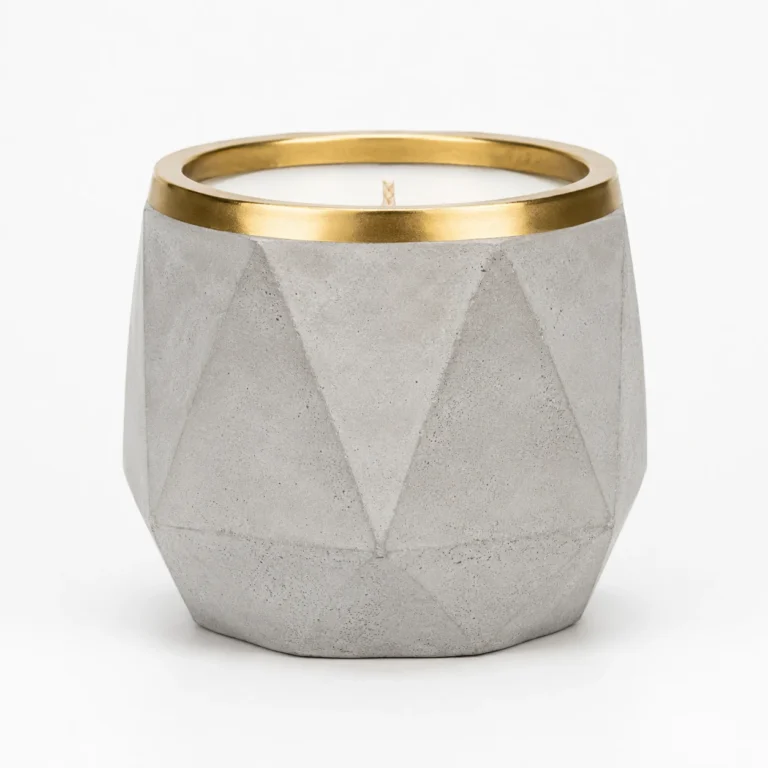

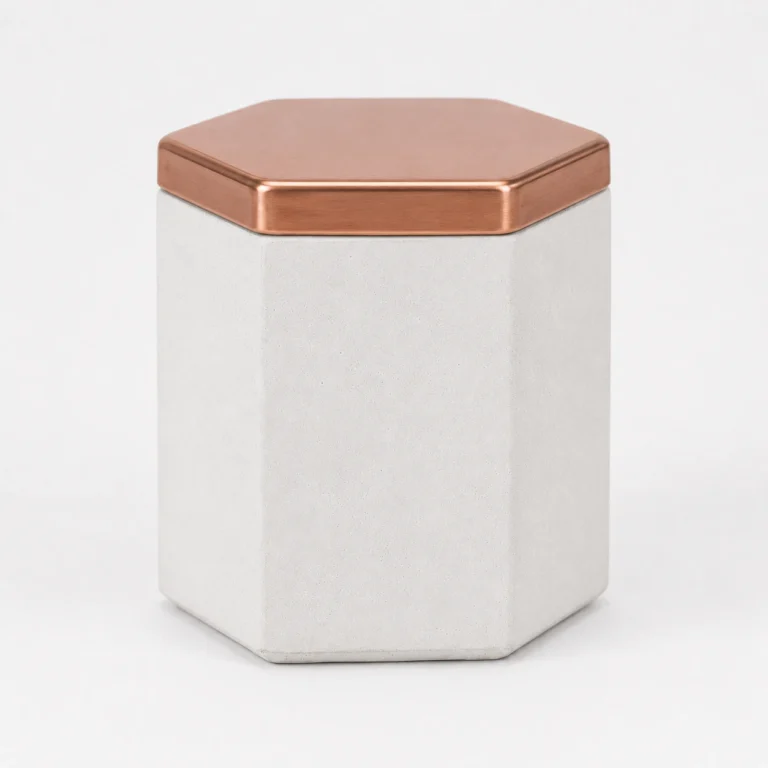
Concrete candle jars are mineral-based candle vessels chosen for their substantial weight, tactile surface and architectural appearance. Concrete, cement and related mineral composites can differ in porosity, sealing, wall thickness and dimensional consistency, so buyers should evaluate the exact vessel construction rather than selecting by appearance alone.For candle projects, confirm the internal surface or sealer, usable wax fill, inner geometry, rim dimensions, base stability and lid fit on production-representative samples. Complete burn testing with the intended wax, fragrance and wick system before mass production, and approve acceptable variation in color, pores and surface texture as part of the quality standard.
Available Products
Showing 1–2 of 2 products
Need help choosing?
Share your target size, shape, finish, closure, branding or packaging needs. We can shortlist suitable options before you order samples.
Buyer Guide
Review the key criteria before sampling or quotation. The information is grouped by decision stage so buyers can scan what matters without reading a wall of text.
Discuss Specifications →Confirm whether the candle cavity uses a sealer, liner or other internal treatment and approve that construction for the intended wax and fragrance system.
Use actual internal dimensions and required headspace to establish commercial wax fill and wick-development space.
Define the acceptable range for natural-looking pores, color variation and tactile texture on physical samples.
Review finished vessel weight, base flatness, rim dimensions and matched lid fit before packaging is finalized.
Record the usable internal diameter and depth at the intended wax-fill level.
Confirm the actual finished wax weight after headspace rather than relying on nominal vessel volume.
Use finished production dimensions when matching lids or other accessories.
Include vessel and finished-candle weight in retail-box and export-carton planning.
Define acceptable pores, color variation, coating or sealer coverage and visible surface defects.
FAQ
Quick answers to the questions that most often affect product selection, sampling and quotation.
No. A container being made of glass does not automatically make it suitable for candle use. Select a model intended for candle applications and evaluate the complete candle system: vessel geometry, wax, fragrance load, wick, fill level and intended burn conditions.
Before launch, run controlled burn tests with production-representative jars. Decorative appearance alone is not enough to approve a vessel for a candle program.
Start with the planned usable wax fill, target burn format, wick layout, label area, lid, box and desired shelf presence. Review outside dimensions together with the internal diameter and actual usable volume.
A wider jar may require a different wick configuration from a tall narrow jar. Request the drawing and sample, then confirm fill weight, component fit and burn performance before production.
Yes. Existing product samples are useful for checking size, weight, appearance and basic fit. Decorated or component-matched samples are more appropriate when color, logo, coating, lids, applicators or retail packaging are important to the decision.
Sample availability, charges, decoration cost and courier freight depend on the project. Use the approved sample or specification as the reference before bulk production begins.
Export packing is selected according to product shape, weight, finish, accessories and shipping method. Common protection includes partitions, molded trays, inner bags or wraps, cartons, corner protection, pallet wrapping and extra separation for decorated surfaces.
Heavy, shaped or protruding products need different protection from simple round containers. Final packing should be approved with the actual product and component set rather than copied from another model.
Request a Quote
Share the size or capacity, style, finish, closure, branding or packaging requirements you already know. We can recommend suitable existing models and the next sampling or customization step.
We can narrow existing models before you spend time comparing every option.
Decoration, color, closure and packaging can be reviewed together with the selected container.
Confirm appearance, fit and decoration on samples before bulk production.