
Developing a robust strategy for packaging and shipping candles can feel daunting, especially when your brand's reputation is on the line with every delivery. A study of bottled-water packaging linked perceived package quality with consumption satisfaction and brand perceptions.1 For candle brands, damaged containers or presentation can create replacement costs and customer complaints. A thoughtful packaging plan gives your team a clearer basis for reducing transit damage and checking deliveries against agreed requirements.
Plan candle protection at several levels: the vessel and any lid, the inner restraint or separation, any retail or gift box, and the outer transport package. Choose and assess the complete configuration for the actual shipment, whether it contains empty containers, individual finished candles, or bulk cartons.
That's the high-level view, but success is found in the details. Each component, from the lid's fit to the type of cardboard used, plays a critical role. Let's break down each stage of the process to build a comprehensive plan that protects your product, delights your customers, and strengthens your brand.
What Should Your Candle Packaging Protect During Shipping?
Are you worried your boxes aren't strong enough for shipping? You should be, but the box is only part of the story. The forces of transit—shock, vibration, and compression—attack every part of your product. Your goal is to identify the relevant hazards and evaluate protection for the complete product and package.
FedEx advises selecting a suitable box, restricting movement and protecting fragile items individually.2 The specific risks depend on whether you are shipping empty jars to a filler or finished, wax-filled candles to a distribution center.
At the packing stage, account for every item in the final pack layout and secure all loose components before dispatch.

Dive Deeper: A Holistic View of Product Protection
First confirm the shipment’s state and destination. We generally do not fill candles unless the customer makes an explicit request; any such work needs separate project agreement. Specify whether empty containers or finished candles are being shipped, and who is responsible for filling, assembly, packaging approval, and shipment release.
Protecting the Vessel
Glass breakage and its operational consequences are concerns discussed in glass-shipment monitoring guidance.3 Assess how the package cushions expected impacts and avoids damaging contact or concentrated loads on the glass.
- Impact: Select cushioning and outer packaging for the actual product weight, geometry, handling route, and agreed evaluation.
- Vibration: Assess movement and contact within the assembled package; restraint should control shifting without creating damaging pressure on the vessel.
- Compression: Specify the carton construction and evaluate the assembled load for the intended stacking, storage, and handling conditions. A board grade or wall count alone does not establish complete-package performance.
Safeguarding Surface Decorations
Print durability can be evaluated separately from label adhesion, including resistance to rubbing.4
- Abrasion: Lids, accessories, or even the inner packaging itself can scuff the surface during transit. Soft-touch materials or a thin protective bag can help.
- Chemical Reaction: Ensure the materials in your inserts or cushioning won't react with or transfer color to your jar's finish. Assess the complete packaging assembly under the conditions agreed for the project.
Securing the Wax and Lid
For finished candles, include the wax surface, fill position, and any lid in the protection assessment.
- Lid Dislodgement: A loose lid can rattle and chip the jar rim or scratch the surface. The inner packaging must hold it firmly in place.
- Wax Integrity: CandleScience reports shrinkage and pull-away after cold exposure in its tests of a particular wax blend.5 In hot weather, it can soften or melt. Thermal exposure depends on the complete formulation, duration, storage and transit conditions, and any qualified thermal protection.
- Contamination: A dust cover or a well-fitted lid is crucial for preventing debris from settling on the wax surface during storage and transit.
How Should You Match the Jar, Lid, and Inner Packaging?
You’ve found a jar and lid that look great together on your desk. But in the back of a vibrating delivery truck, that "perfect" lid can become a tiny hammer, chipping the jar's rim or scuffing its finish. To prevent this, you must think of the jar, lid, and inner packaging as a single, integrated system, not as separate components.
Packaging testing during design helps evaluate the proposed package against its distribution conditions.6 The inner packaging should control movement and damaging contact between the vessel, lid, accessories, and box. Confirm restraint and clearances with the actual components rather than assuming that a tight or similar-sized insert is suitable.
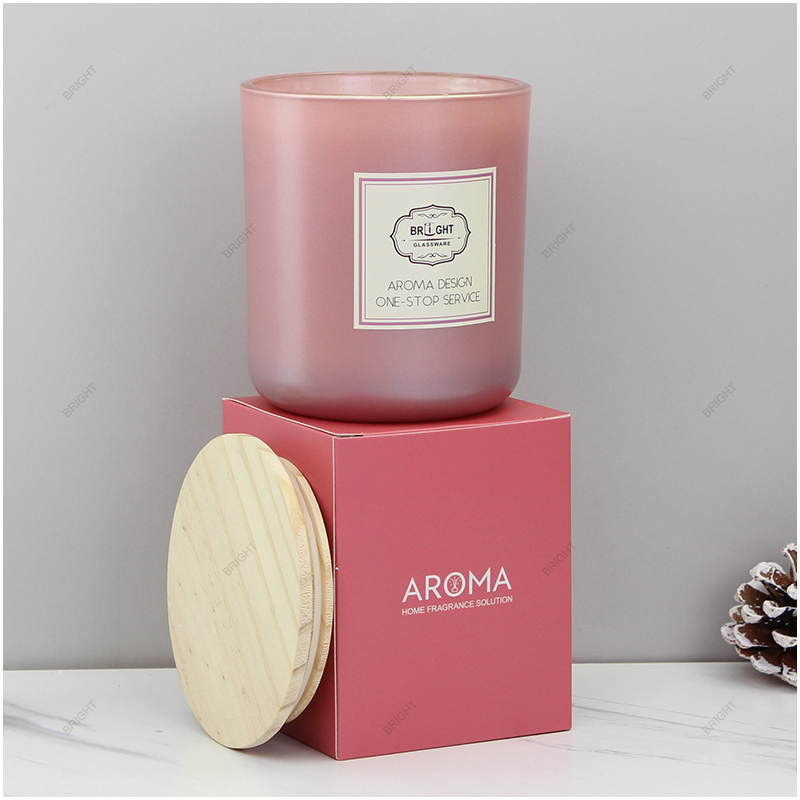
See our guide to choosing the right jar and lid combination for the component-matching stage.
Dive Deeper: Creating a Secure Inner Cavity
The inner packaging insert is the unsung hero of safe candle shipping. An insert needs to support the product, control movement, and allow suitable assembly and removal. Use drawings together with physical samples of the intended jar and lid combination to confirm the design.
The Critical Role of the Inner Insert
Assess how the insert limits vertical and horizontal movement, retains any lid, and separates the product from damaging contact within the box.
Common materials for inserts include:
- Corrugated Cardboard: A folded or die-cut structure can provide separation and support. Confirm its construction, contact areas, cost, and applicable recycling route for the finished design.
- Molded Pulp: A formed-fiber insert is one option for shaped support. Confirm fiber content, dimensions, conditioning, protective performance, and disposal information for the actual material.
- Foam (EVA, EPE, Polyethylene): Foam inserts can be cut or formed for the product. Select the specific material and construction by evaluating protection, contact compatibility, presentation, cost, and available disposal routes.
Here’s how they compare:
| Feature | Corrugated Cardboard | Molded Pulp | Foam (e.g., EVA) |
|---|---|---|---|
| Protection to assess | Structure, support, separation, and contact | Fit, conditioning, and cushioning | Material, density, geometry, and contact |
| Cost to quote | Tooling, board, assembly, and quantity | Tooling, material, and quantity | Tooling, material, cutting, and quantity |
| Environmental information | Finished construction and local recycling route | Fiber content, treatments, and local disposal route | Material identification and available recovery route |
| Presentation | Review the actual finish and sample | Review the actual finish and sample | Review the actual finish and sample |
Dust Cover vs. Scent Lock
It's important to clarify the lid's purpose. A simple drop-on lid may serve as a great dust cover, but it won't necessarily create an airtight seal to lock in fragrance over long periods. If scent retention is a goal, define the intended storage conditions and acceptance criteria with the supplier, then assess the selected closure and any seal. A gasket or inner seal alone does not establish airtightness or long-term fragrance retention.
What Makes a Candle Gift Box Ready for Delivery?
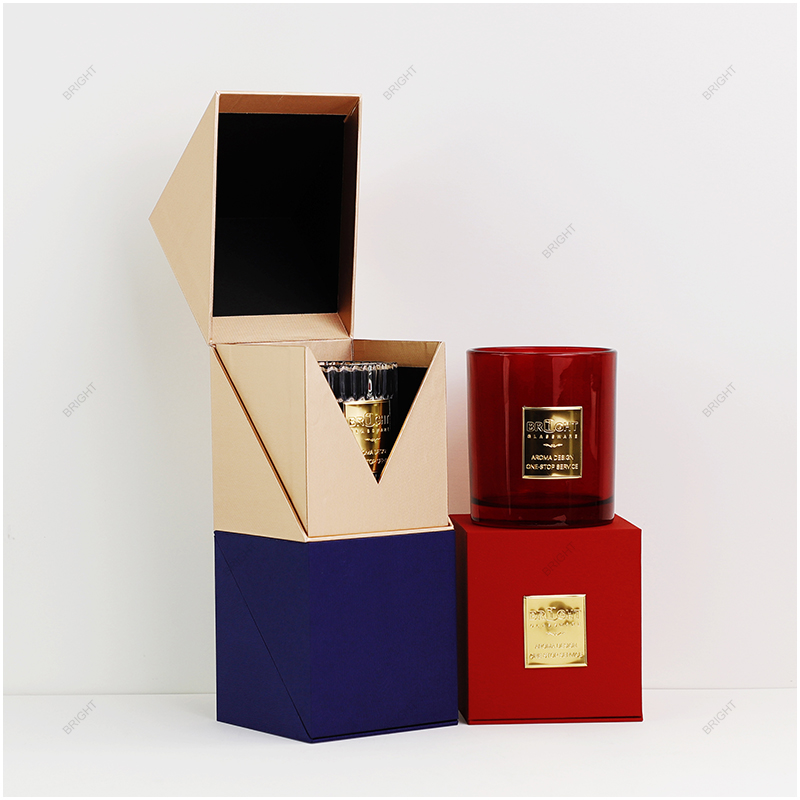
Your gift box looks stunning in product photos, with sharp graphics and a luxurious feel. But if a customer struggles to open it, or if the candle inside arrives scuffed, the premium unboxing experience is instantly ruined. Rigid-box supplier guidance illustrates how structure, inserts and closures are considered alongside presentation in jewelry packaging.7
Gift-box approval should include a physical sample as well as the digital proof. Check assembly, fit, opening and closing, and presentation on that sample; assess transport protection using the complete proposed shipping configuration rather than appearance or feel alone.
Dive Deeper: From Digital Dieline to Physical Reality
A dieline defines the cut and fold layout used to prepare packaging artwork.8 This is a 2D digital template that shows all the cuts, creases, and glue tabs for your box. As a supplier, we can provide dielines for your graphic designer to place their artwork on. Coordinate the package artwork and label layout with the approved structure. However, a dieline is only a blueprint.
Validating with Physical Samples
You must approve a physical, pre-production sample before committing to a full run. Here’s what to check:
- Assembly: If it’s a flat-pack design, is it easy and intuitive to assemble?
- Fit: Does the candle, secured in its insert, slide into the box without force? Is there any rattling?
- Function: Does the lid open and close as intended? For friction-fit or shoulder boxes, is the tension right—not too tight, not too loose?
- Graphics: Are the colors accurate? Is the logo placed correctly? Are there any printing or finishing defects? Record the agreed color reference, approved physical pre-production sample, and acceptance criteria; Pantone references support communication rather than replacing actual sample approval.
Designing for the Unboxing Experience
A great gift box considers the user's journey. How will they open it? What will they see first? If your candle is part of a gift set with other items (like a wick trimmer or matches), the inner insert becomes even more critical. Each item needs its own secure compartment to prevent items from colliding and to create a beautiful, organized presentation when the box is opened. Account for each item in the set when reviewing the insert design and the assembled sample.
How Does E-commerce Packaging Differ from Bulk Export Packaging?
A retail-box design does not by itself establish a bulk-shipping configuration. Review the outer cartons, load arrangement, handling, and route when moving from single-unit delivery to wholesale freight.
E-commerce packaging is designed to protect one unit on a journey with many touchpoints, drops, and orientation changes. Bulk export may consolidate units in master cartons and palletized loads. Evaluate the actual load, transfers, stacking, and route; palletization does not remove handling or transport risks.

For broader glass-container logistics, see our glass packaging and shipping guide.
Dive Deeper: Two Different Logistical Worlds
When requesting a quote, specifying the sales channel is crucial. A plan for packaging and shipping candles directly to consumers looks very different from a plan for shipping to a distribution center.
The E-commerce "Last Mile" Challenge
An individual parcel can encounter repeated handling, transfers, and changes of orientation in the selected carrier network.
- Protection Focus: Select the outer package and cushioning for the actual parcel weight, dimensions, contents, carrier requirements, and agreed evaluation. Do not treat a single drop height or cushioning thickness as a universal candle-packaging specification.
- Key Components:
- Product + Inner Insert: Immobilizes the candle.
- Retail Box: The branded gift box.
- Cushioning: Air pillows, kraft paper, bubble wrap.
- Shipping Carton: A strong, corrugated outer box.
The Bulk Freight "Unit Load" Principle
For B2B shipments, the focus is on the "unit load"—typically a pallet. The goal is to create a dense, stable cube that can be moved efficiently with a forklift.
- Protection Focus: The system must resist compression from stacking and forces from acceleration/deceleration during transit.
- Key Components:
- Product + Inner Insert: Still essential for individual protection.
- Master Carton: An outer carton with an agreed construction, unit count, and packing arrangement, evaluated as part of the complete load.
- Pallet: The wooden or plastic base.
- Stacking Pattern: Select the arrangement with the carton design, compression performance, pallet support, load restraint, and handling conditions in mind.
- Pallet Wrap / Strapping: Secures the entire load into a single unit.
When you ask for a quote, you can ask us to price these scenarios separately. Separate quotes make the scope and cost drivers easier to compare; confirm the protective performance of each proposed configuration.
How Should You Plan for Heat, Storage, and Transit Conditions?
A package may protect the glass while the finished candle still changes under heat exposure. Discuss destination, season, storage, and transit conditions before confirming the shipment plan.
Planning for heat requires a collaborative assessment between you (the brand owner), your wax filler, and your logistics provider. You must consider the destination's climate, the time of year, potential storage conditions, and the thermal behavior of the complete formulation over the expected exposure time. Any insulation or temperature-control measure needs evaluation as part of the actual shipment.
Dive Deeper: Managing Thermal Risks
As a packaging supplier, we design for physical protection. Agree who owns the finished-product requirements and who will assess formulation, packaging, storage, and transport changes. The brand, filler, packaging supplier, and logistics provider should each confirm their project responsibilities.
It Starts with the Wax Formula
The thermal behavior of the complete wax and fragrance formulation is one factor to assess alongside exposure time, container, fill level, and distribution conditions. Wax composition and processing affect melting and softening behavior.9 The brand and its filler must decide if the formulation is suitable for the intended distribution channels. Assess the actual candle under the proposed conditions; any formulation change should also trigger review of the relevant finished-candle performance.
For fill-level planning, see calculating wax weight for candle containers, then confirm the actual filled sample.
Design and Production Considerations
- Headspace: Confirm the fill level and clearance with the actual formulation, vessel, closure, and expected conditions. Headspace is a project parameter; no fixed gap by itself prevents softening, wax movement, leakage, or heat damage.
- "Sweating": If oil beads or other surface changes appear, record the conditions and ask the finished-product team to assess the cause using the actual formulation and sample.
- Thermal Protection: Where needed, evaluate insulation or controlled-temperature transport for the expected exposure and duration. Compare the qualified configuration, handling requirements, and actual quotation.
Logistical Strategies
- Scheduling: Review dispatch timing, service schedules, transfer points, and possible delays to reduce avoidable exposure. Confirm the actual route rather than assuming a fixed weekend delay.
- Carrier Communication: Ask about suitable service and temperature-control options for the actual route, and confirm their scope, availability, and price.
- Warehouse Storage: Agree storage limits and handling requirements with the warehouse or distribution center based on the finished-product assessment.
What Should You Approve and Test Before Shipment?
You’ve received a packaging sample that looks good, and you give your supplier the green light. But the sample you approved was just the box, and you didn’t check it with the final lid and insert. This small oversight can lead to a full production run of packaging that doesn’t fit. To avoid this, you must approve and test the complete packaging system as it will be shipped.
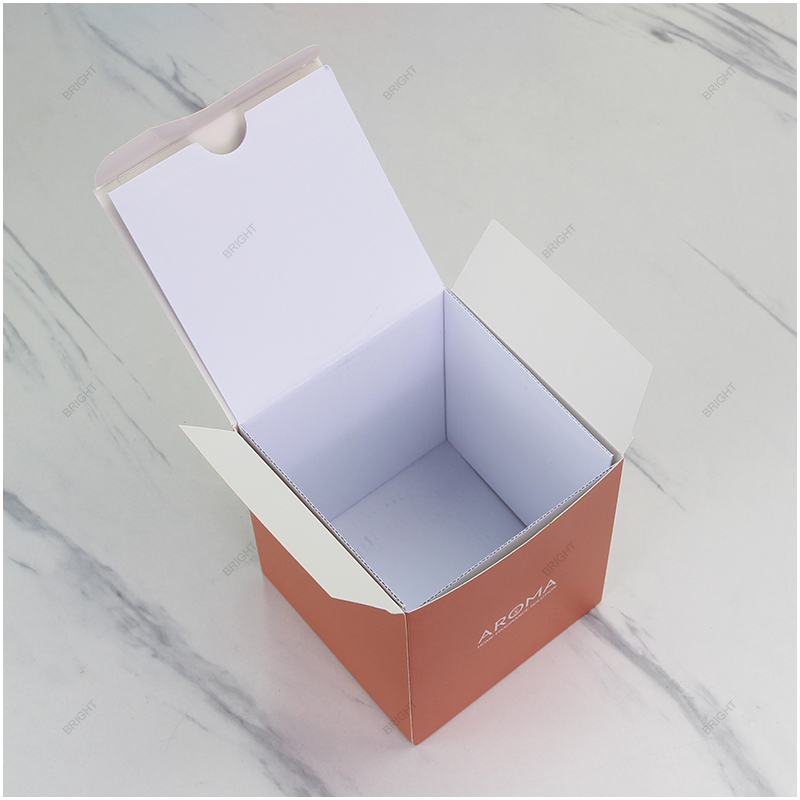
Before mass production, you should approve a "final shipping sample" that includes every component: the exact jar, lid, surface decoration, inner insert, retail box, and master carton. Agree route-appropriate package evaluation and acceptance criteria. A limited trial shipment can provide additional observations, but it does not replace a suitable test program or establish performance across all routes.
Dive Deeper: A Systematic Approval Process
Approving a shipment is more than a quick visual check. It’s a formal confirmation that the production configuration meets the agreed-upon standards. Create a project-specific approval checklist and define how production will be checked against it.
The Final Pre-Shipment Approval Checklist
Your "golden sample" or "approval sample" package should be fully assembled with a product that represents the final production unit (including the correct wax pour, if shipping finished goods). Your checklist should confirm:
- Jar: Agreed component reference, capacity basis, and key dimensions.
- Lid: Agreed component reference, material, finish, and fit on the jar.
- Decorations: Agreed color references, logo placement, and finish, assessed against the approved physical pre-production sample under agreed viewing conditions. Pantone codes are a reference rather than a substitute for that sample.
- Inner Insert: Correct material and a snug fit for both jar and lid.
- Retail Box: Correct printing, finish, and structural integrity.
- Master Carton: Correct grade, dimensions, and unit count.
- Labeling: Correct shipping marks (carton markings) and warning labels.
Real-World and Standardized Testing
Looking at a box on a table doesn’t tell you how it performs.
- Trial Shipments: Sending representative samples through the intended service can reveal observations worth recording. Document the configuration, route, conditions, and received state. A small trial does not substitute for an agreed test program or prove all future shipments will perform the same way.
- ISTA Procedures: Discuss applicable test procedures and reporting with a suitable laboratory based on the package and distribution system. A test report for one configuration is not a blanket certification of all products or routes. For example, Michigan State University lists ISTA 3A among parcel-delivery package-performance tests.10 ISTA’s current selection guidance distinguishes the applicable distribution channels. Testing the agreed configuration under a documented procedure provides a basis for comparing its performance.
An outer box's wall thickness or a "fragile" sticker alone does not guarantee safety. Use complete-package evaluation, agreed acceptance criteria, and production checks to support your plan for packaging and shipping candles.
What Should Your Packaging Brief Include for Quotes and Reorders?
A reorder needs more than “same as last time.” Changes to the lid, board stock, insert, or assembly can affect fit and handling. Record the approved configuration and review changes before repeating the order.
Your packaging brief should be a master document containing every specification for your packaging assembly. For quotes, it defines the scope and assumptions being priced. For reorders, it provides a reference for checking changes. Include agreed component references, materials, dimensions, finishes, artwork versions, and assembly instructions.
Dive Deeper: Building a Bulletproof Brief
Think of your brief as the complete recipe for your packaging. By providing this level of detail, you empower your supplier to be a true partner, flagging potential issues before they become production problems. It also allows you to compare quotes from different suppliers on an apples-to-apples basis.
A clear brief helps buyers and suppliers identify missing information before moving from quotation to sampling and production. Here’s what it should contain:
Essential Components of a Packaging Brief
-
Project Overview:
- Project Name / SKU
- Intended Use (e.g., E-commerce DTC, B2B Wholesale)
- Quantity Required
- Required Delivery Date
-
Component Specifications:
- Vessel: Agreed component reference, material, capacity basis, and dimensions (height and relevant diameters).
- Lid: Agreed component reference, material, finish, and any specified gasket.
- Surface Decorations: Agreed color reference, approved physical pre-production sample, finish, and decoration location.
- Inner Insert: Agreed material and construction, structural design file, and reference sample.
- Retail Box: Box style, agreed board construction, finish, and assembly requirements.
- Master Carton: Agreed board construction or grade, units per carton, dimensions, and packing arrangement.
-
Supporting Files:
- Artwork: Vector files (.ai, .eps) for all printed graphics and logos.
- Dielines: The final approved dieline files for the insert and boxes.
- Reference Photos: Photos of the approved "golden sample" from all angles.
-
Logistics & Packing Instructions:
- Shipping Marks: What information needs to be printed on the master cartons? (e.g., SKU, quantity, country of origin).
- Palletization Requirements: If any (e.g., max height, pallet type).
Keeping this document updated and sharing it for every quote and reorder creates a single source of truth. It gives both parties a shared reference for quotations, approved changes, receiving checks, and reorders.
Frequently Asked Questions
What's the best cushioning material for shipping candles?
Material selection should consider product compatibility, cost, presentation and sustainability.11 Compare the actual cushioning construction with the product weight, geometry, contact surfaces, route, and quotation. Kraft paper, air pillows, foam, and formed-fiber inserts have different design and handling requirements; no material name alone establishes superior protection or value.
How do I prevent candles from melting during shipping in the summer?
Agree the finished candle’s acceptable conditions, then review the expected time and temperature exposure with the filler, warehouse, and carrier. Evaluate any insulation or controlled-temperature service for that configuration. Cold packs are not a default solution: use them only if the full system, including possible moisture and handling effects, has been assessed and the service requirements are confirmed.
What is a dieline and why do I need one for my candle box?
A dieline is a flat, 2D template that outlines all the cuts, creases, and glue tabs for your box or insert. It acts as a blueprint for both the structural design and the placement of graphics. Use the dieline to communicate the intended structure and artwork positions, then confirm dimensions, assembly, and print placement on a physical sample.
Should I ship candles with the lids on?
Confirm the arrangement with the actual jar, lid, finish, and restraint system. A lid may be shipped fitted or separately protected where the agreed design requires it. Assess movement and damaging contact in the complete package rather than assuming that fitted lids or a tight insert are always preferable.
Conclusion
Successful packaging and shipping of candles is not about a single, perfect box; it is about designing a complete, multi-layered system. From the precise fit of a lid and its insert to the structural integrity of the outer shipping carton, every element works together to protect your product and preserve your brand's image. The key is to shift your focus from individual components to a holistic view, considering the entire journey from your warehouse to your customer's hands. By testing your complete packaging assembly, planning for environmental factors like heat, and maintaining a detailed packaging brief, you can establish a clearer basis for reducing risk, checking deliveries, and reviewing changes.
If you are looking for an experienced partner to help you navigate these complexities and develop a comprehensive glass packaging solution for your candle, home fragrance, or beauty brand, contact our team to discuss the container and packaging scope, samples, and responsibilities for your project.
Hess, Singh, Metcalf and Danes (2014), The Impact of Consumer Product Package Quality on Consumption Satisfaction, Brand Perceptions, Consumer Investment and Behavior. https://repository.rit.edu/japr/vol6/iss1/4/. This study concerns bottled-water packaging quality and consumer perceptions, not candle shipping, return rates or melted-wax damage. ↩
FedEx, How to pack breakables. https://www.fedex.com/en-us/shipping/packing/how-to-pack/breakables.html. Carrier guidance on outer-box selection, cushioning, movement restraint and individual protection. It does not establish a Bright Glassware test result or a universal candle-packaging specification. ↩
Impact-O-Graph, The True Cost of Glass Shipment Damage: A $4.7 Billion Problem With a Data-Driven Solution. https://impactograph.com/the-true-cost-of-glass-shipment-damage-a-4-7-billion-problem-with-a-data-driven-solution/. Supplier discussion of glass breakage and logistics disruption. Its numerical loss estimates are not used as verified candle-market statistics here. ↩
Avery Dennison, Application Testing for Optimal Label Performance. https://connect.averydennison.com/en/ad-procerta/our-services. Lists print-durability and adhesion evaluations separately. This is guidance for label performance, not proof that every glass coating or decoration has passed a transport-abrasion test. ↩
CandleScience, Lab Notes: CandleScience Coconut Apricot Wax. https://www.candlescience.com/lab-notes-candlescience-coconut-apricot-wax/. Product-specific stability observations include cold-exposure shrinkage and fragrance-dependent heat behavior. These are not Bright Glassware results and their test values or outcomes must not be transferred to other formulas. ↩
Safe Load Testing Technologies, The role of packaging tests in the design process. https://www.safeloadtesting.com/en/the-role-of-packaging-tests-in-the-design-process/. Testing-equipment supplier guidance on evaluating package designs for handling and transport hazards. It does not establish specific company procedures or guarantee compatibility. ↩
IJEN, The Importance of Structural Integrity in Jewelry Rigid Boxes (2025). https://ijen.com/the-importance-of-structural-integrity-in-jewelry-rigid-boxes/. A supplier example from jewelry packaging about structure, inserts, closures and presentation. Its claims are not candle-package test results. ↩
Wikipedia, Dieline. https://en.wikipedia.org/wiki/Dieline. General definition of a layout used for cutting, folding and artwork orientation. A dieline is a design aid, not a guarantee of finished-box fit, printing accuracy or transit performance. ↩
Blended Waxes, Melting Point Factors for Common Waxes. https://blendedwaxes.com/blog/wax-melting-point-factors/. Manufacturer overview of composition, processing and thermal behavior. It does not certify a finished candle for a route, prescribe an additive recipe or establish universal headspace. ↩
Michigan State University School of Packaging, Package performance tests. https://www.canr.msu.edu/packaging/learn-collaborate/testing_services/package_performance_tests. Lists ISTA 3A parcel and ISTA 3E unit-load test examples. ISTA's current selection guidance corroborates distinct distribution applications: https://www.ista.org/getting_started_with_design.php. These sources do not establish company certification or a test pass for this product. ↩
Paramount Global, Considerations When Choosing Packaging Material. https://www.paramountglobal.com/knowledge/factors-to-consider-when-choosing-packaging-material/. Packaging-distributor guidance on compatibility, marketing, cost, availability and sustainability. It does not rank all foams, molded pulp or corrugated inserts for every candle shipment. ↩
Keep Reading