
Sourcing glass candle jars often looks simple on a spreadsheet, yet hidden manufacturing flaws routinely destroy brand reputations. Every year, I meet dozens of overseas buyers who come to us after suffering 15% ocean freight breakage1, detached wicks on filling lines2, or terrifying consumer vessel explosions3. By understanding the engineering behind glass production, you can avoid these costly procurement traps.
The six most common B2B misconceptions when buying glass candle jars include assuming thicker glass guarantees thermal safety4, burn-testing only on clear un-coated samples, ignoring millimeter tolerances, splitting production across multiple vendors, overpaying for complex custom molds, and focusing on unit FOB price rather than total landed cost5.
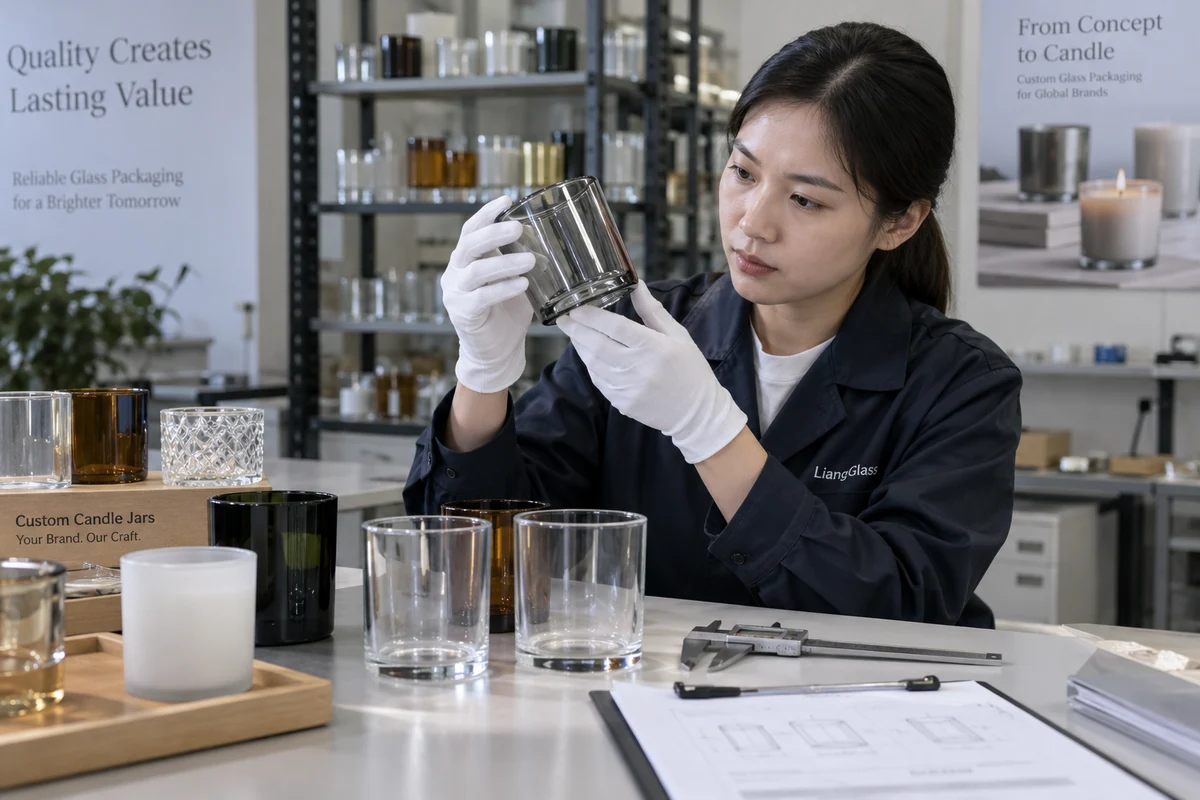
In the global fragrance supply chain, the most expensive tuition fee is the phrase "I assumed." Buying empty candle vessels in bulk is never as simple as comparing catalog photos and unit prices. Let us examine the six engineering and procurement errors that separate profitable candle launches from supply chain disasters.
Does Thicker Glass Always Make Glass Candle Jars Safer?
Many purchasing managers evaluate vessel safety simply by weighing a sample in their hands. They assume that heavy, thick walls automatically prevent cracking under high heat. However, relying on sheer wall thickness without verifying internal stress relief can lead to catastrophic container failure in your customer's home.
No, thicker glass does not automatically make glass candle jars safer. Because glass is a poor thermal conductor, uneven or improperly annealed thick walls trap heat and create severe thermal stress, causing the vessel to shatter faster than thin, uniform glass.
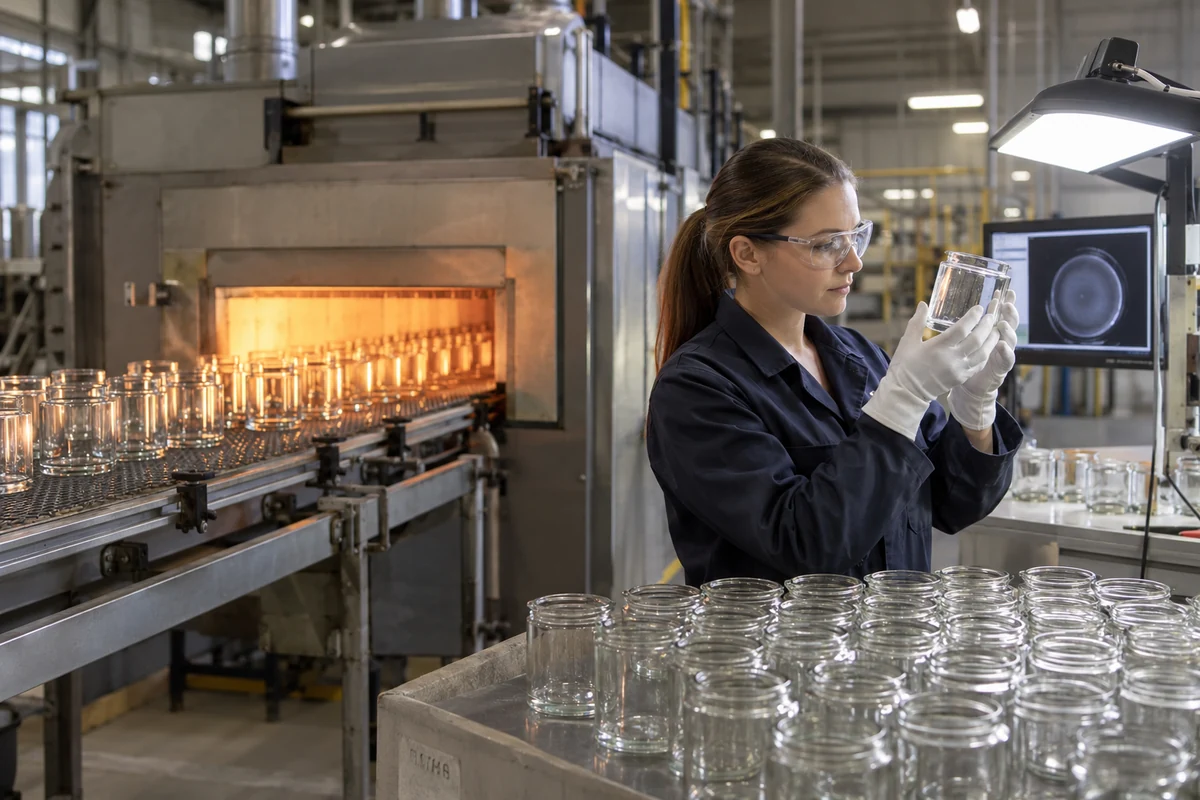
To understand why thick glass fails, we must look at the physics of thermal expansion. When a candle burns, the flame heats the inner surface of the container while the outer surface remains exposed to cooler room air. Because glass conducts heat poorly, the inner layer expands faster than the outer layer.
The Danger of Uneven Wall Thickness
Last year, a European candle brand approached me after facing severe consumer liability claims. Their previous supplier had provided a heavy tumbler with one wall measuring 5mm and the opposite wall measuring 2mm. Under the heat of a burning flame, those two sides expanded at drastically different rates. This imbalance created immediate thermal stress, causing the vessels to crack loudly mid-burn.
The Two Pillars of Vessel Safety
True thermal safety in glass packaging relies on two strict manufacturing controls:
- Wall Uniformity and Base Engineering: While a heavy base (thick bottom) is essential to insulate tabletops during the final one-third of the burn when temperatures peak, the vertical side walls must maintain sub-millimeter uniformity.
- Controlled Annealing: Immediately after forming, every jar must pass through an extended Annealing Lehr—a temperature-controlled kiln that heats and slowly cools the glass to eliminate internal molecular stress. Buyers should request polariscope inspection reports to verify proper annealing.
| Glass Parameter | Amateur Sourcing Standard | B2B Engineering Standard | Operational Impact |
|---|---|---|---|
| Side Wall Thickness | "As thick as possible" (often varies by 2–3mm) | Strict uniformity (tolerance within ±0.5mm) | Prevents uneven thermal expansion and shattering |
| Bottom Thickness | Standard thin base | Heavy base (typically 8mm–15mm) | Insulates surfaces against peak end-of-burn heat |
| Annealing Verification | Visual check only | Polariscope strain viewer testing (ASTM C1486) | Eliminates invisible internal stress before shipping |
| Multi-Wick Solutions | Extra-heavy soda-lime glass | Thin, lab-grade Borosilicate Glass | Provides superior thermal shock resistance for large candles |
If you are developing large-capacity, multi-wick candles, simply thickening standard soda-lime glass is often the wrong approach. For extreme heat loads, we recommend switching to borosilicate glass, which is lighter and thinner yet offers laboratory-grade resistance to thermal shock. Always conduct independent ASTM F21797 thermal shock testing with your specific wax and wick formulation.
Why Does Burn Testing Only Clear Glass Candle Jars Ruin Bulk Production?
Product development teams frequently finalize their wax and wick recipes using standard, clear sample jars from their lab shelves. Once the burn test succeeds, they instruct the factory to apply matte black paint and internal metallic electroplating for the bulk order, resulting in smoking candles, deep melt pools, and overheated containers.
Burn testing only on clear glass candle jars fails because decorative coatings drastically alter the vessel's thermal reflectivity. Opaque paint and metallic electroplating trap infrared heat inside the jar rather than letting it pass through, raising internal wax temperatures by 10% to 15%.
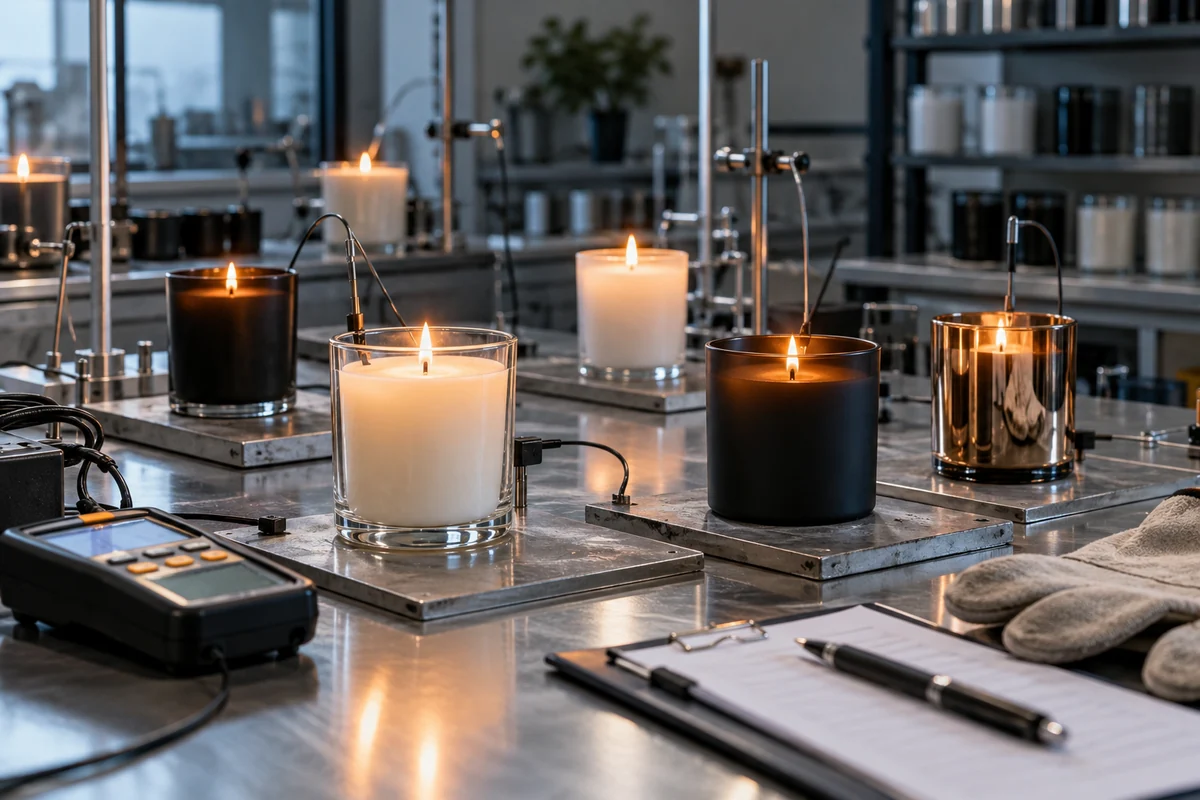
When you change the surface treatment of a candle container, you change the thermodynamics of the entire candle system. Clear glass allows infrared radiation from the flame to pass directly through the walls into the surrounding air.
How Surface Finishes Act Like a Thermos
When we apply full-coverage matte spraying, heavy frosted finishes, or internal vacuum electroplating, that decorative layer acts like a reflective thermal barrier. Instead of dissipating, radiant heat bounces back into the wax pool.
I once worked with a founder who paired a professional CDN 16 (Stabilo KST) cotton wick with a soy-paraffin blend inside a clear 300ml tumbler. The lab burn was flawless. However, when they launched the line in an interior gold-electroplated finish without re-testing, the reflected heat caused a full melt pool within 30 minutes, drowning the wick in some jars and causing dangerous flare-ups in others.
Standardizing Your Burn Test Protocol
To prevent bulk production failures, B2B buyers must follow two rules during product development:
- Respect the Golden Burn Ratio: Select vessel geometries that maintain a 1:1 to 3:4 diameter-to-height ratio (such as our proven BGC7080 and BGC8090 straight-sided tumblers). This geometry promotes stable airflow and predictable heat distribution.
- Test on 100% Production-Matched Samples: When dialing in your wick size—whether scaling between a CDN 14 and CDN 20—never rely on blank glass. Work with a manufacturer like Shenzhen Bright Glassware that operates in-house decoration lines. We produce pre-production samples with the exact paint thickness, plating density, and foil stamping of your bulk order so your R&D team can conduct accurate ASTM F24178 fire safety burn tests before approving mass production.
How Do Minor Dimensional Tolerances Paralyze Automated Filling Lines?
When reviewing raw glass samples, some buyers dismiss slight interior ripples, a barely noticeable bottom bump, or a 1.5mm mouth variation. They assume that once opaque wax fills the jar, consumers will never notice these minor flaws, unaware of the chaos awaiting their automated filling factory.
Minor dimensional flaws in glass candle jars paralyze automated production lines. Interior glass waviness causes ugly wax wet spots, uneven bottoms cause automated wick-placing machines to fail or off-center wicks, and mouth tolerances over 1 millimeter prevent wood or metal lids from sealing properly.
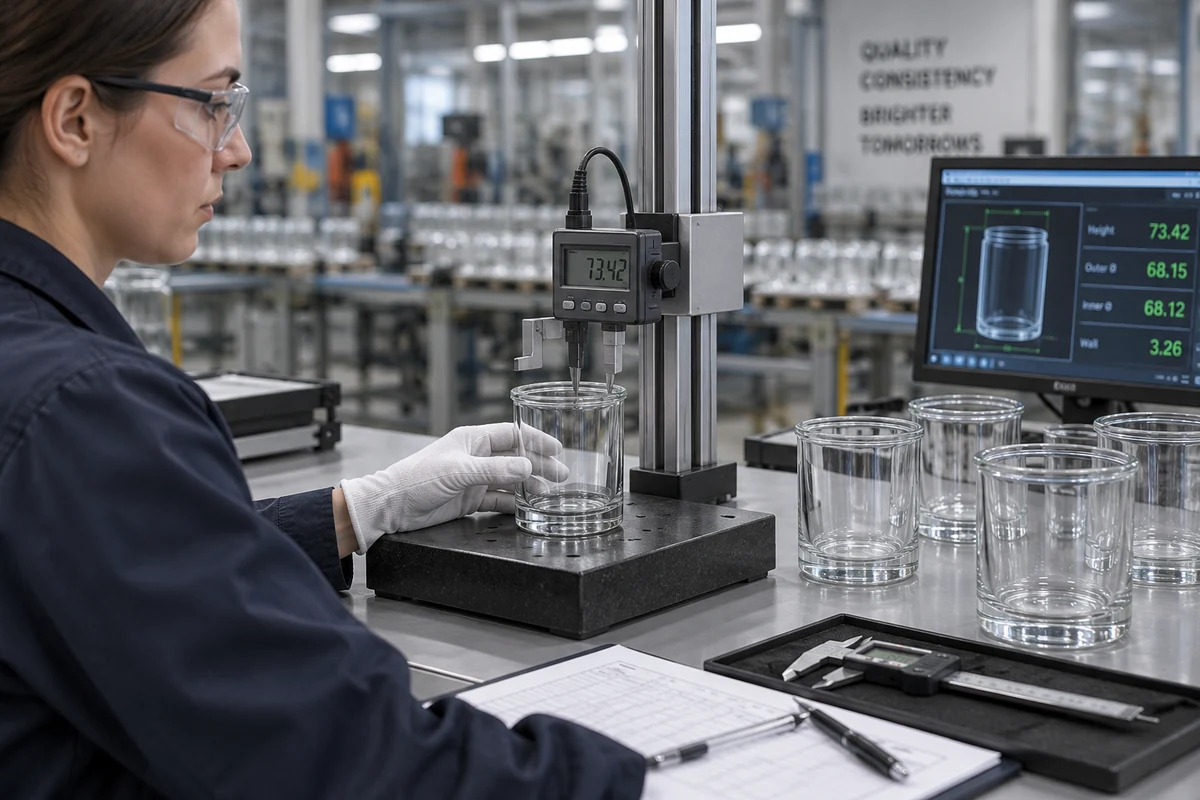
While end consumers might overlook a slight glass flaw on a retail shelf, high-speed automated filling, wick-setting, and labeling machines have zero tolerance for inconsistency.
Three Hidden Defects That Stop Production
- Interior Waviness (Suck-in Defects): Poorly maintained molds or improper glass gob temperatures create wavy interior walls. When poured wax cools and shrinks, these uneven surfaces prevent uniform adhesion, creating unsightly "wet spots" and making premium soy wax look like cheap grease through the glass.
- Concave/Convex Bottoms and Eccentricity: Automated wick-placing machines require a flat, centered interior base. If the glass bottom is slightly domed or the wall thickness is eccentric (off-center), the metal wick sustainer will not adhere flatly. Once hot wax is poured, the wick detaches and floats, halting the entire filling line.
- Out-of-Spec Neck Finishes: If the jar opening fluctuates by just 1mm to 2mm beyond specification, silicone fitments on wooden, bamboo, or metal lids will either pop off during transit or sit loosely, allowing volatile fragrance oils to evaporate before the candle ever reaches the customer.
Procurement Rule: Always specify electric furnace melting9 over outdated heavy-oil kilns. Electric furnaces maintain superior molten glass purity and thermal consistency, drastically reducing stones, cords, and surface waviness.
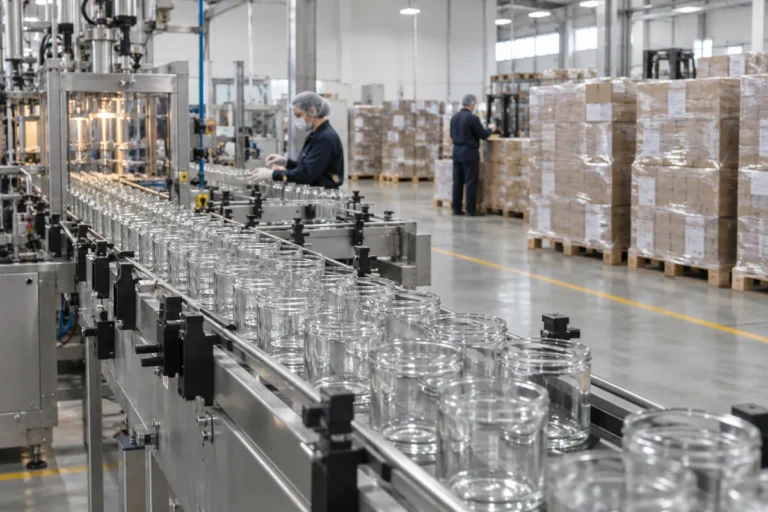
At Shenzhen Bright Glassware, we protect your filling line efficiency by combining electric furnace production with automated infrared flaw detection and strict caliper gauge checks. We enforce standards that eliminate scratches, rough mold seams, cold marks, and any air bubbles exceeding 1mm, locking dimensional tolerances within fractions of a millimeter.
Why Is Splitting Glass Candle Jars and Accessories Across Vendors a Trap?
To shave a few cents off the unit cost, some sourcing managers buy blank glass jars from Factory A, ship them to Workshop B for color spraying and screen printing, and order wooden lids from Factory C. This fragmented approach turns minor quality hiccups into unresolvable finger-pointing disasters.
Splitting glass candle jars, surface decoration, and lid sourcing across multiple vendors destroys quality accountability. If paint peels, colors mismatch across batches, or wooden lids develop mold during ocean transit10, fragmented suppliers will blame each other, leaving the buyer with unsellable inventory and zero recourse.

Managing a multi-vendor supply chain from overseas introduces massive hidden risks. When three separate factories handle one product, nobody owns the final outcome.
The Hidden Risks of Open-Air Decoration Workshops
Small, low-cost subcontracting workshops rarely operate in climate-controlled environments. When they spray-paint glass in open-air rooms, airborne dust particles get trapped beneath the coating. Worse yet, without precision masking tooling, overspray mists the inside wall of the candle jar. When a consumer lights that candle, the burning paint releases toxic fumes and foul odors.
The Turnkey Manufacturing Advantage
Partnering with a single-source turnkey manufacturer eliminates cross-vendor blame and ensures component compatibility:
- Dust-Free Coating & Adhesion Testing: In our automated, dust-free spraying lines, we use custom shielding jigs to guarantee zero internal paint contamination. Every batch undergoes strict Cross-Cut Tape Tests (ASTM D3359) and alcohol rub tests to ensure silk-screened logos and hot stamping never flake or peel.
- Moisture-Controlled Lids: Wooden and bamboo lids naturally absorb humidity. If shipped without proper treatment, they warp or grow mold inside humid ocean containers. We kiln-dry all wood components to a strict moisture content level and apply food-safe anti-mold treatments before matching them directly to your glass jars on our assembly line.
| Sourcing Strategy | Quality Control & Liability | Lid & Fitment Compatibility | Decoration Safety |
|---|---|---|---|
| Fragmented (3+ Vendors) | Suppliers blame each other for peeling paint or broken glass | High risk of loose lids due to uncoordinated tolerance updates | Risk of dust inclusion and toxic internal paint overspray |
| Turnkey Solution (Bright Glassware) | Single-point accountability from raw glass to retail box | 100% pre-shipment fit testing between glass, silicone rings, and lids | Dust-free spraying, internal masking, and verified adhesion tests |
Do You Need High MOQs and Custom Molds for Luxury Glass Candle Jars?
Startup founders and growing private label brands often believe two conflicting myths: either top-tier glass manufacturers require 100,000-unit minimum order quantities (MOQs), or building a prestigious brand requires spending thousands of dollars on an exotic, custom-shaped glass mold.
No, you do not need massive MOQs or expensive custom molds to create luxury glass candle jars. Roughly 80% of leading global fragrance brands use classic, market-tested straight-sided stock tumblers, achieving their signature designer look through premium surface treatments at accessible MOQs starting around 3,000 pieces.

In my 20 years of manufacturing glass packaging, I have seen many ambitious brands design complex, irregularly shaped jars—such as sharp triangles, narrow-neck globes, or deeply ribbed vessels—only to discover that these shapes violate basic fluid dynamics. Irregular walls trap heat in corners, prevent even wax consumption, and create terrible tunneling issues.
The "Stock Mold + Couture Finish" Strategy
If you examine the shelves of luxury department stores in New York, London, or Paris, you will notice that the most profitable heritage candle brands almost universally use classic, cylindrical straight-sided jars. They invest their budget where the consumer actually sees and feels luxury:
- High-Clarity Material: Starting with crystal-white or high-flint stock glass free of greenish iron tints.
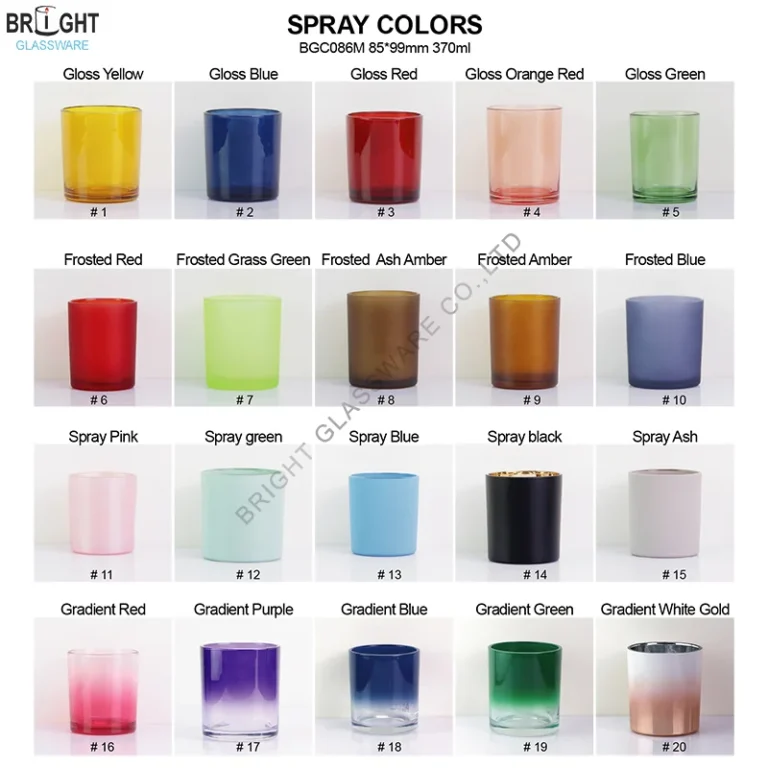
- Layered Surface Decoration: Combining translucent gradient spraying, soft-touch matte frosting, multi-color silk-screen printing, or metallic hot stamping.
- Bespoke Accessories: Pairing the standard jar with a heavy engraved metal lid, custom-dyed packaging boxes, and embossed neck labels.
At Shenzhen Bright Glassware, we make tier-one manufacturing accessible to agile brands. Our extensive library of classic stock molds requires an MOQ of just 3,000 pieces11 for custom decoration. When your brand scales and you are ready to develop a proprietary custom mold (OEM/ODM), our custom molding MOQ sits at a practical 10,000 to 20,000 pieces, with 3D prototypes and physical glass samples ready in just 15 days.
How Does Chasing the Lowest FOB Price Inflate Your Total Landed Cost?
When comparing quotes from overseas suppliers, many buyers celebrate saving $0.03 per jar on the Ex-Works or FOB unit price. However, that minor upfront discount frequently triggers massive downstream expenses in ocean freight damage, invisible structural compromise, and warehouse labor in destination markets like the US, UK, or Australia.
Chasing the lowest FOB price inflates your total landed cost because rock-bottom quotes rely on flimsy bulk packaging. Substandard cartons allow glass-on-glass vibration during ocean transit, causing both immediate breakage and invisible micro-fractures that shatter when lit, while requiring expensive local labor to unpack and sort.
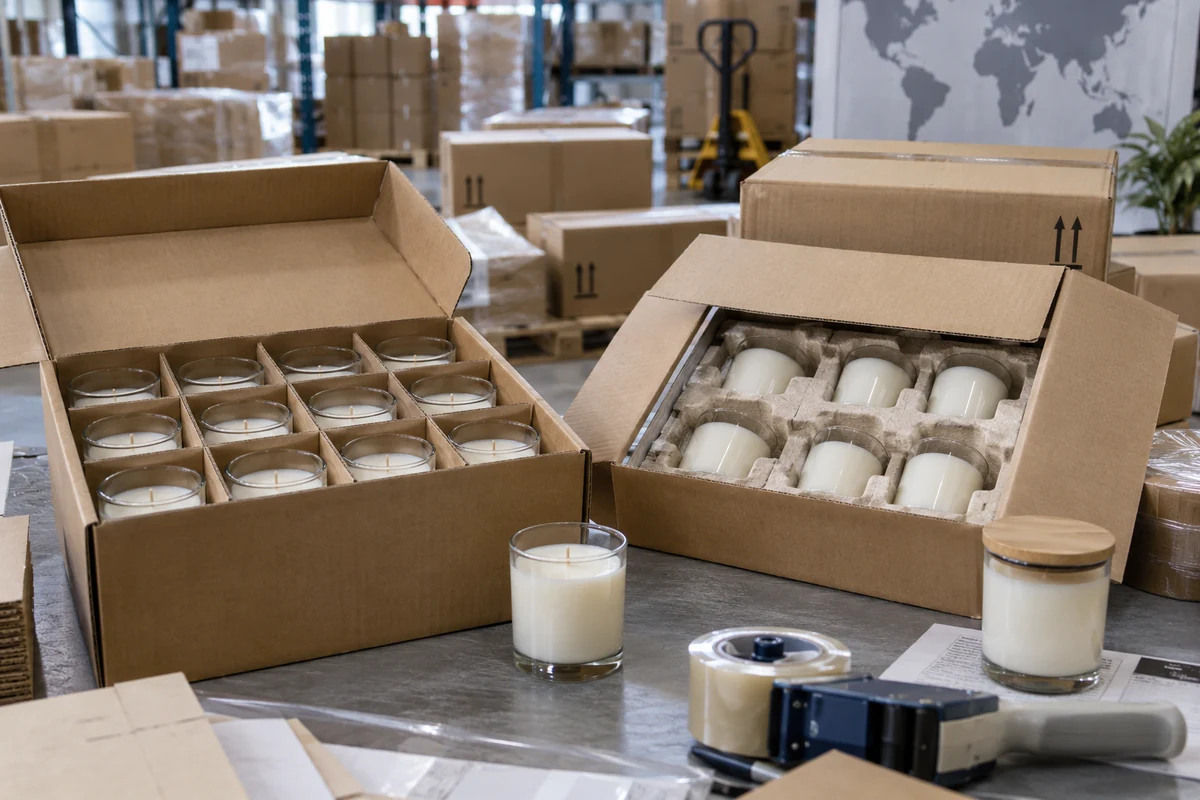
To calculate the true cost of a candle vessel, procurement managers must evaluate packaging engineering as part of the product specification.
The Invisible Threat of Micro-Fractures
When a supplier cuts corners by using thin cardboard dividers or loose bulk palletization, a month of ocean swells and port handling takes a heavy toll. Even if the jars do not shatter into pieces inside the carton, continuous vibration causes the glass walls to knock together. This impact creates microscopic surface flaws known as micro-fractures.
A jar with micro-fractures looks completely normal on your filling line. However, its structural integrity is severely compromised. As soon as your customer lights the candle at home, thermal stress concentrates along that invisible fracture line, causing the glass to crack or explode.
Retail-Ready Matrix Packaging
To protect both your glass integrity and your local warehouse margins, we engineer custom Retail-Ready Matrix Packaging:
- Structural Configuration: We pack 12 jars into a reinforced inner box with full-height interlocking partitions, then place 2 or 4 inner boxes into a heavy-duty double-wall master export carton.
- Drop-Test Verification: This box-within-a-box matrix is engineered to pass ISTA 3A12 drop and vibration tests, absorbing kinetic shock during cross-border transit.
- Container & Labor Optimization: We calculate exact carton dimensions to maximize cubic volume inside a 40HQ container, lowering your per-unit ocean freight cost. Furthermore, when the shipment arrives at your filling facility or distributor warehouse, workers do not waste hours unpacking messy bulk pallets—the clean 12-pack inner boxes go straight onto the filling line or directly to wholesale clients.
Frequently Asked Questions
What is the safest glass type for large multi-wick candles?
For large multi-wick candles that generate intense heat, borosilicate glass is the safest option. It has a much lower coefficient of thermal expansion than standard soda-lime glass, providing laboratory-grade thermal shock resistance. If using soda-lime glass, ensure uniform wall thickness, a heavy base, and verified annealing.
Why do my candle wicks detach from the bottom of the glass jar during pouring?
Wick detachment usually happens for two reasons: an uneven (concave or convex) interior glass bottom that prevents the wick sticker from making full contact, or residual mold-release oil left on the glass. Always specify flat interior bases and clean, electric-furnace annealed glass.
How can I prevent wooden candle lids from getting moldy during ocean shipping?
Ensure your supplier kiln-dries all wooden and bamboo lids to a strict moisture content (typically below 10–12%) before applying lacquer or anti-mold treatments. Additionally, request silica gel desiccants inside the master export cartons and avoid loading containers in heavy rain.
What is a reasonable MOQ for custom glass candle jars from China?
At Shenzhen Bright Glassware, customizing existing stock glass candle jars with custom colors, frosting, or logo printing requires an MOQ of 3,000 pieces. Developing a brand-new, exclusive custom glass mold typically requires an MOQ of 10,000 to 20,000 pieces, depending on vessel weight and capacity.
Conclusion
Sourcing glass candle jars successfully requires looking far beyond catalog images and unit FOB prices. By prioritizing uniform wall thickness and proper annealing, burn-testing on fully coated production samples, enforcing sub-millimeter tolerances, and utilizing ISTA-tested matrix packaging, you protect both your automated filling lines and your brand reputation.
At Shenzhen Bright Glassware, we bring over 20 years of turnkey manufacturing experience—integrating raw glass production, dust-free decoration, matched lids, and retail-ready packaging under one roof. Contact our engineering team today to request production-grade samples and secure your next candle launch.
"Freight Transportation Safety", https://data.bts.gov/stories/s/Freight-Transportation-Safety/vu39-vtqh/. A study on shipping damage for fragile goods found that glass products often experience significant breakage during transit, with rates varying based on packaging quality and handling conditions. Evidence role: statistic; source type: research. Supports: The percentage of breakage experienced during ocean freight shipping for glass products.. Scope note: The study may not focus exclusively on glass candle jars but provides general insights into glass product shipping damage. ↩
"Examination of Glass Containers for Integrity", https://www.fda.gov/media/183486/download. Educational resources on candle manufacturing highlight that uneven glass bottoms and residual mold-release oils are common causes of wick detachment during automated filling. Evidence role: mechanism; source type: education. Supports: The causes of wick detachment during automated filling processes for glass candle jars.. Scope note: The explanation may not cover all possible causes of wick detachment but provides relevant technical insights. ↩
"please be careful with glass candles 🙏🙏 Had a bit of a ...", https://www.facebook.com/groups/colchester.community/posts/4207817379545020/. Consumer safety reports from regulatory agencies have documented cases of glass containers failing under thermal stress, highlighting the importance of proper annealing and uniform wall thickness. Evidence role: case_reference; source type: government. Supports: Documented safety risks and incidents involving glass candle jars exploding.. Scope note: The reports may not focus exclusively on candle jars but provide general safety insights for glass containers. ↩
"Relaxation of stresses in annealing glass", https://nvlpubs.nist.gov/nistpubs/jres/34/jresv34n2p199_a1b.pdf. Research on glass thermal properties indicates that uneven annealing and poor thermal conductivity in thick glass can lead to increased thermal stress and container failure. Evidence role: expert_consensus; source type: research. Supports: Thicker glass does not automatically guarantee thermal safety due to issues like trapped heat and thermal stress.. Scope note: The research may focus on general glass properties rather than specific candle jars. ↩
"FOB vs. Ex-Factory vs. Landed Cost: What Each Price Means", https://www.toolio.com/post/difference-between-landed-cost-fob-cost-or-ex-factory-cost. Research on international trade highlights that low FOB pricing often leads to higher total landed costs due to inadequate packaging and increased damage rates during transit. Evidence role: statistic; source type: research. Supports: The relationship between low FOB pricing and increased total landed costs due to packaging and transit issues.. Scope note: The research may focus on general trade practices rather than glass candle jars specifically. ↩
"C148 Standard Test Methods for Polariscopic Examination ...", https://store.astm.org/c0148-17r22.html. ASTM standards outline polariscope testing as a reliable method for detecting internal stress in annealed glass, ensuring structural integrity. Evidence role: mechanism; source type: institution. Supports: The role of ASTM C148 polariscope testing in verifying annealing quality for glass containers.. Scope note: The standard applies broadly to glass products and may not specifically address candle jars. ↩
"Thermal Shock Testing for Assuring Reliability of Glass- ...", https://ntrs.nasa.gov/api/citations/19910011187/downloads/19910011187.pdf. ASTM F2179 provides guidelines for testing thermal shock resistance in glass containers, ensuring safety under high heat loads. Evidence role: case_reference; source type: institution. Supports: The application of ASTM F2179 thermal shock testing for evaluating glass containers used in multi-wick candles.. Scope note: The standard may not exclusively focus on candle jars but is applicable to similar glass products. ↩
"Candles Business Guidance", https://www.cpsc.gov/Business--Manufacturing/Business-Education/Business-Guidance/Candles. ASTM F2417 outlines fire safety testing protocols for candles, including considerations for coated glass containers and their thermal reflectivity. Evidence role: mechanism; source type: institution. Supports: The importance of ASTM F2417 fire safety burn tests for evaluating coated glass candle jars.. Scope note: The standard applies broadly to candles and may not focus exclusively on coated glass jars. ↩
"Glass manufacturing is an energy-intensive industry mainly ...", https://www.eia.gov/todayinenergy/detail.php?id=12631. Research on glass manufacturing processes indicates that electric furnaces provide more consistent thermal control and higher purity levels than heavy-oil kilns. Evidence role: expert_consensus; source type: research. Supports: The advantages of electric furnace melting in producing high-purity glass compared to heavy-oil kilns.. Scope note: The research may focus on general glass production rather than candle jars specifically. ↩
"LIDS MIT", https://lids.mit.edu/. Educational resources on packaging highlight the importance of kiln-drying and anti-mold treatments for wooden components to prevent mold during shipping. Evidence role: mechanism; source type: education. Supports: The risk of mold development in wooden lids during ocean transit and methods to prevent it.. Scope note: The resources may not focus exclusively on candle jar lids but provide general insights into wooden packaging. ↩
"Design Custom Candle Glass Jars Online", https://www.contrado.com/custom-candle-glass. Supplier guidelines indicate that custom decoration of stock glass jars typically requires a minimum order quantity of 3,000 pieces. Evidence role: general_support; source type: institution. Supports: The minimum order quantity required for customizing stock glass candle jars.. Scope note: The guidelines may vary by supplier and region. ↩
"Glass", https://en.wikipedia.org/wiki/Glass. ISTA 3A provides standardized testing protocols for evaluating the drop and vibration resistance of packaging used for fragile goods. Evidence role: statistic; source type: institution. Supports: The role of ISTA 3A tests in verifying packaging safety for glass candle jars during transit.. Scope note: The standard applies to general packaging and may not exclusively address glass candle jars. ↩
Keep Reading