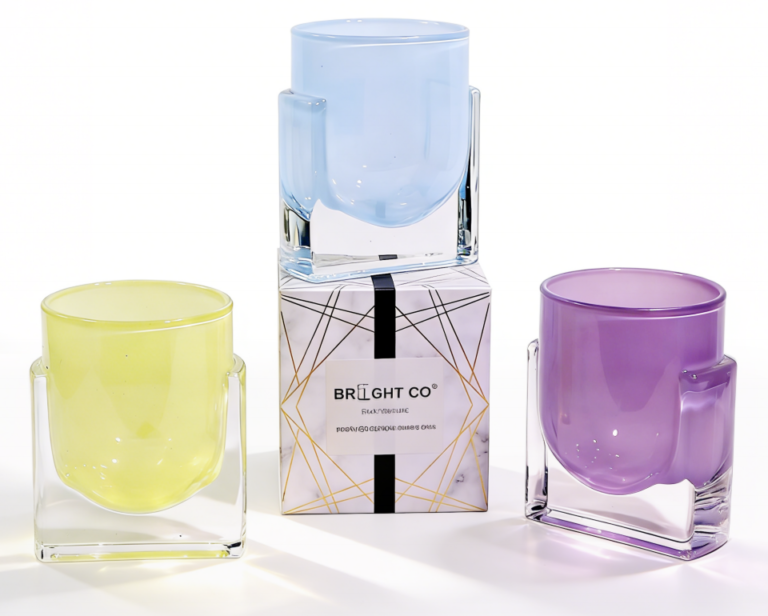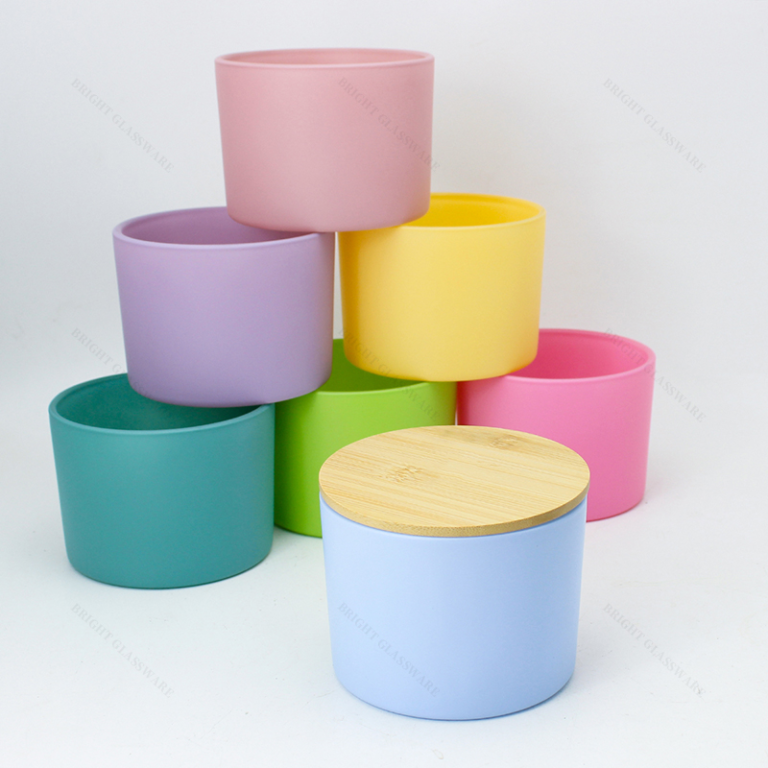

Struggling to find budget-friendly candle jars without compromising on quality? You’re likely focused on the unit price, hoping to maximize your margins. But the hidden truth is that an unusually low price often signals compromises in manufacturing or packaging1 that can lead to cracked jars, production delays, and damaged shipments—ultimately costing you more. The key to finding the truly cheapest candle jars is understanding what drives their cost and how to avoid these expensive pitfalls.
The cheapest candle jars are typically standard, straight-sided vessels made from clear glass using high-volume, pre-existing molds. Their low cost is a direct result of economies of scale in production2 and minimal decorative finishing. However, the absolute lowest price on the market often carries significant risks related to inconsistent quality, improper annealing, and inadequate packaging that can inflate your total cost of ownership.
What Makes Some Candle Jars Cheaper Than Others?
When you're comparing quotes from different suppliers, the price variations for seemingly identical glass jars can be puzzling. It’s tempting to just select the lowest bid and move on. However, without understanding why it's lower, you're making a decision with incomplete information.
The final price of a glass candle jar is influenced by several core factors: the glass material, manufacturing method, mold costs, production volume, and the complexity of any decorative finishing. High-volume production of a simple, clear glass jar using an existing mold will always be more affordable than a small batch of custom-colored, uniquely shaped jars.
Dive Deeper
Let's break down the primary elements that determine the cost of a candle jar. Check all quote details.
Glass Material and Composition
The most common and cost-effective material is standard clear flint glass. It offers excellent clarity and a neutral base for any candle. Using recycled glass (cullet) can sometimes reduce material costs, but it may result in slight color variations or reduced brilliance. Introducing colorants to create colored glass is a value-added process that inherently increases the per-unit price.
Manufacturing Method and Volume
For large-scale orders, a fully automatic machine-pressing process is the most efficient and cheapest method. Machines can produce thousands of identical jars per hour with high consistency. In contrast, semi-automatic or manual production methods are slower, more labor-intensive, and therefore more expensive, typically reserved for complex shapes or smaller batches. The principle of economies of scale is critical here; the larger the production run, the lower the cost per jar.
Mold Ownership and Design
Developing a custom mold for a unique jar shape is a significant upfront investment, often costing thousands of dollars. The cheapest approach is to select a design from a supplier's existing library of stock molds. At Bright Glassware, for example, we have over 3,000 mature molds. Using a proven, high-volume stock mold eliminates development fees and leverages the efficiencies of a well-established production process.
Surface Decoration and Finishing
A plain, undecorated jar is the baseline for cost. Every additional decorative step adds to the final price. Common finishing processes include:
- Color Spraying: Applying an external layer of paint.
- Electroplating: Creating a metallic finish.
- Frosting: Creating a matte, translucent surface.
- Screen Printing / Hot Stamping: Applying logos and other graphics.
The more complex the decoration, the higher the cost.
| Feature | Basic, Low-Cost Jar | Premium, Custom Jar |
|---|---|---|
| Material | Standard Clear Glass | Custom-Colored Glass |
| Mold | Existing Stock Mold | New Custom Mold |
| Production Volume | High (10,000+ units) | Low to Medium (1,000-5,000 units) |
| Decoration | None (Plain) | Multi-Color Printing & Electroplating |
| Resulting Cost | Low | High |
Hidden Quality Risks Behind Low-Cost Candle Jars
You've found a supplier offering a price that seems too good to be true. It probably is. Before you commit, you must ask: what corners were cut to reach that price? The compromises made to achieve the lowest possible cost can introduce severe quality risks that damage your brand's reputation and bottom line.
The most common hidden risks with extremely low-cost candle jars are insufficient annealing leading to thermal shock fractures3, inconsistent physical dimensions that disrupt production, visible surface defects4, and flimsy packaging that results in high breakage rates during shipping5.
Dive Deeper
From our two decades of manufacturing experience, we've seen firsthand how chasing the lowest unit price can backfire. A client once switched to a new supplier to save $0.10 per jar, only to have 15% of their first shipment arrive shattered. The loss from breakage, coupled with the product launch delay, far exceeded any initial savings.
Here are the specific risks you must evaluate:
- Thermal Stress & Cracking: This is the most dangerous risk. To save on energy and time, a manufacturer might shorten the annealing (slow cooling) process. This leaves internal stress in the glass, making it prone to cracking when exposed to heat from a candle flame or even hot wax during pouring.
- Inconsistent Dimensions: Low-cost production often lacks stringent quality control. This can result in jars with varying heights, diameters, or non-flat bottoms. These inconsistencies can wreak havoc on automated labeling and filling lines and cause lids to fit poorly.
- Surface Imperfections: Defects like "waviness" on the jar walls, embedded bubbles (seeds), or small specks (stones) are tell-tale signs of rushed or poorly controlled production. These not only look unprofessional but can also interfere with label adhesion.
- High Breakage Rates in Transit: One of the easiest places for a supplier to cut costs is on packaging. Shipping glass internationally requires robust, purpose-built packaging. The cheapest quotes often rely on thin cartons and simple mesh sleeves that offer virtually no protection against the impacts and vibrations of ocean freight.
How Annealing and Mold Temperature Control Affect Glass Quality
A glass jar can feel heavy and look perfectly fine to the naked eye, giving a false sense of durability. However, invisible forces—specifically, internal stresses created during manufacturing—can make that same jar a liability. Understanding the role of annealing is vital for assessing a candle jar's safety.
Annealing is a critical, controlled cooling process6 that relieves internal stresses acquired during glass formation. If this process is rushed to reduce costs, high levels of residual stress remain. This makes the jar dangerously susceptible to cracking from thermal shock when heated, such as when a candle is burning.
Dive Deeper
After a glass jar is molded at a very high temperature, it must be cooled down gradually. This happens inside a long oven called an annealing lehr. The jar travels through the lehr on a conveyor belt, moving through zones of progressively lower temperatures over a carefully calculated period. This slow, controlled cooling allows the entire body of the glass—both the surface and the interior—to cool and contract at a uniform rate.
The Dangers of Rushed Annealing
If a factory rushes this process to increase output, the surface of the glass cools and solidifies much faster than the molten interior. As the inside eventually cools and contracts, it pulls against the already-rigid outer layer, creating permanent internal tension. This residual stress is invisible but acts like a coiled spring.
When a candle is lit inside a poorly annealed jar, the heat from the flame causes the inner wall to expand. This expansion, combined with the existing internal tension, can be enough to exceed the glass's structural limit, causing it to crack or even shatter. This is a significant safety hazard and a major liability for any candle brand.
As a buyer, you should always ask potential suppliers about their annealing process and quality control measures. Reputable manufacturers will be able to provide documentation on their processes and may offer certifications that you can verify. For any new supplier, we strongly recommend conducting your own thermal shock test7s on samples before committing to a bulk order.
Why Glass Wall Waviness and Uneven Thickness Matter
As you inspect jar samples, you might notice that the surface isn't perfectly smooth; it appears to have subtle vertical ripples or "waves." It’s easy to dismiss this as a minor cosmetic flaw, but this waviness, along with uneven wall thickness, is a red flag indicating poor process control that can cause real problems.
Glass wall waviness and inconsistent thickness are often symptoms of poor mold temperature management or inconsistent pressure during the forming process. These defects not only detract from the premium feel of your product but can also significantly interfere with automated labeling, causing bubbles and wrinkles, and create weak spots in the jar.
Dive Deeper
In a high-quality glass manufacturing operation, every variable is tightly controlled, from the temperature of the molten glass "gob" to the temperature of the mold itself. When these controls are loose, defects appear.
The Impact on Labeling and Branding
The most immediate problem caused by waviness is on your production line. Automated labeling machines are designed to apply labels to a smooth, uniform, cylindrical surface. When the jar surface is irregular, the machine cannot apply the label with even pressure. This leads to:
- Air bubbles trapped under the label
- Wrinkles and creases that look unprofessional
- Misaligned logos and graphics
These issues can force you to resort to slow, costly manual labeling or accept a higher defect rate, tarnishing your brand's image.
The Link to Wet Spots and Structural Integrity
While the primary cause of "wet spots" (areas where candle wax pulls away from the glass) is related to wax formulation and pouring temperatures, an uneven inner glass surface can exacerbate the problem. Irregularities can create pockets where adhesion is inconsistent, making these visual blemishes more prominent.
More importantly, uneven wall thickness creates structural weak points. A spot that is significantly thinner than the rest of the jar is more susceptible to breaking during shipping, handling, or in response to thermal stress from the candle flame. A quality jar should have a consistent wall thickness all the way around.
How Packaging Quality Affects the Total Cost of Candle Jars
You've received a low quote, and the sample jar looks acceptable. You're ready to approve the order. But have you asked the critical question: "How will these be packed for export?" Inadequate packaging can quickly turn the cheapest candle jars into your most expensive mistake.
Extremely cheap candle jars are often shipped with the most basic packaging, such as thin mesh sleeves and flimsy, single-wall cartons. For long-haul international freight, this level of protection is grossly insufficient and commonly results in high breakage rates, dramatically increasing your effective per-unit cost.
Dive Deeper
The price you pay your supplier is only one part of the equation. The true cost is the total landed cost per usable unit.
Let's compare two scenarios for a 10,000-jar shipment:
- Scenario A (Cheap Supplier): The unit price is $0.80. They are bulk-packed in thin cartons with no internal dividers. Due to poor protection, 8% of the jars (800 units) arrive shattered or scratched. Your total cost is $8,000, but you only have 9,200 usable jars. Your effective cost per usable jar is $0.87.
- Scenario B (Quality-Focused Supplier): The unit price is $0.85. They are packed in 5-ply export cartons with individual cardboard dividers immobilizing each jar. The breakage rate is less than 1%. You lose 100 units. Your total cost is $8,500 for 9,900 usable jars. Your effective cost per usable jar is $0.86.
In this realistic example, the "more expensive" supplier was actually the cheaper option and delivered a more reliable result.
When evaluating a quote, you must scrutinize the packaging solution as a core feature of the product. Ask for specifications and photos of the inner and outer packaging. A professional supplier who understands export will offer robust solutions like:
- Cardboard grid dividers that separate each jar.
- Molded pulp trays that cradle the products.
- 5-ply or 7-ply double-walled master cartons that resist crushing.
- Palletizing with edge protectors and shrink wrap for stability.
At Bright Glassware, we consider export-grade packaging a non-negotiable part of our service because we know that a jar that arrives broken has no value to our clients.
Why Standard Stock Candle Jars Can Be a Cost-Effective Choice
You want an affordable candle jar but are now rightfully concerned about the risks of choosing the absolute rock-bottom option. You assume a custom design is out of reach, but you still need a reliable, high-quality container that reflects well on your brand. Often, the best solution lies right in the middle.
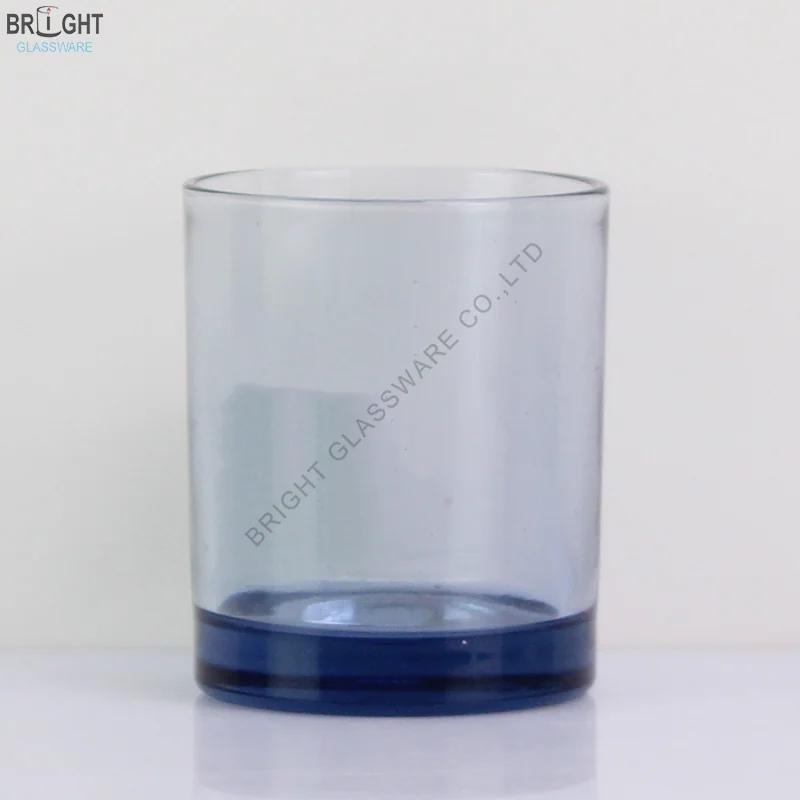
Opting for a supplier's standard stock candle jars is one of the most intelligent and cost-effective procurement strategies. These jars are produced using mature, proven molds in large, continuous runs. This process creates immense economies of scale, lowering the per-unit cost significantly without sacrificing essential quality control.
Dive Deeper
Choosing a standard stock model from a reputable manufacturer provides the perfect balance of cost, quality, and speed. Here’s why it’s such a powerful strategy for brands of all sizes.
Zero Mold Development Fees
The most obvious benefit is eliminating the need for a custom mold, which can be a substantial upfront investment8. By choosing from a supplier's existing library, you bypass this cost entirely, freeing up capital for other aspects of your business, like marketing or fragrance development.
Proven Quality and Reliability
A stock mold that has been used for millions of units is a proven asset. The manufacturer has perfected the production parameters for that specific design, ensuring a high degree of consistency and minimizing defects like waviness or uneven thickness. The annealing process is dialed in, and quality control checkpoints are well-established.
Faster Lead Times and Potential for In-Stock Supply
Because these jars are in high demand, manufacturers often produce them continuously or maintain inventory. This can dramatically shorten your lead times compared to the weeks or months required for custom mold development and testing. In some cases, you may be able to secure stock for immediate shipment.
The Perfect Base for Customization
"Standard" does not mean "boring." A classic straight-sided jar is a blank canvas. You can easily create a unique and premium product by applying your branding through:
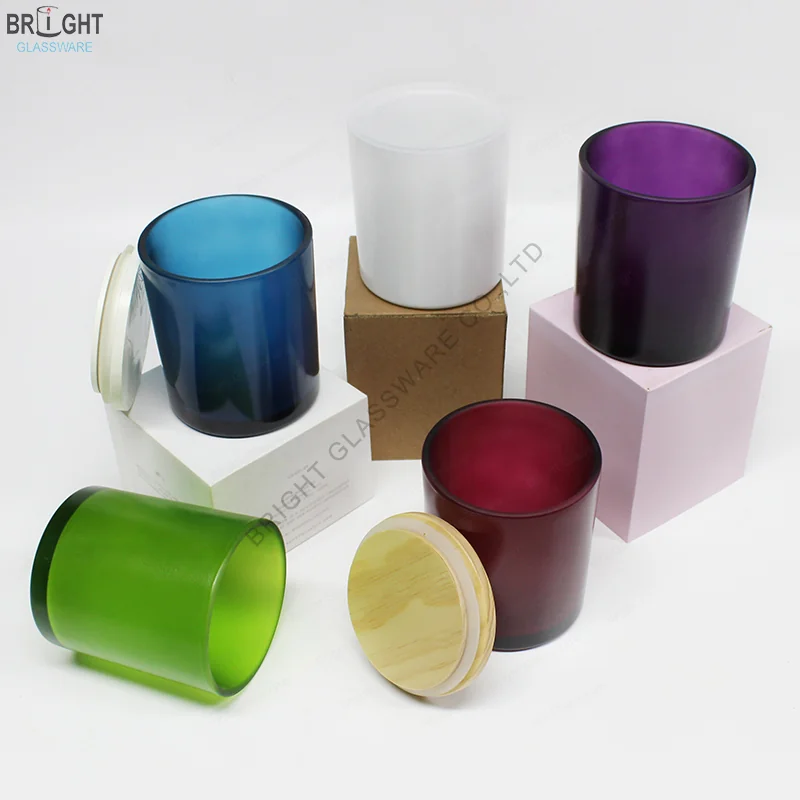
- Custom colors via spraying or inner coating
- Finishes like frosting or electroplating
- Printed logos and designs
- Unique and elegant lids (wood, metal, bamboo)
- Custom-designed retail packaging
This approach provides the best of both worlds: the cost-efficiency of mass production and the brand differentiation of a custom product.
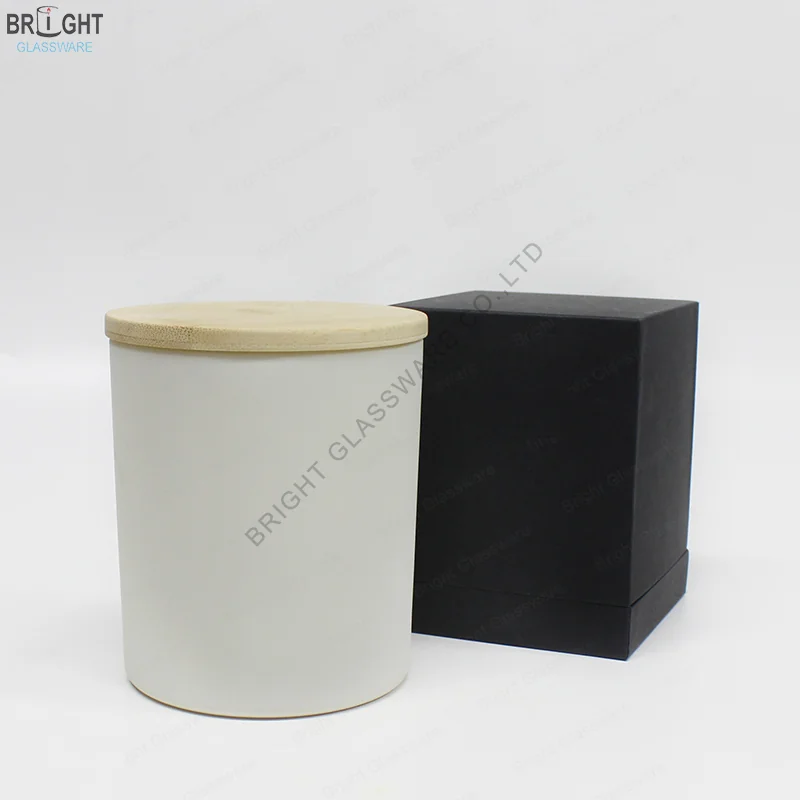
Two Standard Straight-Sided Glass Candle Jar Options
Hearing that standard jars are a great option is one thing, but seeing concrete examples makes the concept much clearer. It's hard to act on abstract advice, so let me introduce two of our most popular and cost-effective candle jar models to illustrate the point.
For instance, our two standard straight-sided glass candle jar models are classic vessels that serve as a reliable and budget-friendly foundation for hundreds of candle brands worldwide. They are part of our extensive portfolio of over 3,000 existing molds, representing a smart starting point for your next collection.
Dive Deeper
These two models showcase the versatility and value that standard jars offer.
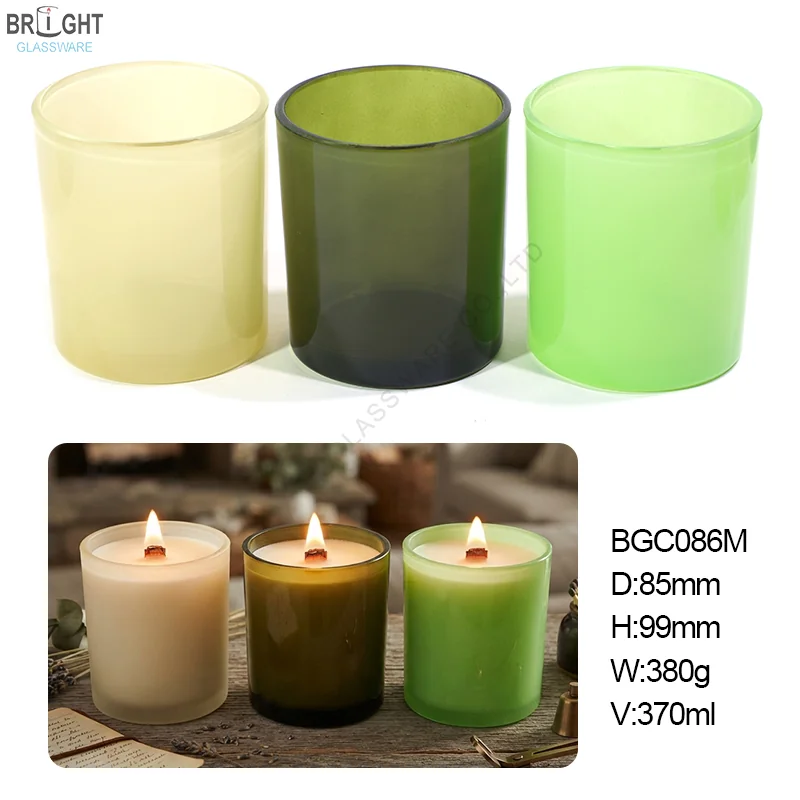
The 370 ml Straight-Sided Glass Candle Jar
This model is a timeless classic, beloved for its clean lines and versatile proportions.
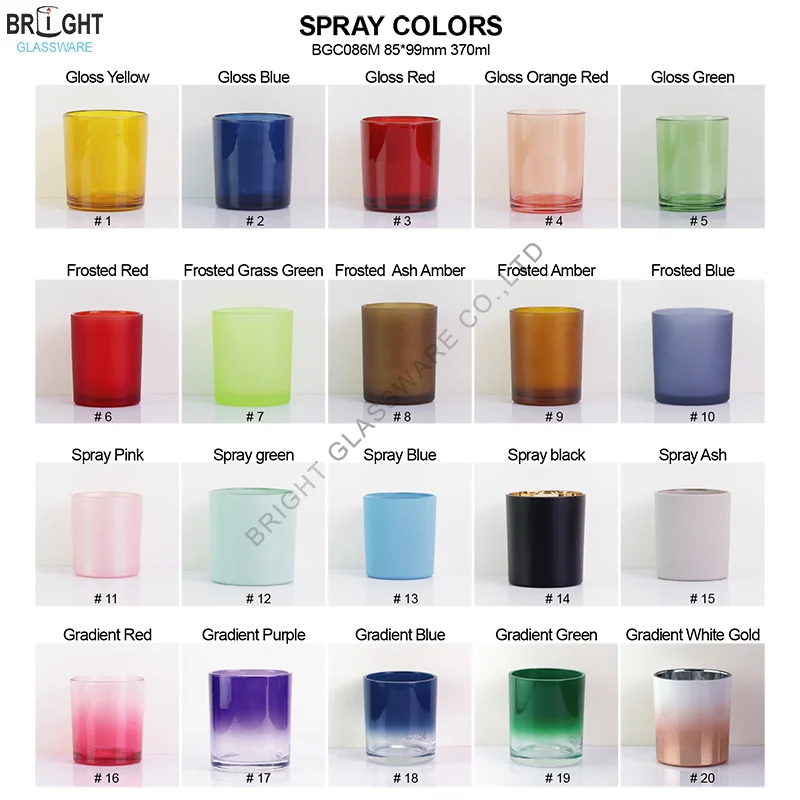
- Model number: BGC086M
- Specifications: Approx. Diameter 85mm, Height 99mm, Weight 380g, Capacity 370ml (12.5 oz).
- Versatility: Its simple, straight-sided design is perfect for easy labeling and suits a wide range of brand aesthetics, from minimalist to luxury.
- Customization: As shown in our catalog, this jar can be transformed with an endless array of spray colors, finishes, and logo printing, allowing you to match it perfectly to your brand identity.
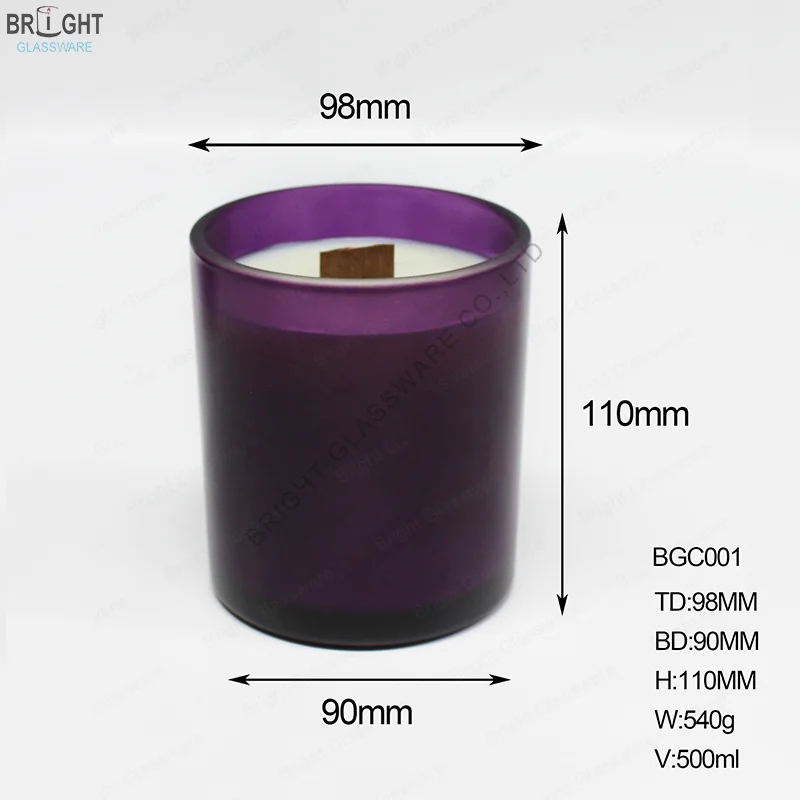
The 500 ml Straight-Sided Glass Candle Jar
For brands looking for a more substantial presence, the 500 ml vessel offers a larger format with the same cost-effective benefits.
- Model number: BGC001
- Specifications: Approx. Top Diameter 98mm, Height 110mm, Weight 540g, Capacity 500ml (16.9 oz).
- Impact: This heavier, larger jar provides a high-perceived value and is ideal for multi-wick candles or luxury single-wick offerings.
- Full Solution: We often supply this model as part of a complete package, including matching lids and custom retail boxes, simplifying the procurement process for our clients.
For both models, our typical minimum order quantity (MOQ) starts around 3,000 pieces, offering an accessible entry point for serious B2B buyers. By choosing a proven existing-mold design, you leverage our production efficiency to get a high-quality jar at a competitive price. Please note that all specifications should be confirmed with our team during your inquiry.
How to Compare Candle Jar Prices Without Sacrificing Quality
You're now armed with the technical knowledge to look beyond the price tag. To make it actionable, you need a practical checklist for your next sourcing project. Without a systematic approach, it's easy to get overwhelmed by details and fall back into the trap of simply comparing numbers on a spreadsheet.
To accurately compare candle jar prices and find the best true value, you must evaluate physical samples for defects, inquire about the supplier’s manufacturing and QC processes, confirm dimensional consistency for your production needs, and critically analyze the proposed packaging solution relative to your supply chain realities.
Dive Deeper
Use this checklist to conduct a thorough, holistic comparison of potential suppliers.
- Demand and Evaluate Physical Samples: Never place a bulk order without first inspecting physical samples. Check for visual clarity, wall waviness, uneven thickness, and any embedded particles. Test the fit with your chosen lids.
- Ask About Process Control: A transparent and reliable supplier will be able to speak confidently about their manufacturing process. Ask them directly: "Can you describe your annealing process?" and "What quality control checks do you perform during and after production?"
- Verify Dimensions and Consistency: Request a technical drawing or specification sheet for the jar. Use calipers to measure the samples you receive—check the height, opening diameter, and base diameter. Assess the consistency across multiple samples. This is non-negotiable if you use any automated equipment.
- Scrutinize the Packaging Solution: This is as important as the jar itself. Ask for detailed photos and specifications of the master cartons, inner dividers, and any other protective materials they will use for your export shipment. If it looks flimsy, it probably is.
- Inquire About High-Volume Stock Molds: Specifically ask suppliers to quote their most popular, highest-volume standard models. This signals that you are a savvy buyer looking for the intersection of quality and value, not just the lowest possible number.
- Clarify the Total Cost: Ensure you have a complete picture. Confirm the MOQ, production lead time, costs for any desired decorations, and shipping terms (FOB, EXW, etc.). Use this information to calculate the total landed cost per usable jar.
By following these steps, you shift the conversation from "who is cheapest?" to "who offers the best overall value and lowest risk?"
Frequently Asked Questions
What is the minimum order quantity (MOQ) for cheap candle jars?
For our standard, cost-effective models, the MOQ is often around 3,000 units to ensure an efficient production run. MOQs for the absolute cheapest jars on the market can vary wildly, but be aware that extremely low prices often require massive order volumes to be profitable for the manufacturer.
Can I still customize a cheap, standard candle jar?
Absolutely. Using a standard stock jar as your base is a smart, cost-effective strategy. You can then create a completely unique product through value-added services like color spraying, frosting, logo printing, custom labels, and by selecting a distinctive lid. This gives you powerful brand differentiation without the high upfront cost of a custom mold.
How can I test a candle jar for proper annealing?
A standard industry procedure is a thermal shock test. This typically involves moving the glass between hot and cold water baths to simulate rapid temperature changes. We recommend that buyers have this test performed by a qualified third-party lab or discuss the supplier's own testing protocols and request to see their quality control reports.
Are heavier glass jars always better quality?
Not necessarily. While a heavy jar can feel substantial, its true quality and safety depend more on the manufacturing process—specifically proper annealing and uniform wall thickness—than on weight alone. A heavy but poorly annealed jar can crack just as easily as a light one, while a well-made, lighter jar can be exceptionally durable.
Conclusion
In the search for the cheapest candle jars, it’s essential to look beyond the unit price. The lowest quote on a spreadsheet rarely reflects the true cost of getting a quality product onto your customers' shelves. True cost-effectiveness is achieved by balancing price with manufacturing quality, supplier reliability, and robust packaging. The hidden risks of improper annealing, inconsistent dimensions, and shipping damage can quickly erase any initial savings and harm your brand.
A smarter approach is to leverage a supplier's high-volume standard models. By choosing a proven, mass-produced jar, you benefit from economies of scale without compromising on the critical quality controls that ensure safety and consistency. This allows you to invest your budget in customization—like colors, logos, and lids—that truly differentiates your brand.
If you are looking for a reliable and cost-effective candle packaging partner who understands the total cost of ownership, we invite you to explore our extensive catalog of standard glass candle jars. Contact our team today to discuss your project, and let us help you find the perfect balance of quality, price, and customization.
"Energy Efficiency Improvement and Cost Saving Opportunities ...", https://energyanalysis.lbl.gov/publications/energy-efficiency-improvement-and-7. Studies on glass manufacturing have shown that cost-cutting measures, such as reduced annealing times or inadequate packaging, can lead to increased defect rates and breakage during transit. Evidence role: general_support; source type: research. Supports: Low-cost glass jar production often results in quality compromises such as cracking and shipping damage.. Scope note: The findings may vary depending on the specific manufacturing processes and materials used. ↩
"Economies of scale", https://en.wikipedia.org/wiki/Economies_of_scale. Educational resources on manufacturing economics explain that high-volume production spreads fixed costs over more units, reducing the cost per unit. Evidence role: mechanism; source type: education. Supports: Economies of scale reduce per-unit costs in high-volume glass jar production.. Scope note: The principle applies broadly but may not account for specific inefficiencies in certain factories. ↩
"Annealing (glass)", https://en.wikipedia.org/wiki/Annealing_(glass). Educational materials on glass production detail how annealing relieves internal stresses, making glass less prone to cracking under temperature changes. Evidence role: mechanism; source type: education. Supports: Annealing is critical for reducing internal stresses in glass, preventing thermal shock fractures.. Scope note: The explanation may not address specific variations in annealing practices across manufacturers. ↩
"7 Types Of Glass Defects", https://www.glass-ts.com/news/7-types-of-glass-defects/. Research on glass manufacturing highlights that insufficient quality control in low-cost production can lead to visible defects like bubbles and uneven surfaces. Evidence role: general_support; source type: research. Supports: Low-cost glass production often results in surface defects such as waviness and embedded bubbles.. Scope note: The prevalence of these defects may vary depending on the specific production methods used. ↩
"Advantages and Disadvantages of Glass Packaging", https://www.plastekgroup.com/blog/advantages-and-disadvantages-of-glass-packaging/. Institutional guidelines on packaging for fragile items emphasize the importance of robust materials to minimize breakage during transit. Evidence role: general_support; source type: institution. Supports: Inadequate packaging increases the risk of breakage during shipping for glass products.. Scope note: The guidelines may not specifically address candle jars but apply broadly to glassware. ↩
"Annealing (glass)", https://en.wikipedia.org/wiki/Annealing_(glass). Educational resources on glass production explain how controlled cooling during annealing reduces internal stresses and enhances structural integrity. Evidence role: mechanism; source type: education. Supports: Annealing relieves internal stresses in glass, preventing cracking and improving durability.. Scope note: The explanation may not cover specific annealing practices for candle jars. ↩
"Thermal Shock Testing for Assuring Reliability of Glass- ...", https://ntrs.nasa.gov/api/citations/19910011187/downloads/19910011187.pdf. Educational materials on glass testing describe thermal shock tests as a reliable method for assessing durability and annealing quality. Evidence role: case_reference; source type: education. Supports: Thermal shock tests are commonly used to evaluate the annealing quality of glass products.. Scope note: The procedure may vary depending on the specific type of glass being tested. ↩
"Meat - Custom Processing", https://ag.colorado.gov/ics/meat-custom-processing. Industry reports on glass manufacturing indicate that custom mold development typically ranges from $5,000 to $20,000, depending on design complexity. Evidence role: statistic; source type: research. Supports: Custom molds for glass jars can cost thousands of dollars, depending on complexity.. Scope note: The cost may vary significantly based on regional factors and specific mold requirements. ↩
Keep Reading