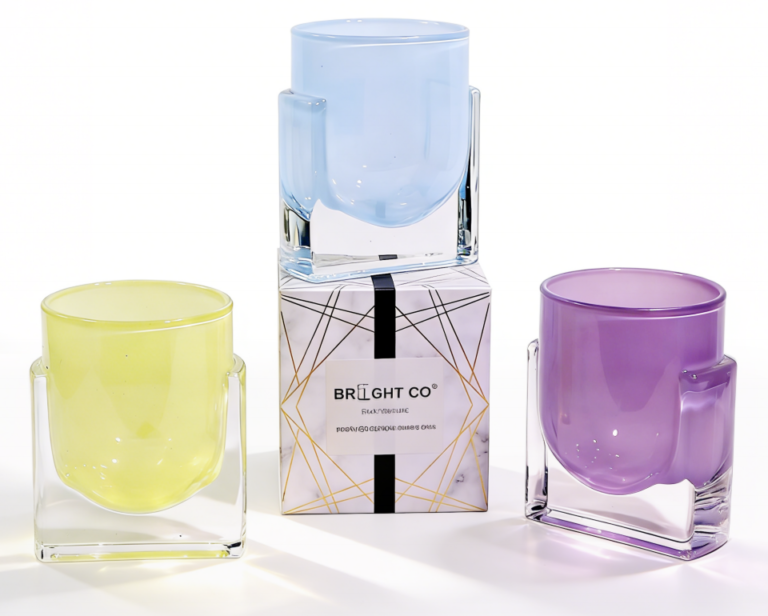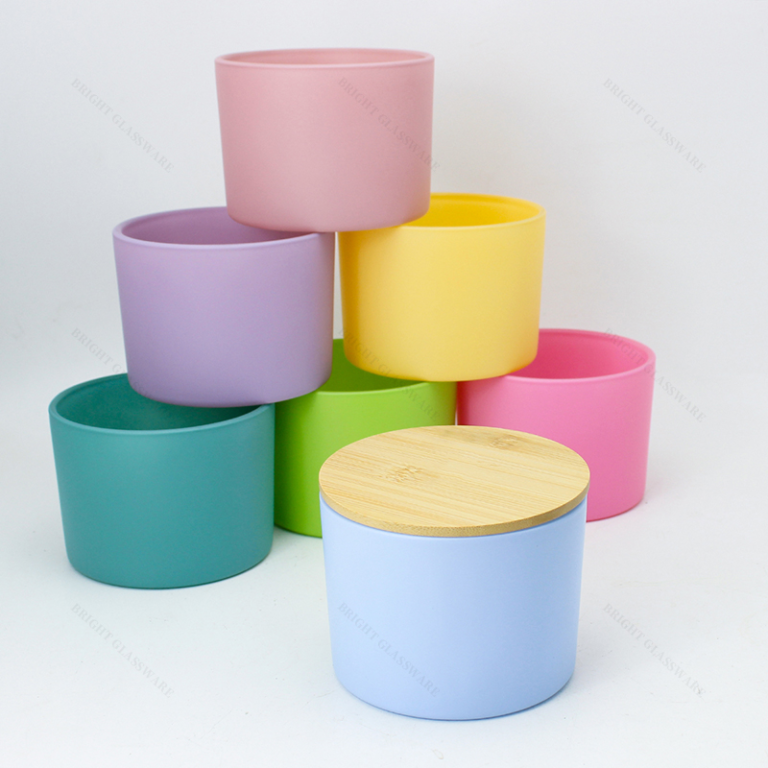

Finding a supplier of luxury glass candle jars wholesale requires more than comparing attractive catalog photos. Subtle defects in glass walls or decorative finishes can compromise a brand's premium presentation.1 Buyers should evaluate sourcing channels alongside the manufacturing details that determine consistent quality.
You can buy luxury glass candle jars wholesale directly from specialized B2B manufacturers, from packaging distributors and wholesalers, or through global sourcing platforms like Alibaba. The best suppliers are those who can demonstrate robust quality control over critical manufacturing details like glass wall uniformity, the annealing process, and the adhesion of surface decorations.
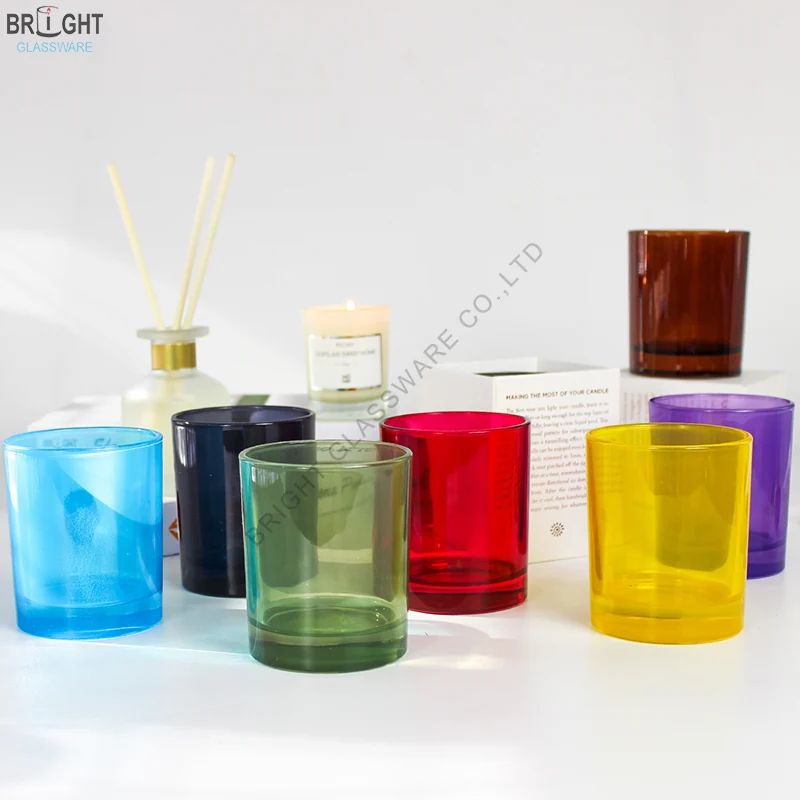
Finding a supplier is only the first step. Look beyond catalog photos and price lists to evaluate the manufacturing details that distinguish luxury jars from standard ones.
Where Can You Buy Luxury Glass Candle Jars Wholesale?
High-end candle containers can be difficult to source consistently. The key is finding suppliers that deliver reliable quality, not simply an appealing sample or low price.
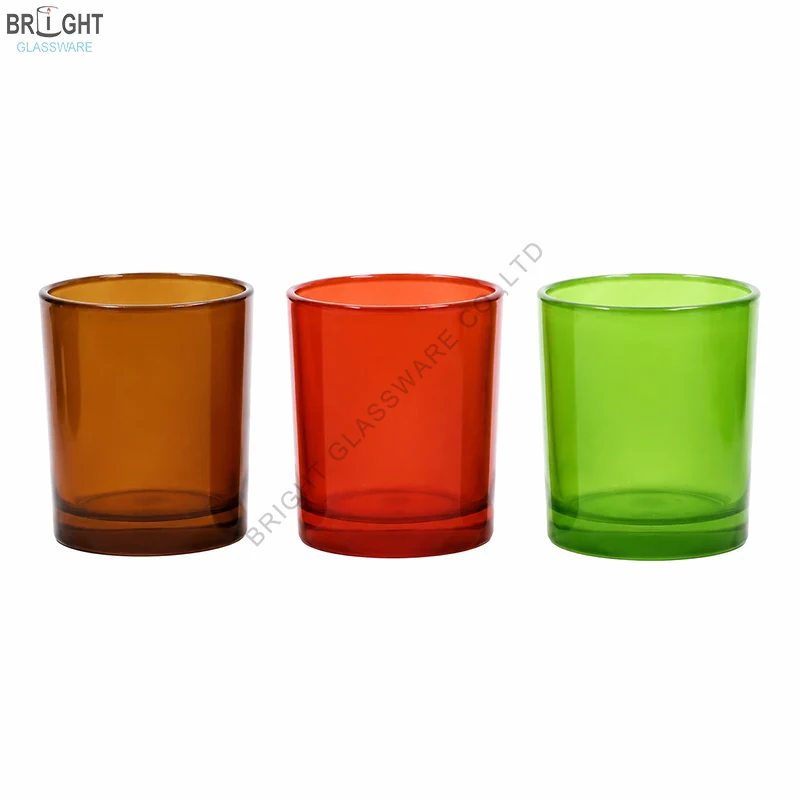
You can source luxury glass candle jars wholesale from three primary channels: directly from manufacturers like us, through regional packaging distributors, or via large B2B marketplaces. Each path has its own advantages, depending on your business's scale, customization needs, and procurement strategy.
Dive Deeper into Your Sourcing Options
Choosing the right sourcing channel is a strategic decision. Based on our 20+ years of experience exporting glass packaging, here is how we see the landscape for buyers.
Direct from a Manufacturer
This is often the preferred route for brands seeking customization, competitive pricing on large volumes, and a direct line of communication regarding quality control. When you work directly with a manufacturer like Bright Glassware, you gain access to our full range of capabilities.
- Pros: Better pricing for bulk orders, full OEM/ODM and private label capabilities, direct control over customization (color, finish, logo), and transparent communication on production timelines and quality checks. You can develop exclusive molds for a truly unique product.
- Cons: Typically higher Minimum Order Quantities (MOQs) compared to wholesalers. The procurement process can be more involved, requiring you to manage international shipping and import logistics.
Packaging Wholesalers & Distributors
These companies purchase large quantities from various manufacturers and stock them regionally. They are an excellent option for businesses that need smaller quantities or faster delivery times.
- Pros: Lower MOQs, faster shipping from local warehouses, and the ability to bundle different packaging items from various sources in one order.
- Cons: Higher per-unit cost, limited customization options (often restricted to what they have in stock), and less direct control over manufacturing quality. You are relying on the distributor's own supplier vetting process.
B2B Sourcing Platforms
Platforms like Alibaba, Made-in-China, and Global Sources connect thousands of buyers with suppliers. They offer a vast selection but require careful vetting.
- Pros: A massive variety of suppliers and product styles in one place, competitive pricing due to high competition.
- Cons: Quality can vary dramatically between suppliers. Communication can be challenging, and it's crucial to perform due diligence, verify certifications, and always order samples before committing to a bulk purchase. You are responsible for vetting the factory's true capabilities.
What Makes a Luxury Glass Candle Jar Different from an Ordinary Jar?
What justifies the "luxury" label? Many glass candle jars look similar in photographs, making quality difficult to judge. Buyers need to assess the manufacturing details behind the finish.
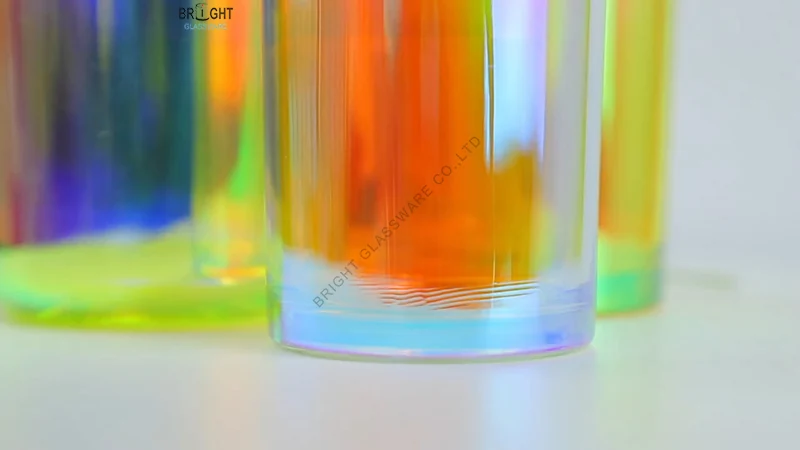
A luxury glass candle jar is defined by manufacturing details that are often invisible to the untrained eye. Key differentiators include the perfect uniformity of the glass walls, a thorough annealing process to ensure thermal stability, and the flawless application and durability of any surface decorations like electroplating or printing.
Dive Deeper into the Hallmarks of Quality
From our perspective as a manufacturer, the difference between a standard jar and a luxury one comes down to process control. While aesthetics are paramount, the underlying structural integrity and consistency are what we focus on. Here are the elements we believe define a truly high-end glass container.
- Flawless Glass Distribution: A luxury jar has smooth, even walls without any "waviness" or distortion. The thickness of the glass is consistent around the entire circumference and from top to bottom.
- Internal Stress Management: The glass has undergone a proper annealing process. This controlled cooling procedure removes internal stresses, drastically reducing the risk of the jar cracking from thermal shock when the candle burns.
- Pristine Clarity and Color: For clear jars, the glass should be crystal clear with no cloudiness, bubbles, or inclusions. For colored glass, the color must be consistent and rich throughout the batch.
- Decoration Excellence: Surface treatments—whether it's spraying, electroplating, or screen printing—must be perfect. This means excellent adhesion (no scratching or peeling), uniform color and finish, and crisp, precise logo application.
- Perfect Accessory Fitment: The rim of the jar should be perfectly level to ensure a snug and secure fit with lids. For diffuser bottles, the neck and screw thread must be manufactured to tight tolerances to prevent leaks.
Ultimately, a luxury jar is the result of a commitment to excellence at every stage of production. It's an investment in a vessel that not only looks beautiful but also performs safely and reliably, protecting your customers and your brand.
How Does Glass Wall Uniformity Affect Candle Jar Quality?
A thick-walled glass jar may feel substantial, but thickness alone doesn't guarantee quality. Uneven glass distribution can affect both appearance and performance.
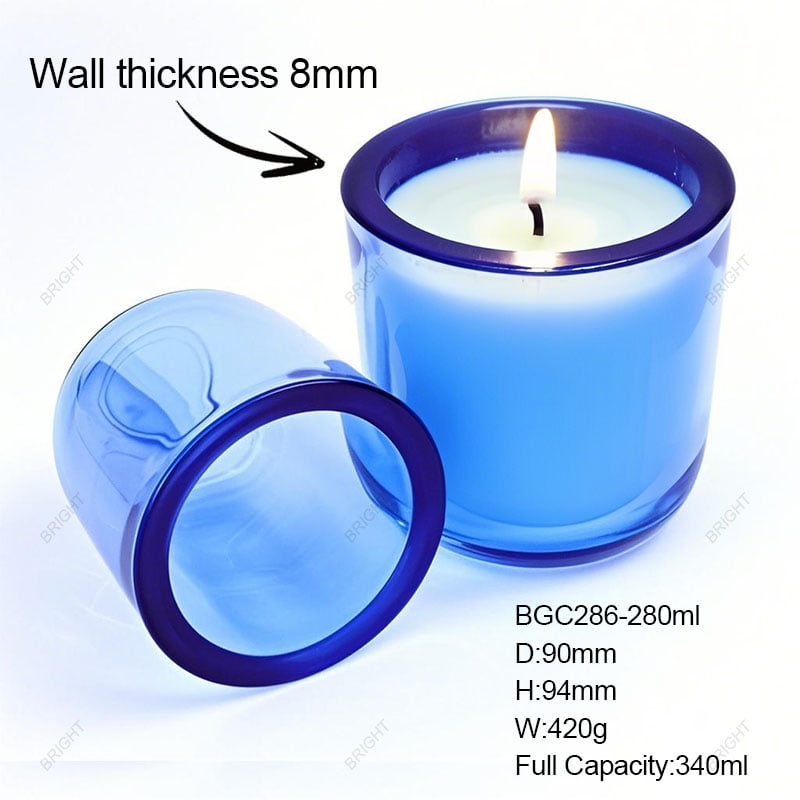
Glass wall uniformity is more critical than sheer thickness.2 A jar with one side thicker than the other will heat and expand unevenly as the candle burns.3 This creates concentrated thermal stress, which can lead to cracking and is a serious safety hazard that premium brands cannot afford.
Dive Deeper into Wall Consistency
In our production facility, we pay close attention to two aspects of wall uniformity: waviness and thickness consistency. These details are often overlooked during procurement but are vital for creating a truly luxury glass candle jar for wholesale purchase.
The "Waviness" or "Washboarding" Effect
This refers to visible, wave-like distortions on the surface of the glass wall. While it may seem like a minor aesthetic flaw, it's often a sign of inconsistent glass flow during the molding process. For a high-end brand, where a sleek and perfect finish is part of the brand promise, such imperfections are unacceptable. When evaluating samples, hold the jar up to a light source and rotate it slowly, looking for ripples or distortions in the reflection. A premium jar will have a smooth, flat surface that reflects light evenly.
Thickness Uniformity and Thermal Stress
This is the more critical safety factor. When a candle burns, it heats the glass container. If the glass wall is, for example, 3 mm thick on one side and only 1.5 mm on the other, the thinner side will heat up faster and expand more than the thicker side. This differential expansion creates immense internal stress.
This stress is especially problematic when the flame gets lower in the jar, where heat is more concentrated. Over time, or with a sudden temperature change (like moving the candle to a cooler spot), this stress can cause the glass to crack or even shatter. That's why, in our quality control process, we measure the wall thickness at multiple points around the circumference to ensure it falls within a very tight tolerance.
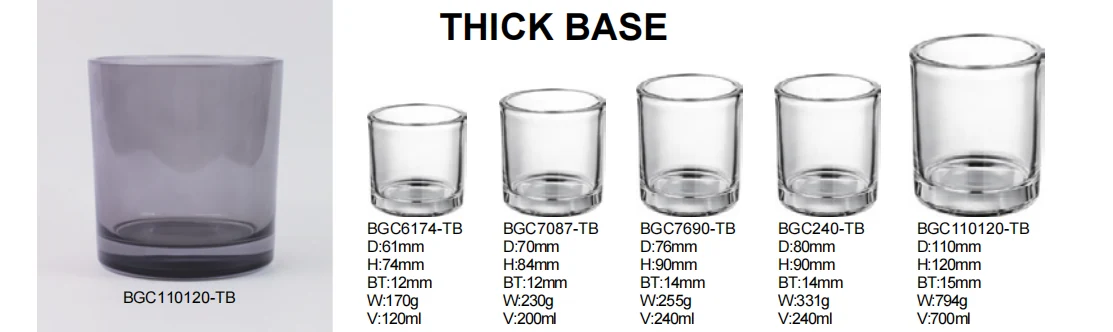
For designs like our thick-bottom candle jars (e.g., model BG054), managing the transition from the thick base to the thinner walls is crucial. A smooth, well-managed transition is key to mitigating stress points. When sourcing, don't just ask, "How thick is the glass?" Ask, "What is your tolerance for wall thickness variation?"
Why Is the Annealing Process Important for Glass Candle Jars?
You've approved a beautiful sample, and the jar feels solid. What else needs checking? Annealing is a critical but invisible manufacturing step. If rushed, residual stresses may remain in the jar, increasing the risk of failure when exposed to heat.
The annealing process is essential for glass candle jars because it removes internal stresses created during manufacturing.4 By slowly cooling the jars in a controlled manner, annealing ensures the glass can withstand the thermal shock of a burning candle, dramatically reducing the risk of cracking or shattering during use.
Dive Deeper into Annealing and Residual Stress
Glass is formed at extremely high temperatures. As it cools and solidifies, the outer surface cools faster than the interior. This differential cooling creates immense tension and compression forces within the glass structure, known as "residual stress." An un-annealed or poorly-annealed piece of glass is like a tightly wound spring, waiting for a trigger to release its stored energy.
How the Annealing Process Works
After a jar is molded, it's not finished. It immediately enters a long, temperature-controlled oven called an annealing lehr. Inside the lehr, the process unfolds in stages:
- Reheating: The jars are briefly held at a uniform temperature just below their softening point. This allows the internal glass structure to relax, releasing the manufacturing stresses.
- Controlled Cooling: The jars then move through progressively cooler zones of the lehr. This cooling is done very slowly and precisely to ensure that the entire body of glass—both surface and interior—cools at the same rate. This prevents new stresses from forming.
- Final Cooling: Once below a critical temperature point, the jars can be cooled more rapidly to room temperature.
The entire process can take over an hour, depending on the thickness and shape of the glass. A supplier who tries to cut costs by speeding up this process is compromising the safety and integrity of the final product.5
What Buyers Should Ask
When evaluating a supplier for luxury glass candle jars wholesale, you should inquire about their annealing process. While you can't see residual stress, you can ask questions that reveal a supplier's commitment to quality:
- "Can you describe your annealing process for these jars?"
- "What quality control measures do you have in place to verify proper annealing?"
A knowledgeable supplier will be able to explain their process confidently. However, we must stress an important point: even a perfectly annealed jar is not a guarantee of safety for every candle formulation. As a brand owner, you must still conduct your own rigorous burn tests with your specific wax, fragrance, and wick combination to ensure the final product is safe for consumers. The supplier provides a quality vessel; the brand is responsible for verifying its compatibility with the final product.
How to Evaluate Electroplated Glass Candle Jars
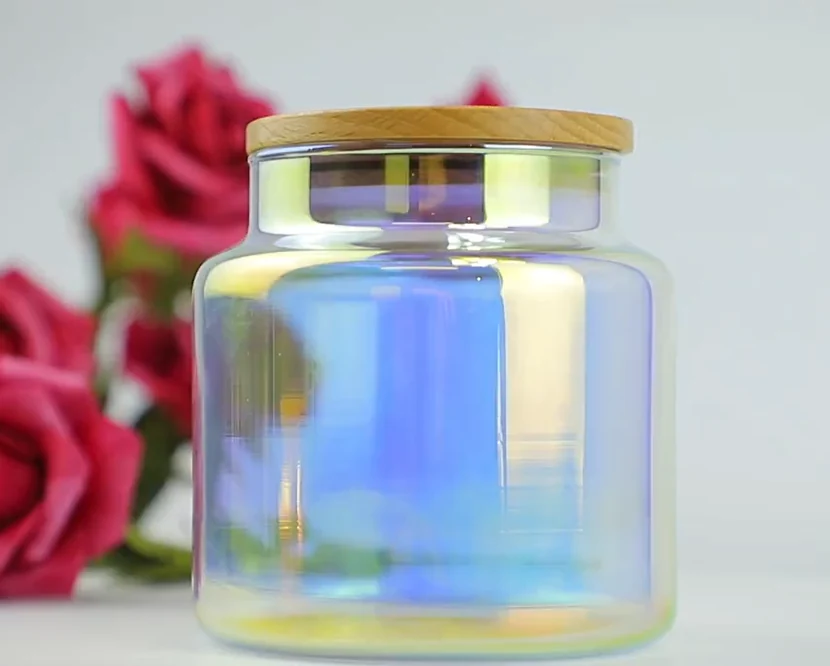
Electroplated candle jars offer that stunning, reflective, metallic finish that screams luxury.6 But you've heard the horror stories: finishes that scratch off with a fingernail or colors that vary from one side of the jar to the other. How can you ensure the beautiful sample you approved is what you'll get in your bulk order?
To properly evaluate electroplated glass candle jars, you must check for two key quality indicators: coating adhesion and color consistency. Adhesion should be verified with a cross-hatch test, while color consistency requires examining the jar from all angles to check for "yin-yang" discoloration.
Dive Deeper into Electroplating Quality Control
At Bright Glassware, we produce many electroplated jars, like our popular BGC1088 iridescent model. This jar features a 30 cl capacity, a diameter of 88 mm, and a height of 100 mm with a classic round base. Through manufacturing thousands of these, we've honed our QC process to focus on the details that matter most to luxury brands.
1. Coating Adhesion: The Cross-Hatch Test
A beautiful finish is worthless if it doesn't last. The most common failure in cheap electroplating is poor adhesion, where the metallic layer peels or scratches off easily. The industry-standard method for testing this is the Cross-Hatch Adhesion Test (ASTM D3359).
Here's how we do it:
- A special cutting tool is used to score a grid of 6x6 or 11x11 lines through the coating down to the glass surface.
- Specialized, pressure-sensitive tape is firmly applied over the grid.
- The tape is then pulled off at a rapid, sharp angle.
- The grid is then inspected under magnification. A high-quality finish will show no, or very minimal, flaking of the coating from the squares of the grid.
When you receive samples, you can perform a simpler version of this test by gently trying to scratch the finish in an inconspicuous area (like the bottom) with a fingernail or a coin. If the coating comes off easily, it's a major red flag.
2. Color Consistency: Avoiding the "Yin-Yang" Effect
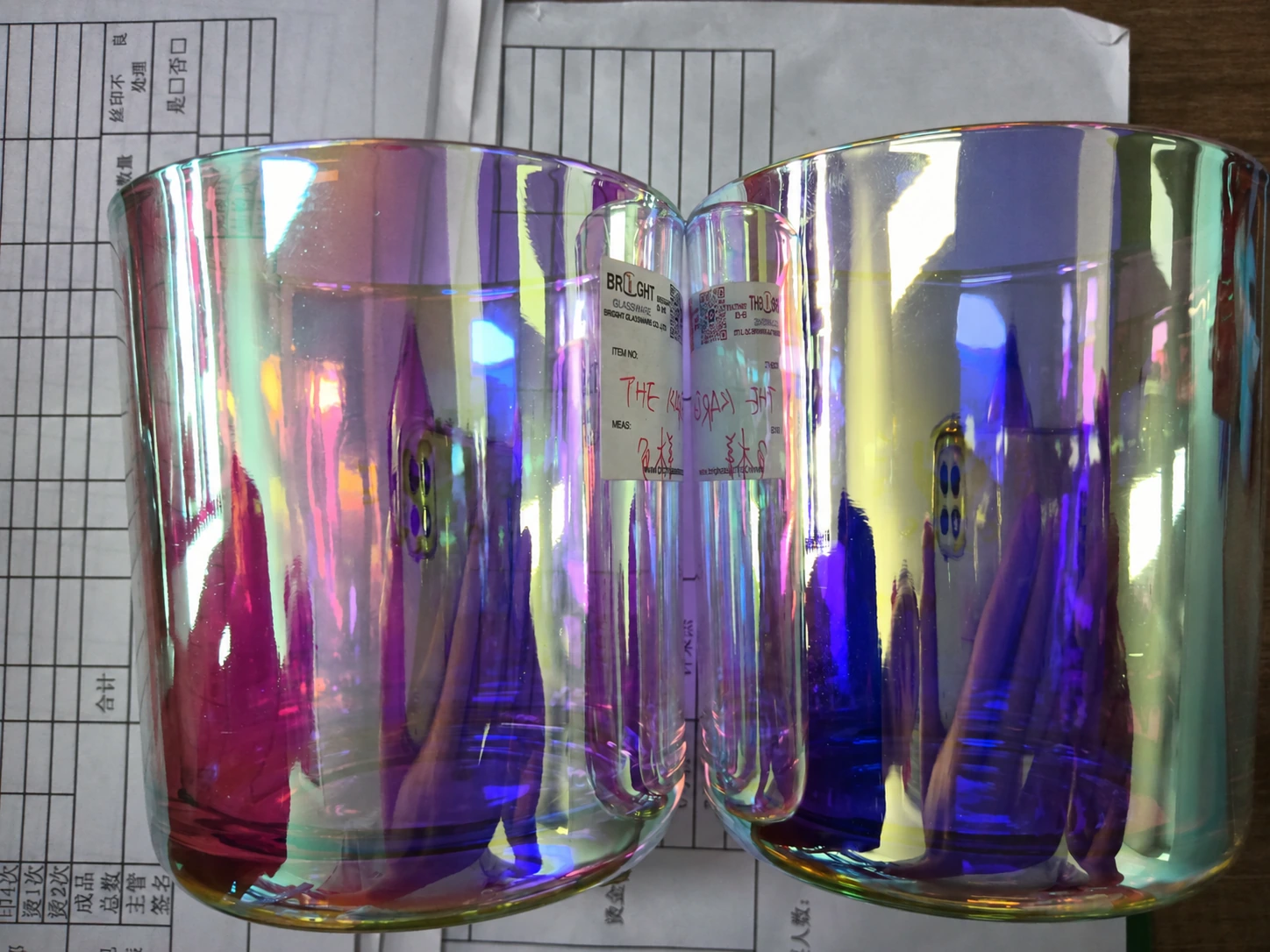
The "yin-yang" effect (阴阳面) is a term we use for uneven color or reflectivity on a single jar. It happens when the electroplating process doesn't deposit the metallic layer uniformly around the entire surface. One side might look perfect, while the other appears faded, discolored, or has a different sheen.
This is a defect that is impossible to spot in a single, front-facing product photo. It only becomes apparent when you physically hold and rotate the jar. This is why relying solely on pictures to approve an electroplated finish is a huge risk. When you get samples, make sure to inspect them in good lighting, turning them 360 degrees to check for any noticeable shifts in color or finish. A premium electroplated jar should look identical from every angle.
What Quality Checks Should Buyers Request Before Bulk Purchasing?
You are ready to place a large order, but a nagging thought remains: how can you be sure the thousands of jars you receive will match the perfect sample on your desk? Placing a bulk order is a significant investment, and without the right checks in place, it can feel like a gamble.7
Before committing to a bulk purchase of luxury glass candle jars wholesale, you must request and perform a series of quality checks. This includes a thorough physical evaluation of pre-production samples, confirmation of the supplier's internal QC processes, and a clear agreement on acceptable quality limits (AQL).
Dive Deeper into Your Pre-Purchase Checklist
To protect your investment and your brand, you need to move from being a passive buyer to an active quality partner. Here is a checklist of checks and questions we recommend every buyer use when evaluating a potential supplier.
1. Demand Representative Samples
Do not approve production based on catalog photos or generic samples. Request pre-production samples (PPS) that are made using the exact materials, molds, and decoration techniques intended for your bulk order. This is your "golden sample" and the benchmark against which the final production will be measured.
2. Conduct a Thorough Physical Inspection
When you receive your PPS, evaluate them against this checklist:
- Visual Uniformity: Hold the jar up to the light. Is the wall surface smooth, or can you see waves and ripples?
- Dimensional Accuracy: Use calipers to measure the height, diameter, and opening. Do they match the specifications?
- Wall Thickness: If possible, ask the supplier for the wall thickness specifications and their tolerance. Check for obvious thin or thick spots.
- Rim Levelness: Place the jar upside down on a perfectly flat surface. Does it sit flat, or does it wobble? A wobbly jar means an uneven rim and a poor lid fit.
- Decoration Quality: For decorated jars, perform the scratch test for adhesion. Rotate it 360 degrees to check for color consistency. Check that logos are crisp, centered, and flawlessly printed.
3. Inquire About Their Internal QC Processes
A reliable supplier will have a robust quality system. Ask them directly:
- "What are your quality control checkpoints during production?"
- "Do you perform annealing on all your candle jars?"
- "For our electroplated jars, will you be performing a cross-hatch adhesion test? Can you share the results?"
- "What is your process for checking color consistency across a batch?"
Their ability to answer these questions clearly and confidently is a strong indicator of their professionalism and commitment to quality.
4. Establish an AQL Agreement
No manufacturing process is perfect; there will always be some minor variation. An Acceptable Quality Limit (AQL) is a statistical method for defining the maximum number of defective units that would be considered acceptable in a batch.8 Agreeing on an AQL standard with your supplier beforehand provides an objective framework for inspecting the goods upon arrival and handling any potential disputes.
How to Choose a Reliable Luxury Candle Jar Wholesale Supplier
You understand the technical details that define a quality jar, but how do you find a supplier who can deliver on those promises consistently? A great product is meaningless without a reliable partner behind it. The search for a supplier is not just about the jar; it's about finding a long-term manufacturing partner.
Choosing a reliable luxury glass candle jar wholesale supplier involves evaluating their manufacturing expertise, communication, and overall service capabilities. Look for a partner with extensive industry experience, a one-stop solution model, and a proven track record of exporting quality products to your market.
Dive Deeper into Supplier Evaluation Criteria
As a business that has partnered with hundreds of brands—from startups to established names—we know what clients value most in a supplier relationship. It extends far beyond the physical product. Here are the key criteria you should use to vet potential partners.
| Criteria | What to Look For | Why It Matters |
|---|---|---|
| Experience & Specialization | 10+ years of experience in glass packaging for the candle/fragrance industry. A clear focus on your product category. | An experienced supplier understands the unique challenges of candle jars (thermal stress, lid fitment) and has refined their processes over time. |
| One-Stop Service | Ability to provide the jar, lid, surface decoration, custom logo, and even the final retail packaging (gift boxes). | This dramatically simplifies your supply chain, reduces risk, and ensures all components are designed to work together perfectly. Managing one supplier is far easier than coordinating five. |
| Customization Capabilities | Offers a full range of OEM/ODM services, from custom colors and finishes on existing molds to developing completely new, exclusive molds. | This allows your brand to evolve. You can start with a stock jar and private labeling, then invest in a unique shape as you grow, all with the same trusted partner. |
| Transparent Communication | Clear, prompt, and professional communication. The sales and support team should have technical knowledge. | Good communication is vital for avoiding misunderstandings about specifications, timelines, and quality expectations, especially when dealing with international suppliers. |
| Quality Control & Verification | Willingness to discuss their QC processes, share test results, and provide pre-production samples for approval. | This transparency is a hallmark of a confident, quality-focused manufacturer. It shows they stand behind their work and have nothing to hide. |
| Export Experience | A proven track record of shipping to your country/region. They should understand packaging for safe transit, container loading, and required customs documentation. | An experienced exporter ensures your goods arrive safely and without costly delays at customs. They know how to pack glass to minimize breakage during a long ocean freight journey. |
Choosing a supplier means building a partnership.9 Your candle jar shapes your brand identity, so evaluate the supplier's ability to deliver consistent quality and clear communication on every new order instead of focusing only on unit price.
Frequently Asked Questions
What is a good MOQ for wholesale luxury candle jars?
A reasonable MOQ (Minimum Order Quantity) for factory-direct wholesale is typically between 1,000 to 5,000 units per SKU, depending on the complexity of the jar and any custom decorations. For standard, in-stock items, it may be lower, while fully custom molds will require a higher commitment.
Can I get a custom shape for my luxury candle jar?
Yes, absolutely. Reputable manufacturers like us offer full OEM/ODM services, which include developing a custom mold based on your design, drawing, or physical sample.10 This is the best way to create a truly unique and exclusive vessel for your brand, though it involves an initial investment in tooling.
How can I test the quality of a sample candle jar?
Inspect it visually for waviness and clarity. Measure its dimensions. Place it on a flat surface to check the rim for levelness. For decorated jars, perform a scratch test on the finish. Most importantly, use the sample to conduct a full burn test with your wax and wick to ensure safety and performance.
Are thicker glass candle jars always better?
Not necessarily. While a certain minimum thickness is required for safety, wall uniformity is far more important than sheer thickness. A jar with extremely thick but uneven walls can be more prone to cracking from thermal stress than a moderately thick jar with perfectly even walls.
Conclusion
Successfully sourcing luxury glass candle jars wholesale requires moving beyond surface-level evaluations of price and appearance. As we've explored, the true markers of quality lie in the manufacturing details: the uniformity of the glass walls, the integrity of the annealing process to prevent thermal shock, and the adhesion and consistency of decorative finishes. By understanding these critical elements, you can ask suppliers the right questions and properly vet their capabilities. This empowers you to choose not just a product, but a reliable manufacturing partner committed to excellence.
If you are looking for a partner to bring your luxury candle, home fragrance, or perfume packaging vision to life, our team at Bright Glassware is here to help. With over two decades of experience, we offer a one-stop solution from design to delivery. Contact us today to discuss your project requirements and request samples.
"7 Types Of Glass Defects", https://www.glass-ts.com/news/7-types-of-glass-defects/. Research on consumer perception of product quality indicates that visible defects in packaging materials, such as glass jars, can diminish perceived brand value and customer trust. However, specific studies on luxury candle jars may be limited. Evidence role: general_support; source type: research. Supports: Defects in glass walls or decorative finishes can negatively impact the perception of a brand's premium quality.. Scope note: The support is based on general studies of packaging quality and consumer perception, not specific to candle jars. ↩
"The 5 Unexpected Benefits of Using Glass Wall Designs for ...", https://www.nanawall.com/blog/the-5-unexpected-benefits-of-using-glass-wall-designs-for-the-home. Studies on glass manufacturing highlight that uneven wall thickness can lead to thermal stress and structural failure, emphasizing the importance of uniformity over thickness. Evidence role: mechanism; source type: research. Supports: Uniform glass walls reduce thermal stress and improve the safety and durability of glass candle jars.. ↩
"Managing Thermal Stress Breakage | Vitro Architectural Glass", https://glassed.vitroglazings.com/managing-thermal-stress-breakage. Research on thermal properties of glass confirms that uneven wall thickness can result in differential expansion, increasing the risk of stress and failure under heat. Evidence role: mechanism; source type: research. Supports: Uneven wall thickness in glass can cause differential thermal expansion, leading to stress and potential cracking.. ↩
"Annealing (glass)", https://en.wikipedia.org/wiki/Annealing_(glass). Educational resources on glass manufacturing explain that annealing involves controlled cooling to relieve internal stresses, which is vital for preventing cracking or shattering in glass products exposed to heat. Evidence role: mechanism; source type: education. Supports: The annealing process is critical for removing internal stresses in glass products, ensuring durability and thermal stability.. ↩
"Annealing (glass)", https://en.wikipedia.org/wiki/Annealing_(glass). Studies on glass manufacturing processes confirm that improper annealing can lead to residual stresses, compromising the structural integrity and safety of glass products. Evidence role: mechanism; source type: research. Supports: Rushing the annealing process can leave residual stresses in glass, increasing the risk of cracking or shattering.. ↩
"Fashion and Packaging Finishes", https://www.macdermidenthone.com/markets/fashion-and-packaging. Educational materials on glass decoration techniques explain that electroplating creates a metallic finish, enhancing the aesthetic appeal of luxury glass products. Evidence role: general_support; source type: education. Supports: Electroplated finishes are widely used in luxury glass products for their reflective and metallic appearance.. ↩
"Strategies in Procurement Risk Management", https://enroll.webster.edu/strategies-in-procurement-risk-management/. Educational resources on procurement highlight the importance of quality control and supplier vetting to reduce risks in bulk purchasing. Evidence role: general_support; source type: education. Supports: Bulk purchasing in manufacturing involves risks, which can be mitigated through proper quality control measures.. ↩
"Acceptable quality limit", https://en.wikipedia.org/wiki/Acceptable_quality_limit. Educational resources on quality control define AQL as a widely used statistical method for setting defect tolerance levels in manufacturing processes. Evidence role: definition; source type: education. Supports: An Acceptable Quality Limit (AQL) is a statistical tool used to determine the maximum acceptable number of defective units in a production batch.. ↩
"Managing Relationships with Suppliers and Vendors You Use", https://www.apu.apus.edu/area-of-study/business-and-management/resources/managing-relationships-with-suppliers-and-vendors-you-use/. Educational resources on supply chain management emphasize the importance of strong supplier relationships for maintaining quality and reliability in manufacturing. Evidence role: general_support; source type: education. Supports: Building a partnership with suppliers is crucial for ensuring consistent quality and long-term business success.. ↩
"Transform Your Vision into High-Quality OEM/ODM Products", https://www.linuo-glass.com/oemodm/. Industry reports on manufacturing trends indicate that OEM/ODM services are standard among manufacturers specializing in custom glass products. Evidence role: general_support; source type: institution. Supports: OEM/ODM services are commonly offered by reputable manufacturers to enable custom mold development for unique product designs.. ↩
Keep Reading