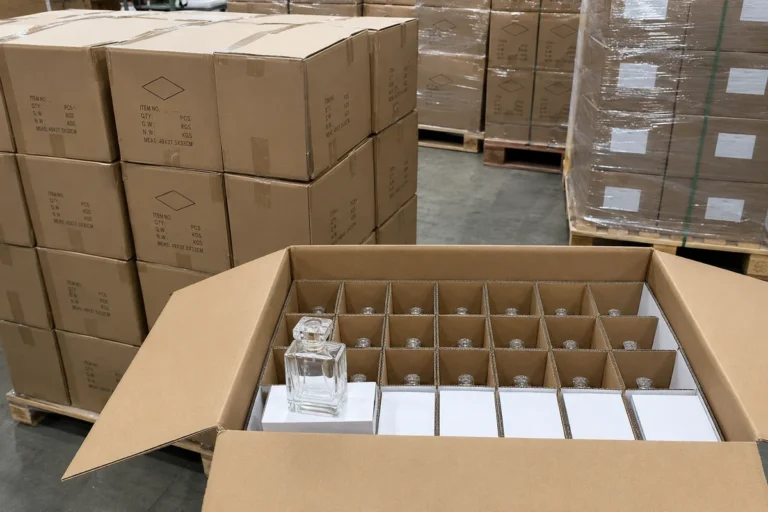

Finding a manufacturer for your brand's perfume bottles can feel like a high-stakes search. You have a vision for a luxurious product, but the risk of partnering with the wrong supplier—resulting in quality issues, delays, and a tarnished brand image—is immense. The solution is to find a manufacturing partner who is not just a glass maker, but a master of the craft, capable of turning a design into a flawless piece of luxury packaging.
The world's leading perfume bottles are manufactured by specialized glass packaging suppliers with deep expertise in material science, precision engineering, and sophisticated deep processing.1 These manufacturers, like Bright Glassware, go beyond simple glass molding to control every variable, from the purity of the raw materials to the micro-millimeter tolerance of the bottle neck, ensuring a final product worthy of a luxury brand.
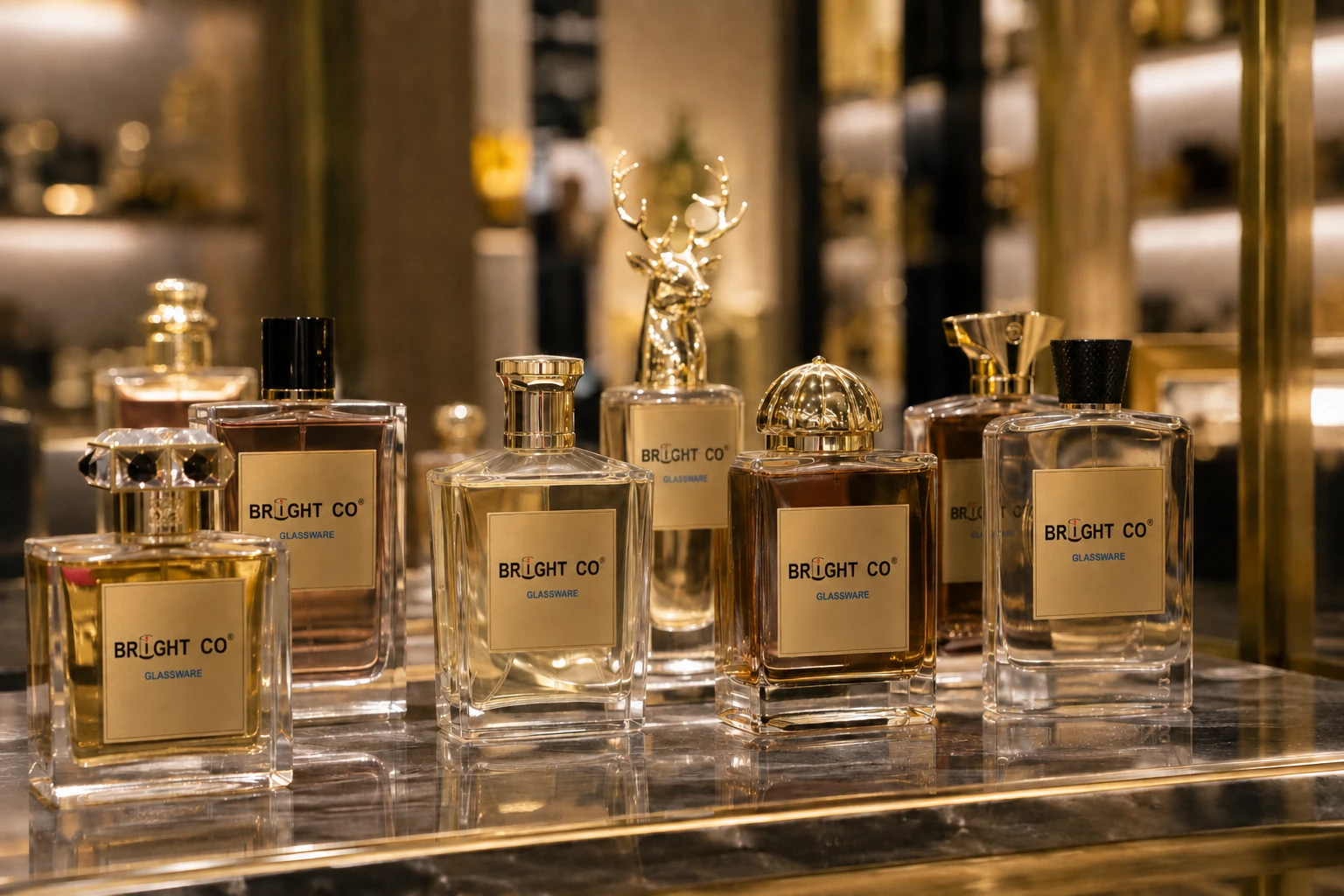
But what truly separates a standard glass factory from a world-class partner trusted by brands like BVLGARI? The difference lies in a set of core competencies that create an impenetrable barrier against defects and inconsistencies. Let's explore the five pillars that define a top-tier manufacturer of perfume bottles.
What Material Makes the Best Perfume Bottles?
You've likely noticed that some glass bottles look dull, yellowish, or have a faint haze. This immediately cheapens the perception of the high-value liquid inside. For a luxury perfume, the glass itself must communicate brilliance. The secret to achieving this lies in the raw materials and, more importantly, the melting process.
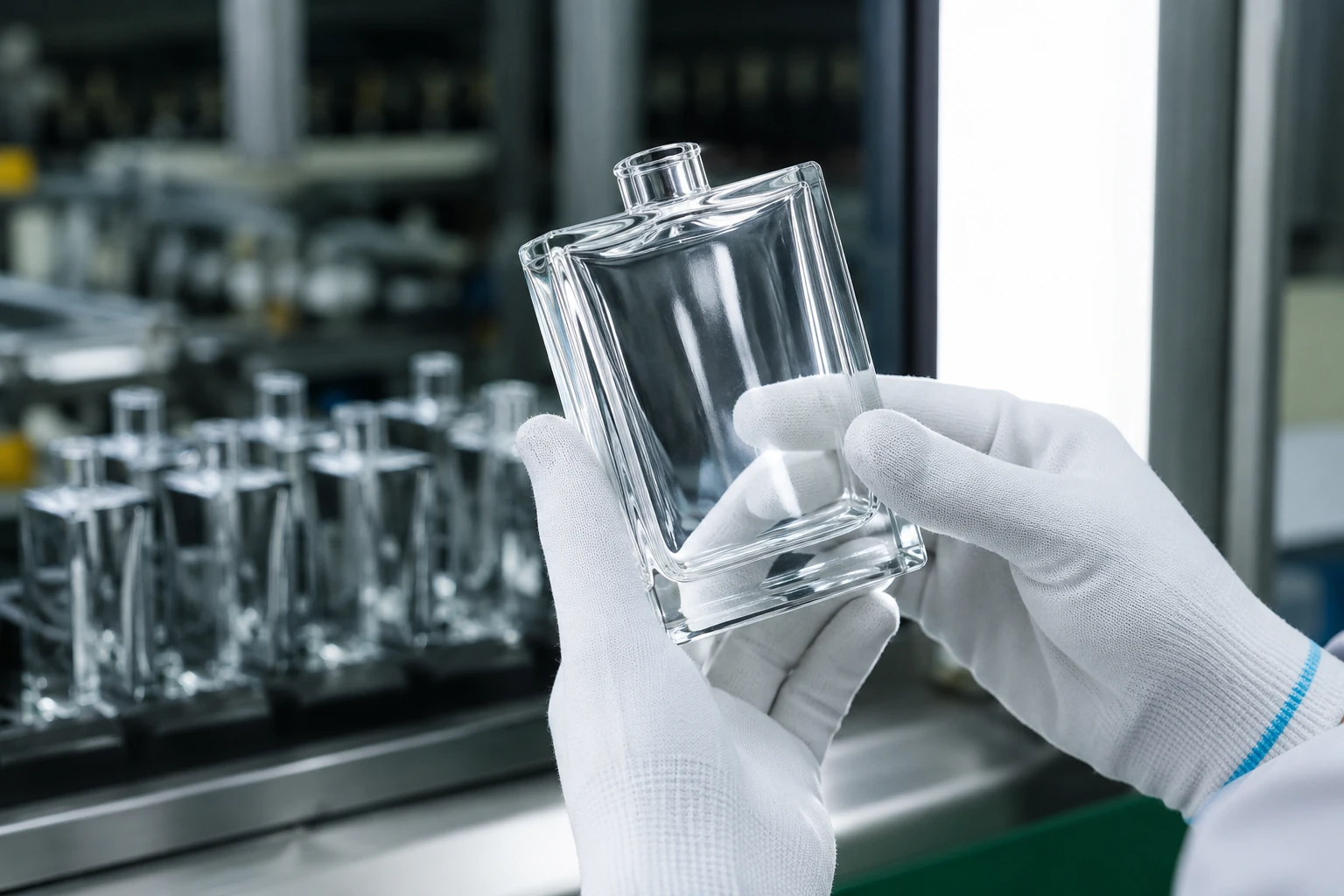
The best perfume bottles are made from high flint or crystal flint glass. This superior clarity is achieved by using top-grade quartz sand and, critically, melting it in advanced electric furnaces, which eliminate the impurities common in cheaper, fossil-fuel-powered methods.
Dive Deeper: The Purity of Electric Furnaces
For many years, I've seen buyers puzzled by the vast difference in glass quality. The underlying reason is the heat source. Many traditional glass factories use heavy oil-fired furnaces to save costs. While effective at melting glass, this method introduces contaminants from combustion into the glass melt, resulting in a less-than-perfect finish. The glass often has a slight green or yellow tint and lacks true brilliance.
At Bright Glassware, we made a significant investment to move away from this outdated technology. We exclusively use advanced electric furnaces for melting. This process provides an incredibly pure and stable heating environment.
Here’s why it matters:
- Ultimate Purity: Electric melting uses electrical resistance to heat the glass mixture directly.2 There is no combustion, no fumes, and no external contaminants, ensuring the molten glass remains pristine.
- Superior Materials: This pure process allows us to work with the highest-grade raw materials, like low-iron quartz sand, to produce High Flint Glass (also known as super flint) and Crystal Flint Glass.
- Unmatched Brilliance: The result is a bottle with exceptional transparency, a high refractive index (how it sparkles), and a perfectly neutral color. It looks and feels more like crystal, providing the perfect showcase for a luxury fragrance.
This commitment to material science is the physical foundation of a premium perfume bottle. It's not just glass; it's an optical-grade material engineered for luxury.
Why is Bottle Neck Tolerance Critical for Perfume Bottles?
Perfume is a highly volatile and valuable liquid. The last thing a brand wants is for its customers to discover their expensive fragrance has evaporated over a few months. This nightmare scenario is a direct result of a poor seal between the bottle and the pump, a problem that begins with manufacturing.
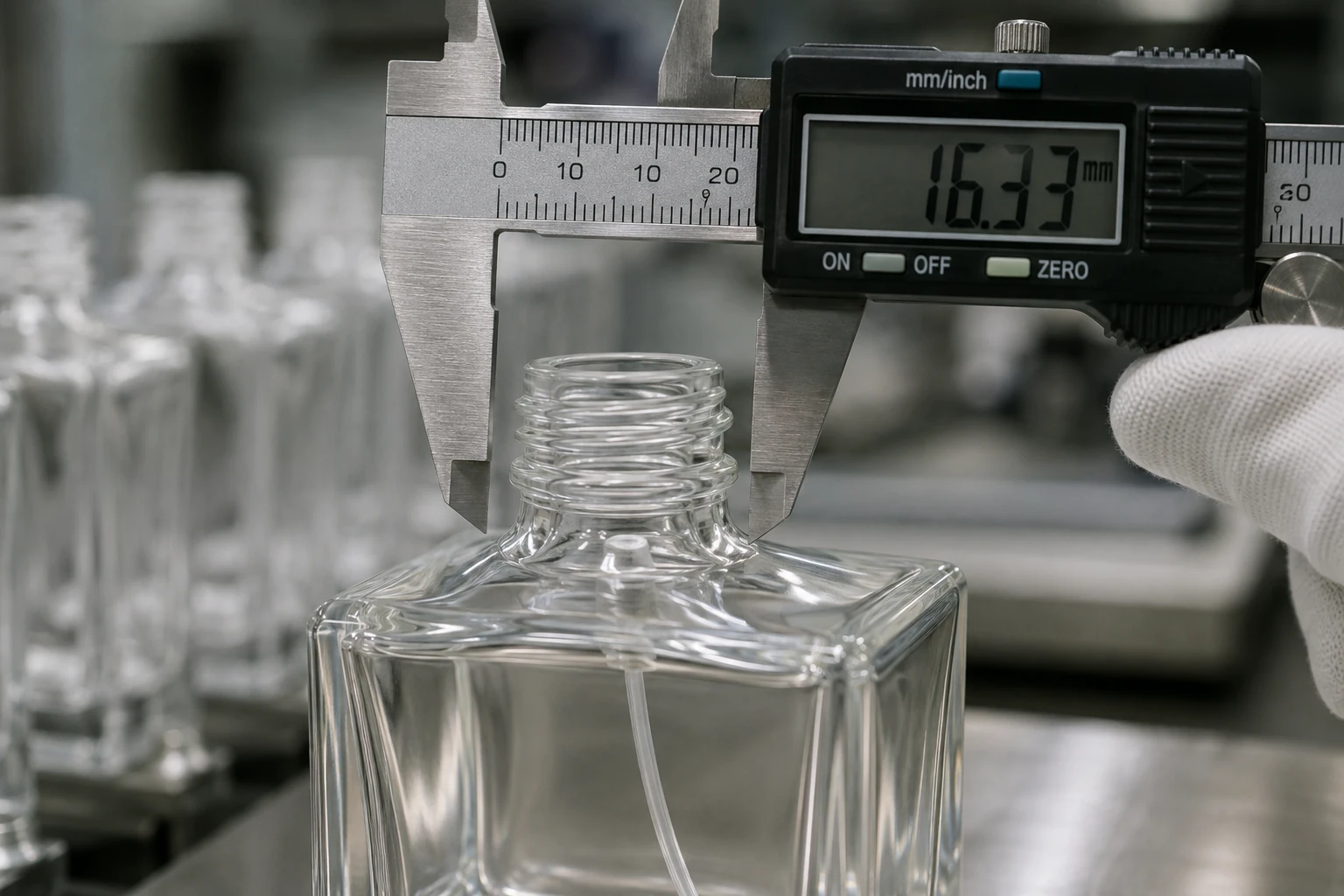
Strict, micro-millimeter tolerance on the bottle's neck and opening is non-negotiable.3 This precision ensures a perfect, airtight crimp with the spray pump, completely preventing leaks and evaporation, thereby protecting the product, the customer experience, and the brand's reputation.
Dive Deeper: The Micro-Millimeter War Against Evaporation
A faulty seal is a catastrophe for a perfume brand. While a low-quality factory might rely on random spot-checks by eye, this is simply gambling with your product. At Bright Glassware, we treat the bottle neck as the most critical engineering point.
We have implemented a multi-stage quality control system to guarantee a perfect seal on every single bottle:
- Automated Inspection: We utilize high-precision, automated infrared inspection systems that scan every bottle coming off the production line. These machines measure the inner and outer diameter of the neck with extreme accuracy.
- Rigorous Caliper Checks: In addition to automation, our QC teams perform rigorous manual checks using specialized calipers to ensure all dimensions are within our strict tolerance limits—often just a few tenths of a millimeter.
- FEA Standard Compliance: We engineer our bottle necks to be perfectly compatible with industry-standard pump sizes (e.g., FEA 15, FEA 20). This means that whether you source your pumps from us or another supplier, the fit will be seamless.
When a client orders tens or hundreds of thousands of perfume bottles, they need to know that the last bottle will seal as perfectly as the first. This obsession with tolerance is how we eliminate the risk of leakage and evaporation, providing total peace of mind.
What Defines a Luxury Heavy Base on Perfume Bottles?
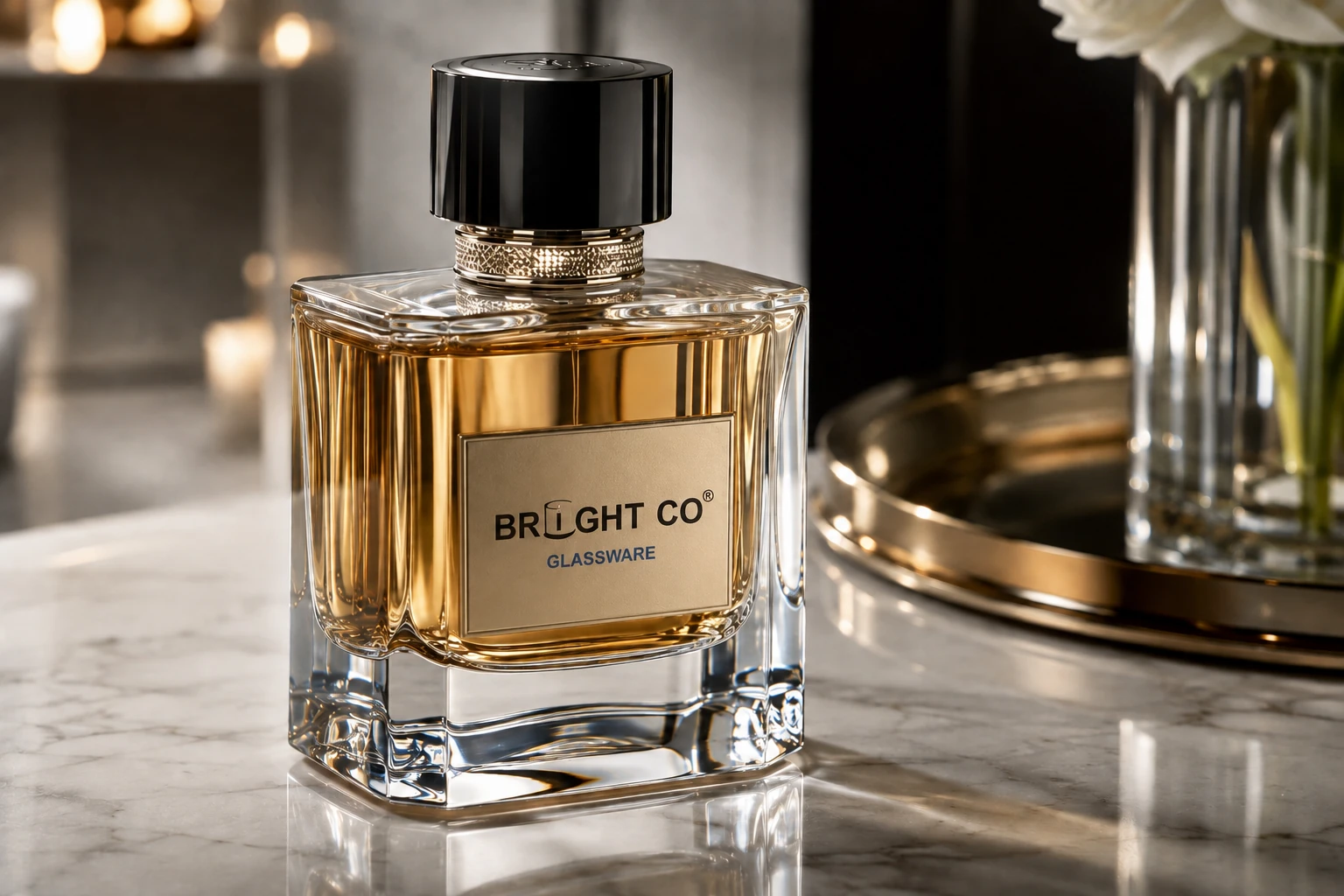
Think of the most iconic and expensive perfumes on the market. They often share a common design signature: a substantial, weighty, and flawlessly clear heavy base. This feature conveys value and quality before the customer even smells the fragrance. However, from a manufacturing standpoint, creating a perfect heavy base is one of the most difficult challenges in glassmaking.
A true luxury heavy base is defined by its perfect clarity, absence of defects, and a smooth, natural transition from the thick base to the thinner walls.4 Achieving this consistently is a hallmark of a technically superior manufacturer.
Dive Deeper: The Art and Science of the Heavy Base
As a factory director, I know the physics that make a heavy base so challenging. When molten glass enters the mold, the thickest part—the base—cools much more slowly than the thinner walls. This temperature differential creates immense internal stress.5
If not managed perfectly, this process leads to common defects:
- Bubbles (Seeds): Trapped gases can form small bubbles within the thick glass, ruining the crystal-clear look.
- Chill Marks: If parts of the glass cool too quickly upon contact with the mold, it can create unsightly wavy lines or "chill marks" on the surface.
- Uneven Distribution: An unskilled process can result in a lopsided base or an unnatural transition to the walls.
Conquering these challenges requires more than just a standard mold. At Bright Glassware, we have perfected this with our precision mold temperature control systems. These systems carefully manage the cooling rate across every part of the bottle, allowing the heavy base to solidify uniformly without creating internal stress or visual flaws. This core technology is one of the reasons we have earned the trust of premier luxury brands, including our recently authorized partnership to produce fragrance packaging for BVLGARI.
How Can Brands Customize Perfume Bottles Without High MOQs?
Many emerging and niche perfume brands have incredible design ideas but are stopped in their tracks by the demands of traditional manufacturers. Go to a legacy European factory, and you'll likely be quoted a Minimum Order Quantity (MOQ) in the hundreds of thousands and a long, expensive mold development process. This model stifles innovation and shuts out new players.
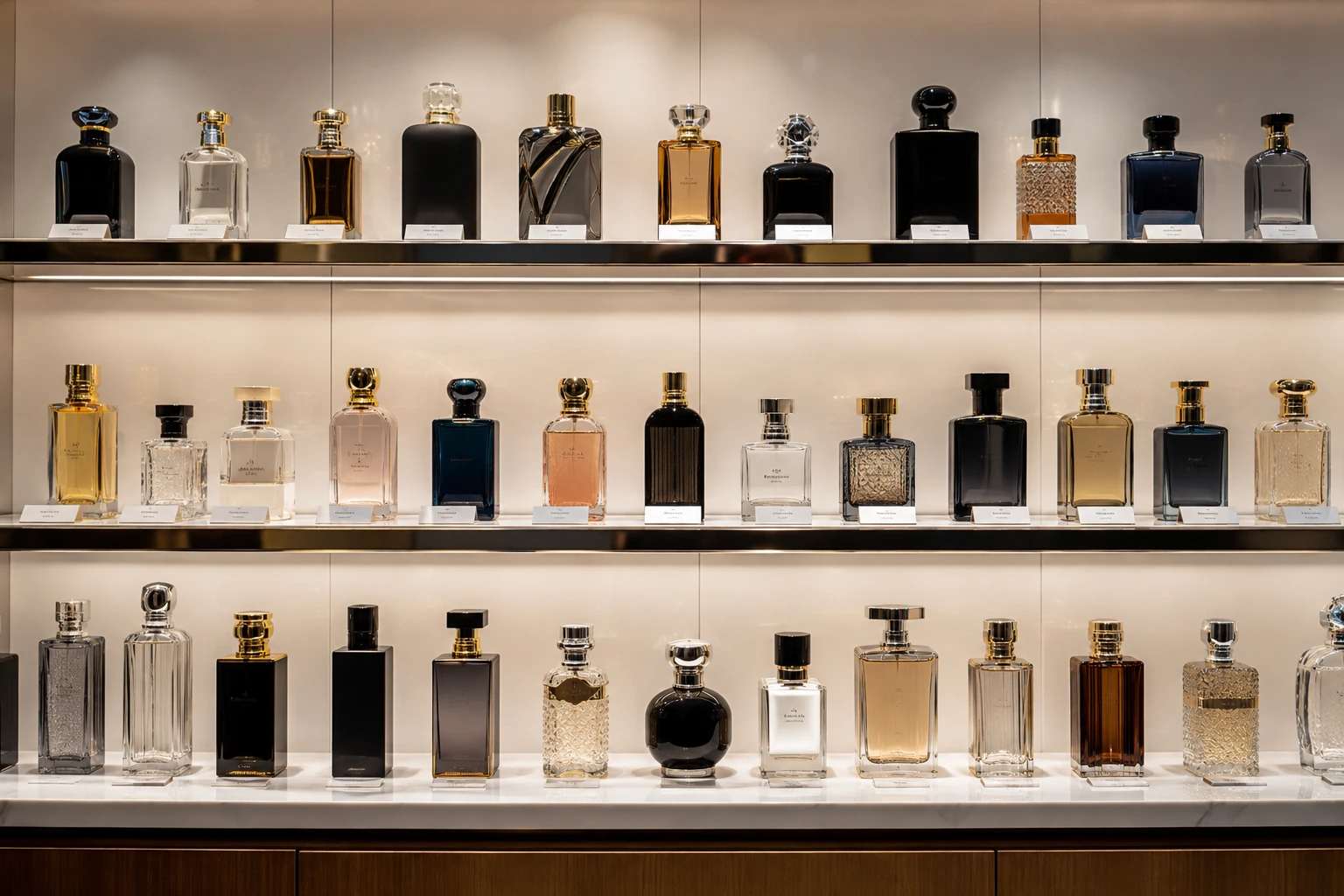
Brands can get access to premium, customizable perfume bottles by partnering with an agile manufacturer who offers a two-track solution: a library of existing stock molds with low MOQs, and a streamlined, cost-effective process for developing exclusive private molds.
Dive Deeper: Agile Supply for Brands of All Sizes
We built Bright Glassware's service model to break down these barriers. We believe every brand deserves access to world-class packaging, regardless of its size. We achieve this with a flexible, "Agile Customization" approach.
| Service Tier | Minimum Order Quantity (MOQ) | Best For | Key Benefits |
|---|---|---|---|
| Stock Molds | Starts at 3,000 pieces | Startups, Niche Brands, Market Testing | Access our library of hundreds of proven, premium bottle shapes. Made with the same crystal flint glass as our largest clients. Allows for differentiation through color, finishing, and branding. |
| Private Mold (OEM/ODM) | Starts at 10,000–20,000 pieces | Growing Brands, Exclusive Product Lines | Develop a completely unique bottle shape. We offer highly competitive mold development fees and have compressed the sampling timeline to as little as 15 days. |
This dual approach empowers our clients.6 A startup can launch quickly and test the market using a stock mold with a low initial investment. Once they validate their product and scale up, they can seamlessly transition to developing a proprietary bottle shape that becomes a core part of their brand identity. We provide the path to scale, from 3,000 pieces to millions.
What is the Final Quality Check for Premium Perfume Bottles?
A perfectly molded bottle is only half the story. The final decoration—the color coating, the printed logo, the hot-stamped branding—is where the luxury identity truly comes to life. A tiny dust speck in the paint or a logo that flakes off can destroy the entire premium perception. The ultimate quality gatekeeper is the deep processing environment and the rigorous testing that follows.
The final quality check for premium perfume bottles involves ensuring all surface decorations are applied in a near-dust-free cleanroom environment. Furthermore, every element, from the paint to the logo, must pass stringent adhesion and chemical resistance tests to guarantee its durability and visual perfection.
Dive Deeper: The Uncompromising World of Deep Processing
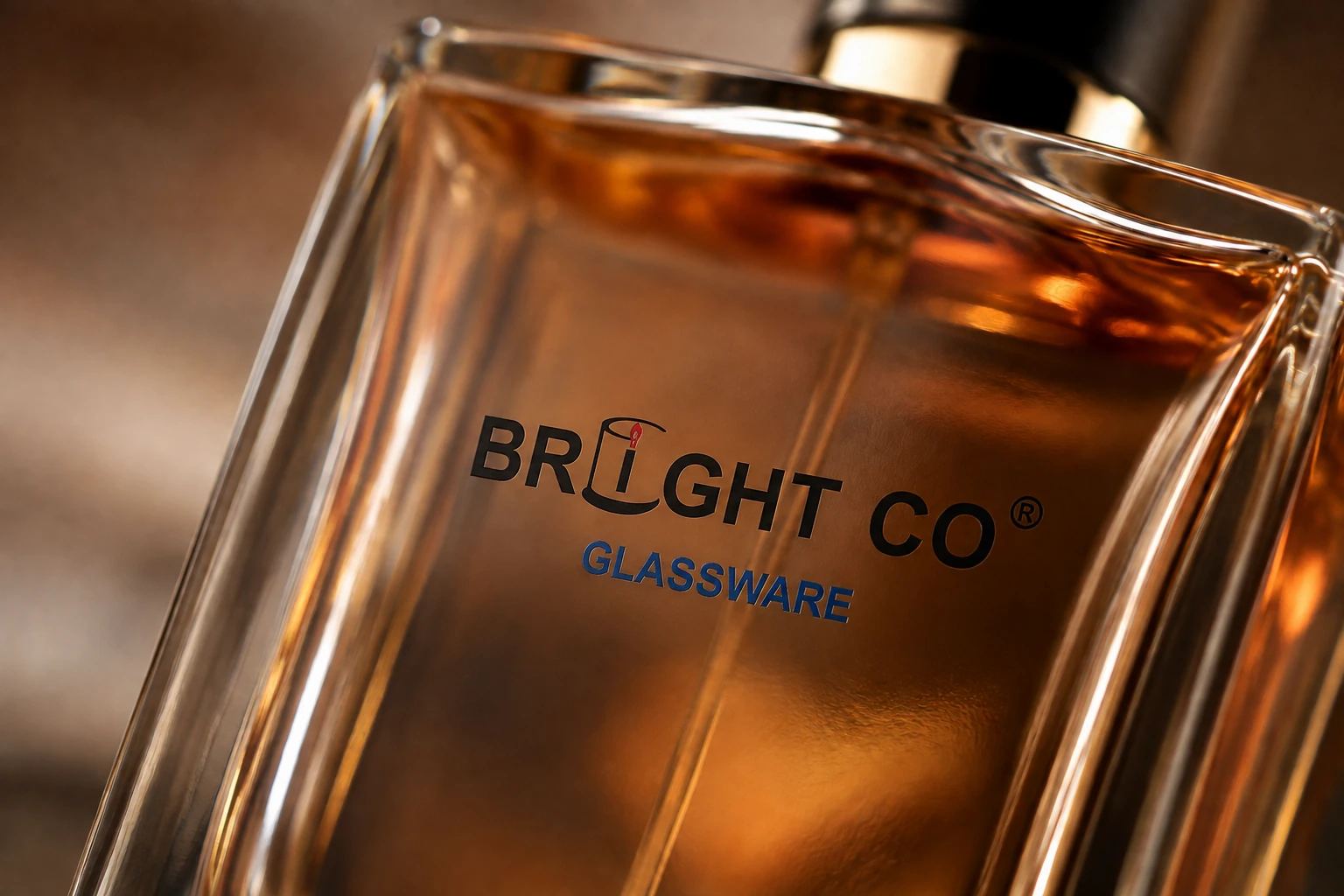
Deep processing is our ultimate competitive moat. It's not just about having the right machines; it's about controlling the entire environment and process with an obsessive level of detail. Today, products for top international beauty and perfume brands are flowing from Bright Glassware’s workshops to retail counters worldwide, because we pass their "unreasonable" quality control audits every single day.
Here’s how we ensure a flawless finish:
H3: The Battle Against Dust
We've invested heavily in creating near-cleanroom conditions for our decoration workshops. Why? Because a single, barely visible speck of dust that lands on a bottle during a gradient spray application becomes a fatal flaw under the bright lights of a retail store. Our dust-free environment is the first line of defense in achieving a perfect luxury finish.
H3: Eliminating Batch Color Variation
Our fully automated color-spraying lines guarantee absolute consistency.7 Whether a brand orders a specific Pantone color today or places a reorder six months from now, our process ensures the color is a 100% pixel-perfect match, eliminating the dreaded problem of batch-to-batch color variation.
H3: Ensuring Durability Against Alcohol
Perfume contains a high concentration of alcohol, a solvent that can wreak havoc on low-quality printing and stamping.8 Every logo and design we apply—whether via silk-screening or hot-stamping—undergoes a rigorous high-temperature curing process.9 We then validate its durability with tests like the cross-hatch adhesion test and prolonged alcohol immersion and friction tests. We guarantee our branding will not peel, flake, or fade.10
Frequently Asked Questions
What is the typical MOQ for custom perfume bottles?
For our existing stock molds, the MOQ can be as low as 3,000 pieces, allowing you to customize with color, finishing, and logos. For a fully custom private mold (OEM/ODM), the MOQ typically starts around 10,000 to 20,000 pieces, depending on the bottle's complexity.
What is the difference between high flint and crystal flint glass?
Both are premium materials used for luxury packaging. High flint glass (or super flint) has excellent transparency and is the standard for high-end bottles. Crystal flint glass is an even higher grade with enhanced brilliance and a higher refractive index, giving it a sparkle that closely resembles true crystal.
How long does it take to develop a custom perfume bottle mold?
The timeline can vary, but our streamlined process allows us to move incredibly fast. From finalizing the 3D drawing to producing the first physical samples from a new mold, our typical lead time is just 15 to 25 days, enabling brands to accelerate their product development cycle.
Can you help match the perfume bottles with caps and pumps?
Absolutely. We provide a one-stop packaging solution. We can source and ensure a perfect fit for a wide range of accessories, including standard or custom spray pumps, caps (wood, metal, plastic), collars, and more, saving you the complexity of managing multiple suppliers.
Conclusion
When you ask who manufactures perfume bottles, you are really asking who can be trusted with your brand's reputation. The answer is not just any glass factory, but a dedicated partner with proven expertise across five critical areas: the purity of crystal flint materials, the micro-millimeter precision of the bottle neck, the flawless execution of a heavy base, flexible and agile customization options, and an uncompromising approach to deep processing and quality control. These are the pillars that support the world's most iconic fragrance brands.
Top-tier brands conduct exhaustive factory audits and demand a level of quality control that many suppliers simply cannot meet. Our automated production lines and obsessive QC processes are designed to pass these tests every day. Don't leave your brand's packaging to chance. Bring your design to Bright Glassware, and let us help you craft the next stunning perfume bottle that will captivate the market.
"Manufacturing - MIT Department of Materials Science and Engineering -", https://dmse.mit.edu/research-impact/impact-areas/manufacturing/. Specialized glass packaging suppliers for luxury perfume bottles often employ advanced material science and precision engineering techniques to ensure high-quality production standards. Evidence role: general_support; source type: research. Supports: The claim that leading perfume bottle manufacturers specialize in material science, precision engineering, and deep processing.. Scope note: The source may provide general industry practices rather than specific examples of all leading manufacturers. ↩
"Glass melting furnace", https://en.wikipedia.org/wiki/Glass_melting_furnace. Electric melting in glass manufacturing involves using electrical resistance to heat the glass mixture, providing a cleaner and more controlled process compared to traditional methods. Evidence role: mechanism; source type: education. Supports: The claim that electric melting uses electrical resistance to heat the glass mixture directly.. Scope note: The source may focus on general glass manufacturing rather than perfume bottles specifically. ↩
"Cork Stoppers & Lids | Candle Jar & Diffuser Bottle Manufacturer", https://brightglassware.com/closures-accessories/cork-stoppers-and-lids/. Maintaining micro-millimeter tolerance in bottle neck dimensions is essential to ensure an airtight seal, preventing leaks and evaporation in perfume packaging. Evidence role: mechanism; source type: research. Supports: The claim that micro-millimeter tolerance on the bottle neck is critical for preventing leaks and evaporation in perfume bottles.. Scope note: The source may provide general insights into packaging precision rather than specific data on perfume bottles. ↩
"Best Candle Jars for Candle Making: Materials, Shapes and Safety", https://brightglassware.com/best-candle-jars-for-candle-making-materials-shapes-and-safety/. Luxury heavy bases in glass bottles are defined by their clarity, absence of defects, and smooth transitions, which enhance the product's aesthetic appeal. Evidence role: definition; source type: education. Supports: The claim that a luxury heavy base is characterized by clarity, defect-free surfaces, and smooth transitions.. Scope note: The source may not address all aspects of luxury heavy bases but focuses on general design principles. ↩
"[PDF] Effects of the Cooling Rate on the Shear Behavior of Continuous ...", https://scholarsmine.mst.edu/cgi/viewcontent.cgi?article=7819&context=mec_aereng_facwork. Temperature differentials during the cooling process can lead to internal stress in glass, affecting its structural integrity and appearance. Evidence role: mechanism; source type: research. Supports: The claim that temperature differentials during cooling create internal stress in glass.. Scope note: The source may discuss general glass manufacturing rather than perfume bottles specifically. ↩
"Custom Frosted Glass Candle Jars: Unlimited Colors, Lids & Box Sets", https://www.brightglassware.com/article/frosted-glass-candle-jars.html. Providing both stock and private molds allows manufacturers to cater to diverse client needs, offering flexibility for small orders and scalability for larger production runs. Evidence role: general_support; source type: research. Supports: The claim that offering both stock and private molds provides flexibility and scalability for clients.. Scope note: The source may discuss general manufacturing practices rather than specific examples from the article. ↩
"Custom Spray Painted Borosilicate Glass Candle Jars ...", https://www.brightglassware.com/article/custom-spray-painted-borosilicate-glass-candle-jars-professional-spraying-factory.html. Automated color-spraying lines in glass manufacturing provide consistent and uniform color application, reducing the risk of batch-to-batch variation. Evidence role: mechanism; source type: research. Supports: The claim that automated color-spraying lines ensure consistent color application in glass manufacturing.. Scope note: The source may discuss general automation in manufacturing rather than specific to perfume bottles. ↩
"Unsafe alcohol", https://www.interpol.int/en/Crimes/Illicit-goods/Shop-safely/Unsafe-alcohol. Alcohol, commonly found in perfumes, can degrade low-quality printing and stamping on glass surfaces, leading to peeling or fading. Evidence role: mechanism; source type: research. Supports: The claim that alcohol in perfumes can damage low-quality printing and stamping on bottles.. Scope note: The source may provide general insights into alcohol's effects on materials rather than specific to perfume bottles. ↩
"Votive & Tea Light Candle Containers - Bright Glassware", https://brightglassware.com/applications/votive-and-tea-light-candle-containers/. High-temperature curing strengthens the adhesion and durability of silk-screened and hot-stamped designs on glass surfaces. Evidence role: mechanism; source type: research. Supports: The claim that high-temperature curing enhances the durability of silk-screened and hot-stamped designs on glass.. Scope note: The source may not focus exclusively on perfume bottles but on general glass decoration processes. ↩
"Where Can I Buy Empty Designer Perfume Bottles? A Wholesale ...", https://brightglassware.com/where-to-buy-perfume-bottles-wholesale-b2b-sourcing-guide/. Durability tests, such as the cross-hatch adhesion test, are used to ensure that branding on glass bottles resists peeling, flaking, and fading. Evidence role: general_support; source type: research. Supports: The claim that the branding on glass bottles is tested to ensure it does not peel, flake, or fade.. Scope note: The source may describe general testing methods rather than specific results for the mentioned manufacturer. ↩
Keep Reading