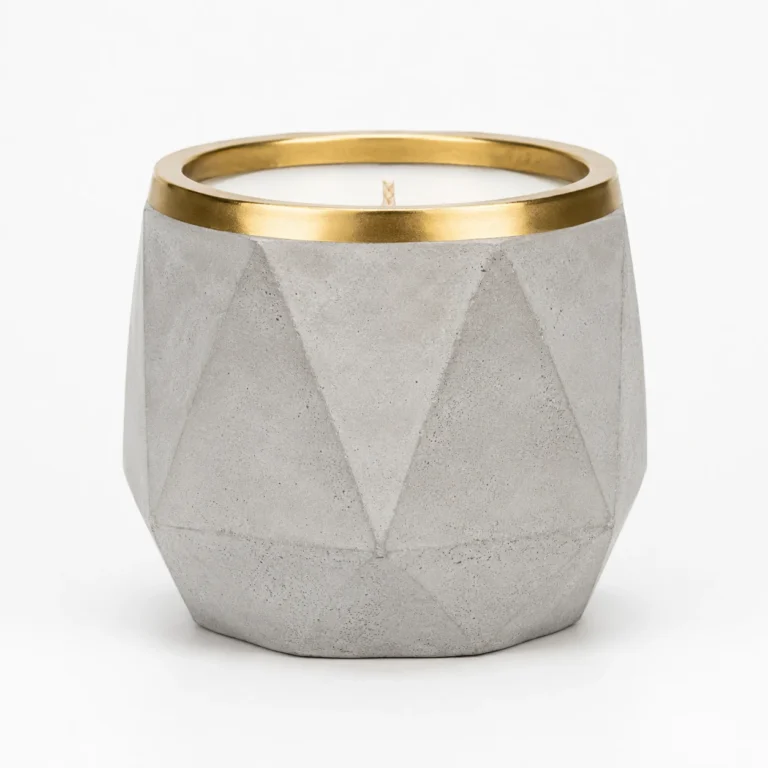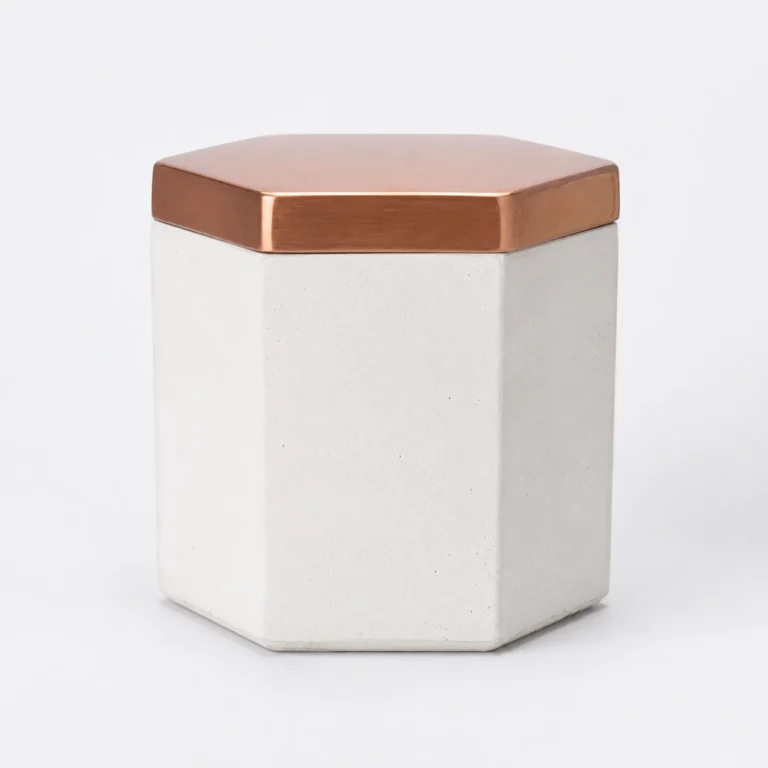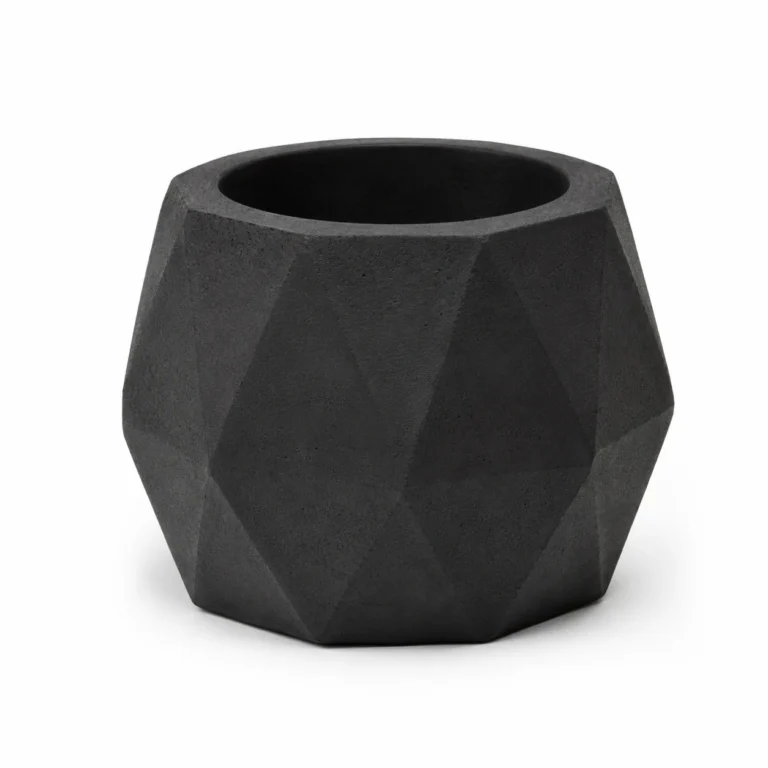
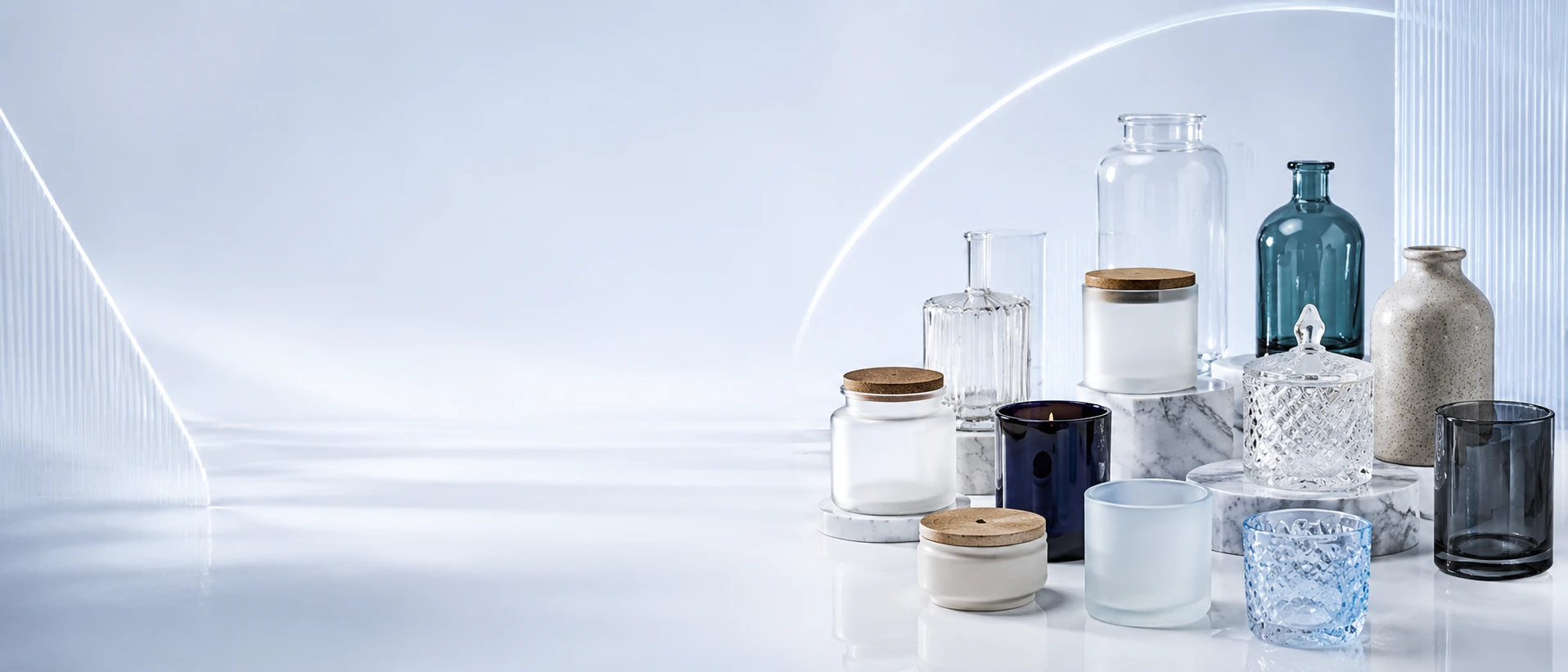
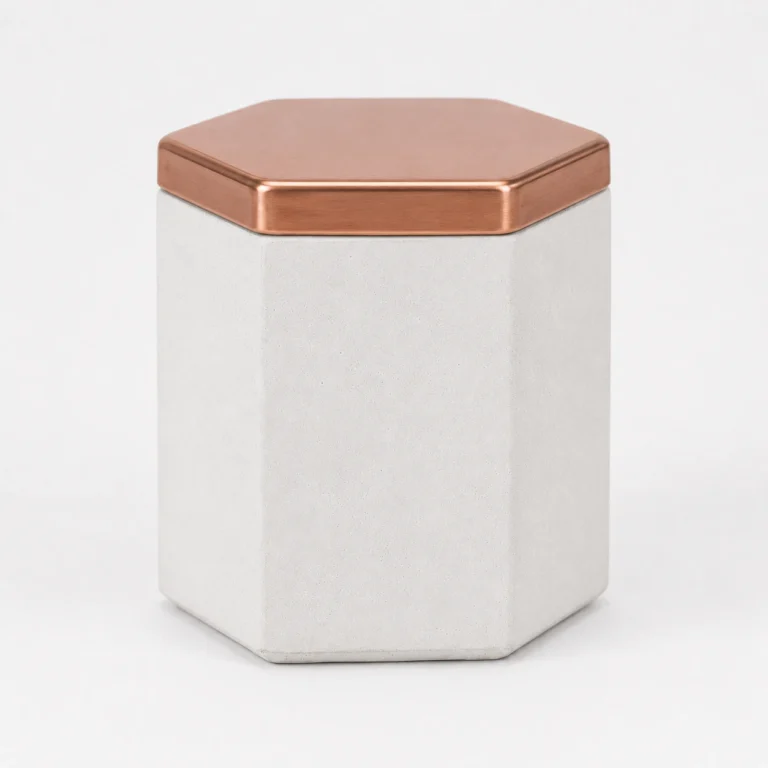
Concrete, cement and Jesmonite are mineral-based materials used for selected candle jars and candle holders where weight, tactile texture and a stone-like appearance are part of the product identity. These materials are not identical formulations, so porosity, surface sealing, wall thickness and finished weight must be confirmed on the exact product.For candle use, review the internal surface, coating or liner strategy, usable wax area, base stability and heat-use requirements on production-style samples. Natural-looking mineral surfaces can show controlled variation in tone, pores and texture; define the acceptable visual standard and protective packing before bulk production.
Available Products
Showing 1–4 of 4 products
Need help narrowing the options?
Share your target appearance, weight, use conditions, decoration and closure requirements. We can help compare the most practical material choices.
Creates a substantial tactile appearance with natural-looking texture and visual mass.
Porosity varies by formulation and finishing route; confirm any sealer, liner or internal treatment required for the intended use.
Casting and curing can create small variation in dimensions, surface texture and color that should be defined through sample approval.
Pigmentation, engraving, printed logos, decals, metallic details and surface coatings may be possible depending on the material and sealer. Approve on physical samples.
The substantial feel and distinctive texture support premium presentation, but higher weight, porosity control, dimensional variation and edge protection need to be planned.
Project Support
Continue with the pages most relevant to the next sourcing, customization or risk-control decision for this collection.
See how appearance, dimensions, component fit, decoration and final order quality are checked.
Explore page →Validate an existing model, decorated sample or custom concept before committing to bulk production.
Explore page →Coordinate the container, closure, decoration, accessories, packaging, QC and delivery in one project.
Explore page →Related Resource
A focused reference for this material, selected to help with product comparison, sampling or sourcing decisions.
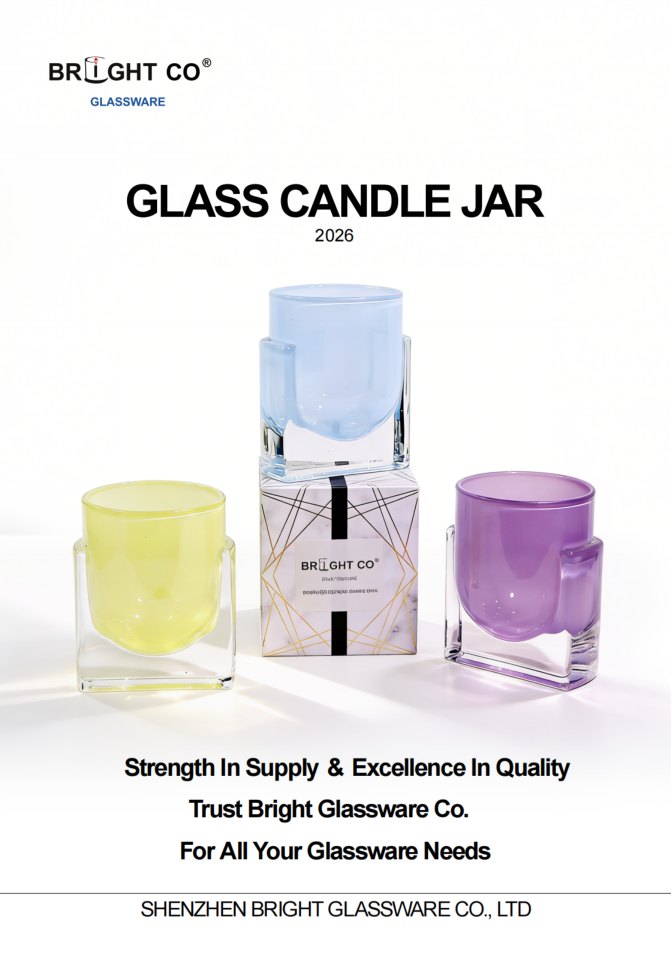
A 20-page glass candle jar catalog covering standard and decorative vessels, custom branding, accessories, packaging and one-stop candle solutions.
View Resource →FAQ
These answers cover the questions most likely to affect product selection, sampling and quotation for this collection.
Still have a question? Ask our team →No. A container being made of glass does not automatically make it suitable for candle use. Select a model intended for candle applications and evaluate the complete candle system: vessel geometry, wax, fragrance load, wick, fill level and intended burn conditions.
Before launch, run controlled burn tests with production-representative jars. Decorative appearance alone is not enough to approve a vessel for a candle program.
Start with the planned usable wax fill, target burn format, wick layout, label area, lid, box and desired shelf presence. Review outside dimensions together with the internal diameter and actual usable volume.
A wider jar may require a different wick configuration from a tall narrow jar. Request the drawing and sample, then confirm fill weight, component fit and burn performance before production.
Common candle-jar finishes include clear glass, frosting, matte or gloss coatings, sprayed colors, printing, decals, metallic effects, textured or embossed surfaces and ceramic glazes. The best option depends on the vessel material, branding goal, filling process and intended candle use. Review the finish after wax filling, labeling, packing and handling, then approve it together with the intended wax, wick, lid and packaging.
Export packing is selected according to product shape, weight, finish, accessories and shipping method. Common protection includes partitions, molded trays, inner bags or wraps, cartons, corner protection, pallet wrapping and extra separation for decorated surfaces.
Heavy, shaped or protruding products need different protection from simple round containers. Final packing should be approved with the actual product and component set rather than copied from another model.
Request a Quote
Share the size or capacity, style, finish, closure, branding or packaging requirements you already know. Our team can review suitable existing models and the next sampling or customization step.
We can narrow existing models before you spend time comparing every option.
Decoration, color, closure and packaging can be reviewed together with the selected container.
Confirm appearance, fit and decoration on samples before bulk production.