
Struggling to find the perfect candle jars for your brand? Many entrepreneurs pour their hearts into wax and fragrance, only to see their product fail due to a poorly chosen container, leading to sooting, poor adhesion, or even dangerous fractures1. The best candle jars, I’ve learned over 20 years in this business, are rarely chosen for looks alone; they are a calculated compromise of material engineering, thermodynamics, and supply chain economics.
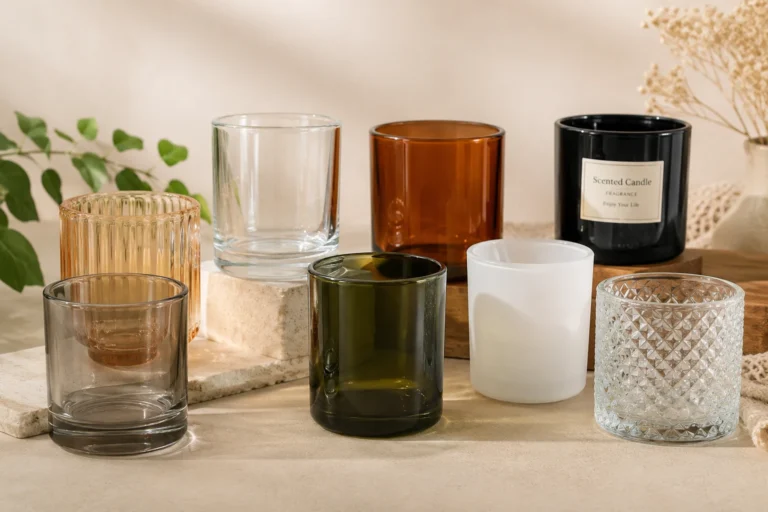
The best candle jars for candle making are those that match your brand's specific needs in material, shape, and safety. For luxury brands, heavy-base soda-lime glass offers a premium feel and substantial weight2. For modern DTC brands, lightweight borosilicate glass saves on shipping and provides a flawless canvas for decoration3. The most versatile shape is a straight-sided round jar, which optimizes burning performance and logistical efficiency.
Now that you have the quick answer, let's explore why these details are non-negotiable for building a successful candle brand. The choice you make here can define your product's performance, your brand's reputation, and your customer's safety.
Which Materials Make the Best Candle Jars?
Choosing a material can feel overwhelming, with options ranging from glass and ceramic to metal. Making the wrong choice can undermine a premium brand image or inflate your shipping costs unnecessarily. The secret is to align the material's properties with your specific commercial goals.
For most professional candle brands, the decision boils down to two types of glass. The best choice depends entirely on the brand story you want to tell and the market you serve.
The Classic Luxury Choice: Heavy Base Soda-Lime Glass
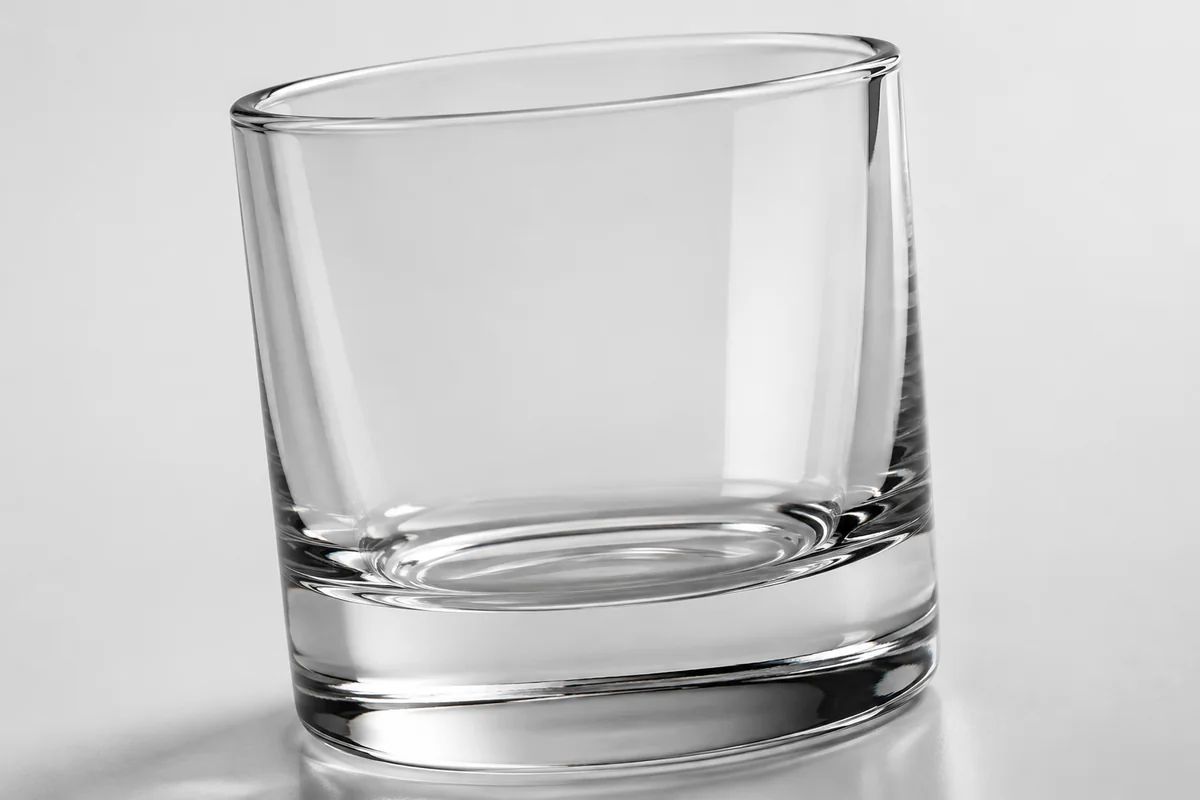
If your brand identity revolves around timeless elegance, sensory weight, and a premium feel, then high-quality, heavy-base soda-lime glass is your go-to option. This isn't just any glass; it's a statement. The defining feature is its substantial, thick base, which gives the jar a satisfying heft and perceived value the moment a customer picks it up. It feels like a luxury good.
However, from a manufacturing standpoint, achieving this luxury feel requires absolute perfection. At our facility, the standards for our high-clarity soda-lime candle jars are non-negotiable:
- Zero Scratches: The surface must be pristine.
- No Visible Seam Lines: The finish should be seamless and smooth.
- Bubble Control: We don't permit any bubbles larger than 1mm in the glass wall. Under the warm glow of a candle flame, even the tiniest imperfection can become a glaring flaw, shattering the illusion of luxury you've worked so hard to create.
This material is perfect for high-end retail, gift sets, and brands that want to communicate quality through tangible weight and flawless clarity.
The Future-Proof Champion: High Borosilicate Glass
For modern, minimalist, and direct-to-consumer (DTC) brands, I strongly recommend high borosilicate glass. This advanced material offers two decisive commercial advantages that are changing the game for e-commerce sellers.
First, it is exceptionally lightweight. This directly translates into significant savings on last-mile courier and shipping fees, a critical factor for any brand selling online. Lighter packages mean lower costs per unit, protecting your profit margins.
Second, it boasts optical-grade flatness4. A common issue with standard glass is a subtle "waviness" on the interior wall. This distortion can make expensive waxes like soy or coconut look uneven or cheap, especially as the candle burns down. Our borosilicate candle jars, by contrast, have an almost mirror-like interior surface. This pristine, even wall provides the perfect canvas for advanced decoration techniques like real-gold hot stamping, gradient spraying, and electroplating, ensuring your branding looks crisp and high-end. Its superior thermal properties also make it ideal for multi-wick candles that generate more intense heat.
Why Are Straight-Sided Round Candle Jars the Industry Standard?
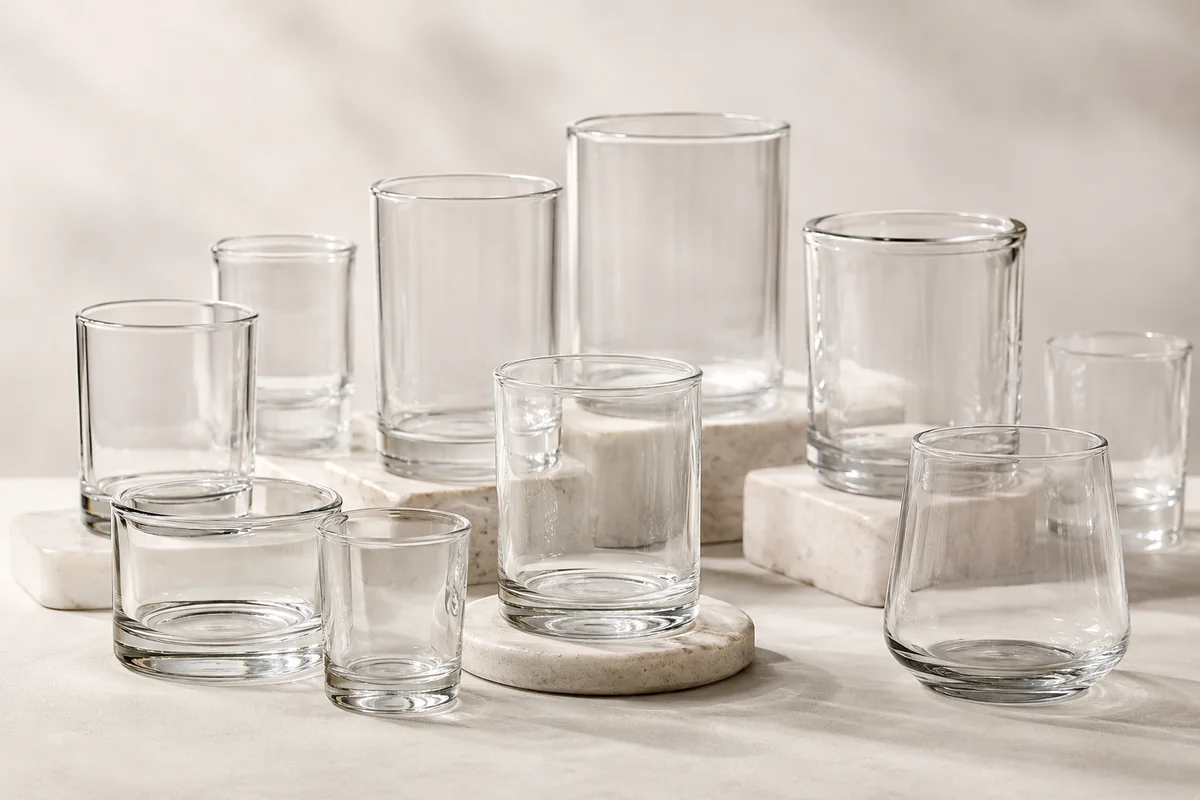
Scroll through Instagram, and you'll see a dazzling array of uniquely shaped candle vessels. But if you were to walk the production floor of my factory, you'd notice that the world's top-selling fragrance brands almost exclusively rely on one shape: the straight-sided round jar.
This isn't a lack of creativity; it's a strategic decision rooted in physics and logistics. Our top-selling models, like the BGC7080 (7cm diameter, 8cm height) and BGC8090 (8cm diameter, 9cm height), dominate for very practical reasons.
The Thermodynamic "Sweet Spot"
A candle is a heat engine, and its container is a critical part of that system. The classic straight-sided round jar, particularly with a height-to-diameter ratio between 1:1 and 4:3, hits a "physical sweet spot."
This ratio provides the perfect balance between heat retention and oxygen flow.
- Too Wide: A jar that is too wide for its wick can struggle to melt the wax all the way to the edges, resulting in "tunneling" and wasted wax.
- Too Narrow: A jar that is too narrow or has an inward-curving top can trap heat, starve the flame of oxygen, and lead to sooting or incomplete combustion.
The straight-sided cylinder allows heat to distribute evenly, enabling the candle to achieve a full, clean melt pool across the entire surface quickly. This ensures a consistent scent throw and maximum burn time for the consumer—the hallmarks of a well-made candle.
The Supply Chain's MVP
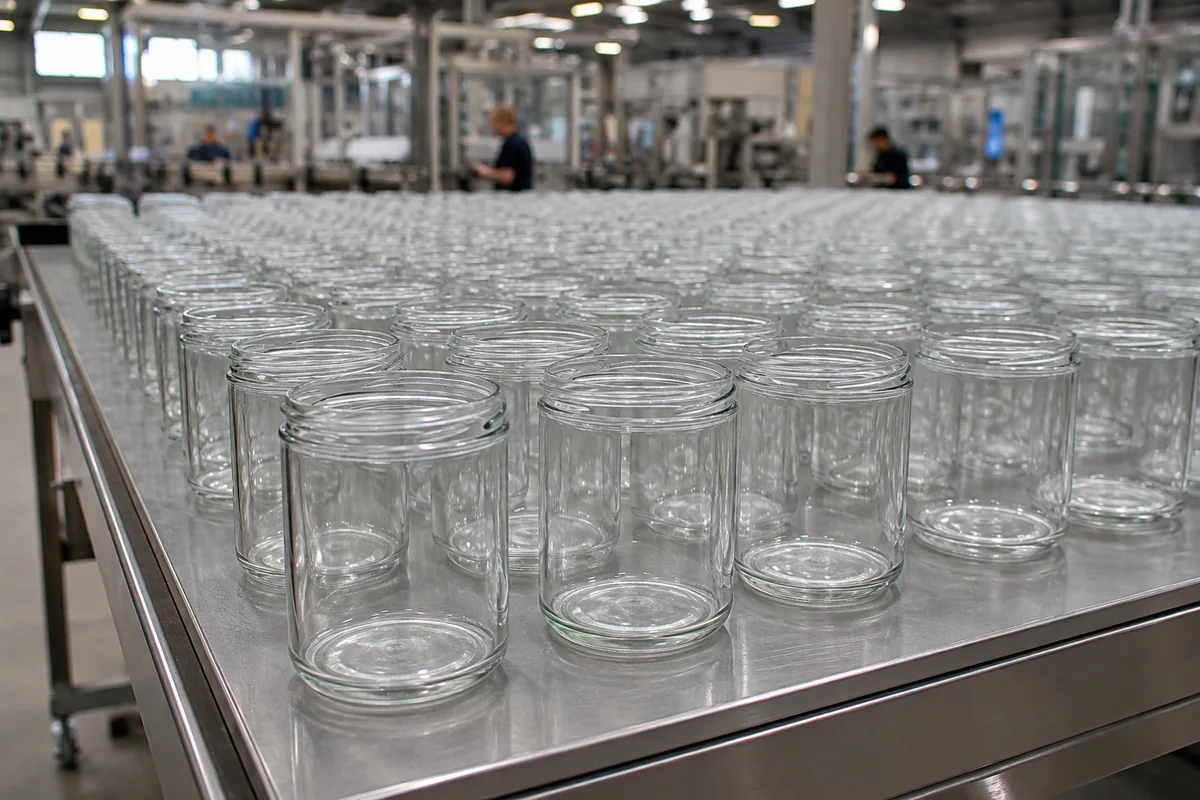
Beyond performance, the straight-sided round jar is an operational dream. During automated production, its cylindrical shape allows for flawless wrap-around label application without air bubbles or creasing.
More importantly, this shape is the most efficient for packing and shipping. Cylinders nest together perfectly, maximizing the use of space inside a carton and, by extension, a shipping container. When combined with our custom-fit inner and outer boxes, this geometric efficiency dramatically reduces volumetric weight, compressing international shipping costs to their absolute minimum.
| Feature | Straight-Sided Round Jar | Irregular or Tapered Jar |
|---|---|---|
| Burn Performance | Excellent, promotes full melt pool | Variable, prone to tunneling or sooting |
| Automated Labeling | Fast and flawless | Slow, difficult, or requires manual labor |
| Packing Density | High, maximizes container space | Low, creates wasted space, higher shipping cost |
| Lid Compatibility | High, easy to fit with standard lids | Low, often requires custom-made lids |
What Safety Standards Define High-Quality Candle Jars?
A beautiful candle jar is worthless if it's a safety liability. A customer experiencing a cracked or shattering jar is a brand's worst nightmare. True safety isn't a marketing slogan; it's a result of rigorous, data-driven manufacturing processes you can't see.
Professional candle makers often use high-performance cotton or wood wicks, such as the CDN Stabilo KST series5 (e.g., CDN 18 or 20), which burn hotter to achieve a good melt pool in larger diameter jars. This intense, localized heat places enormous thermal stress on the glass.
Fighting Extreme Heat with Thermal Stress Management
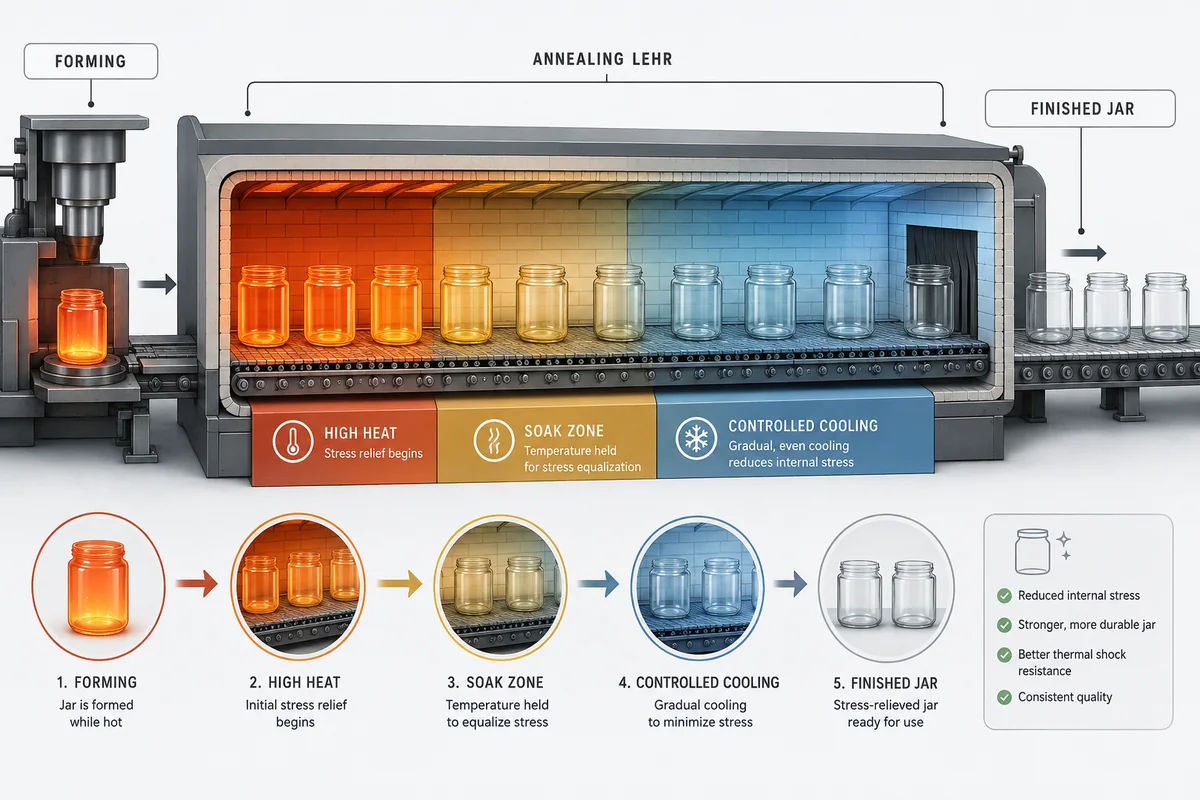
If glass is cooled too quickly after being molded, internal stresses become locked into the material. When that glass is later subjected to the intense, focused heat from a candle flame, these stresses can release catastrophically, causing the jar to crack.
To prevent this, every candle jar we produce goes through a long, temperature-controlled oven called an annealing lehr6. This process slowly and precisely cools the glass over a long period, allowing the internal molecular structure to settle and releasing virtually all internal stress. This ensures the jar can withstand the thermal shock of a burning candle, even a multi-wick candle lit in a cold room. Borosilicate glass, with its extremely low coefficient of thermal expansion, offers an even higher margin of safety in this regard.
The Critical Role of Wall Thickness Uniformity
Another common point of failure in low-quality jars is uneven wall thickness—thick on one side, thin on the other. As the candle burns, the thin side heats up and expands much faster than the thick side. This uneven expansion creates two problems:
- "Wet Spots": The differential expansion can cause the wax to pull away from the glass wall in certain areas, creating unsightly "wet spots" that customers perceive as a defect.
- Increased Fracture Risk: The thin wall becomes a weak point, highly susceptible to cracking under thermal stress.
Our fully automated production lines control the mouth diameter, height, and wall thickness to within fractions of a millimeter. This precision is not just for safety; it's also essential for ensuring a perfect, airtight fit with high-end wood, metal, or bamboo lids, completing the premium product experience.
Beyond the Jar: What is Retail-Ready Packaging?
You've selected the perfect material, shape, and safety-certified jar. But the job isn't done. A premium product delivered in a flimsy box—or worse, arriving broken—can erase all your hard work. The final line of defense is packaging engineered for the realities of global logistics.
This is where we elevate the conversation from simply supplying a component to delivering a complete, finished-goods solution. A supplier who has experience with top-tier retailers understands this implicitly.
Retail-ready packaging is a robust system designed to protect the product from our factory floor to your customer's shelf, all while optimizing for handling and distribution.
The Final Step: Violent-Proof Packaging
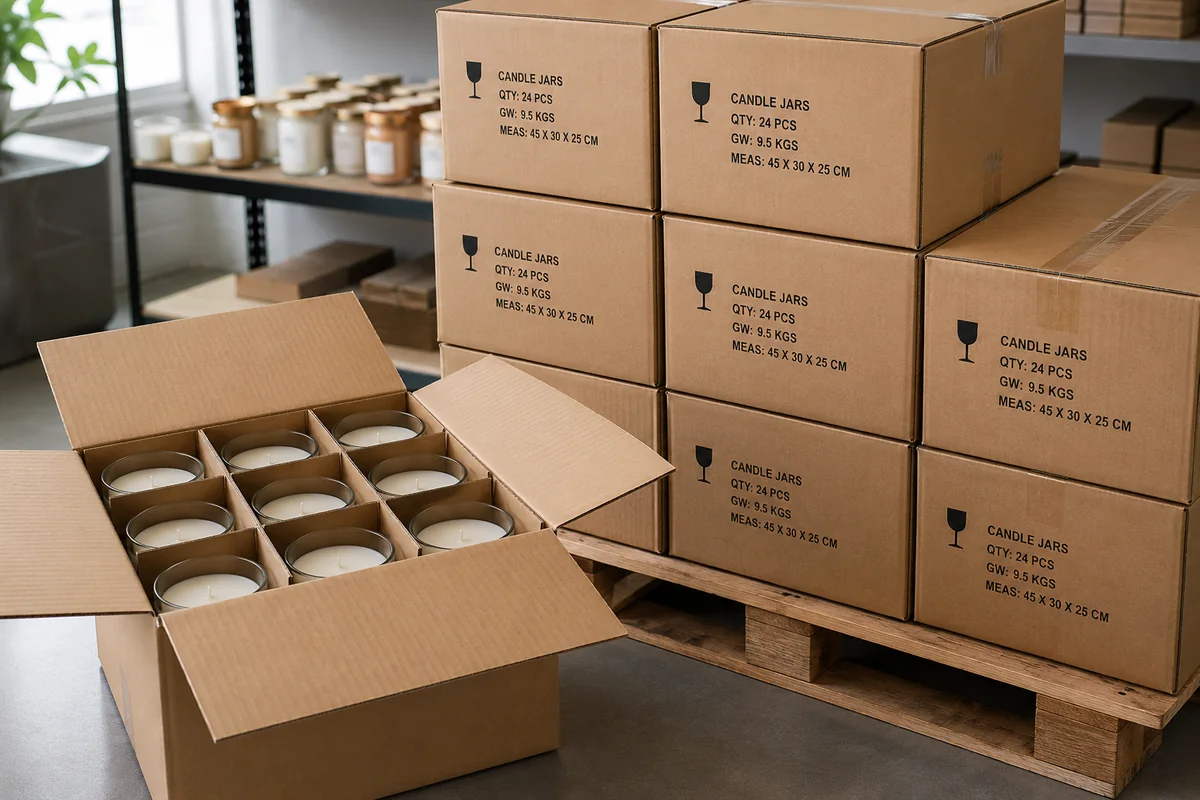
As a supplier to major brands and retailers in the United States, Europe, and Australia, we don't just sell candle jars; we deliver a complete, retail-ready program. This means the packaging itself is part of the product specification.
For example, a typical configuration is a "12-pack inner box" that fits snugly inside a "5-ply master carton." This matrix structure is engineered to withstand the rigors of shipping and pass international drop-test standards.
The benefits for you, the brand owner, are immense:
- Protection: Your inventory arrives intact and ready for sale.
- Efficiency: Your warehouse staff or fulfillment center doesn't need to waste time and money repacking products. They can simply open the master carton and ship the inner boxes directly to distributors or place them on shelves.
- Professionalism: It signals to your B2B partners that you are a serious, professional brand that understands the demands of the supply chain.
This final step ensures that the quality and safety we engineer into the glass are preserved all the way to the end user.
Frequently Asked Questions
What is the best material for luxury candles?
For a high-end, luxury feel, heavy-base soda-lime glass is the top choice. Its substantial weight and flawless clarity communicate premium value before the candle is even lit. It provides the "heft" that customers associate with quality goods.
Why is my candle tunneling and not burning to the edges?
Tunneling is usually caused by a wick that is too small for the jar's diameter. However, the jar shape is also a factor. Using a straight-sided round jar within the recommended thermodynamic ratio helps ensure even heat distribution for a full melt pool.
Can I use any glass jar from a craft store for candle making?
No, this is extremely dangerous. Standard decorative jars are not properly annealed to withstand the prolonged, localized thermal stress from a candle flame. Always use vessels specifically manufactured and tested for candle making to prevent cracking and ensure customer safety.
What is a good starting size for a new candle line?
Our most popular candle jars for new brands are in the 7 to 8 cm (2.75 to 3.15 inches) diameter range with a height of 8 to 9 cm7. This size offers a great burn time, excellent scent throw, and falls right into the thermodynamic and logistical "sweet spot" for performance and shipping.
Conclusion
Choosing the right candle jars is one of the most critical decisions a brand owner can make. It goes far beyond aesthetics. The best choice is a strategic one, balancing material properties with your brand's positioning, using a shape optimized for both burn performance and logistics, and insisting on manufacturing processes that guarantee safety. From the premium weight of heavy-base glass to the lightweight efficiency of borosilicate, and from the thermodynamic perfection of a straight-sided jar to the assurance of retail-ready packaging, every detail matters. Don't let your beautiful fragrances and waxes be let down by the vessel that holds them.
If you're ready to move beyond trial and error and develop a complete, safe, and retail-ready packaging solution for your candle brand, my team and I are here to help. Contact Shenzhen Bright Glassware today to discuss your project and request samples of our professionally engineered candle jars.
"Is it safe to burn a candle with broken glass?", https://www.facebook.com/groups/TwinCitiesGeeks/posts/7817115938317731/. Research on candle safety highlights that improper container materials or designs can lead to issues such as sooting, poor wax adhesion, and even fractures due to thermal stress. Evidence role: general_support; source type: research. Supports: Poorly chosen candle containers can lead to sooting, poor adhesion, or dangerous fractures.. Scope note: The source may focus on general safety guidelines rather than specific case studies. ↩
"CO-OPS Products - NOAA Tides & Currents", https://tidesandcurrents.noaa.gov/products.html. Studies on consumer perception of product materials suggest that the weight and clarity of soda-lime glass contribute to its association with luxury. Evidence role: general_support; source type: research. Supports: Heavy-base soda-lime glass provides a premium feel and substantial weight, making it ideal for luxury brands.. Scope note: The source may focus on general material perception rather than specific applications in candle jars. ↩
"Borosilicate glass", https://en.wikipedia.org/wiki/Borosilicate_glass. Research on borosilicate glass highlights its lightweight nature and smooth surface, which are advantageous for shipping and decorative applications. Evidence role: general_support; source type: research. Supports: Lightweight borosilicate glass reduces shipping costs and offers a smooth surface for decoration.. Scope note: The source may not directly address its use in candle jars. ↩
"Case Studies - - Bright Glassware", https://brightglassware.com/case/. Studies on borosilicate glass properties confirm its high flatness and clarity, making it suitable for decorative applications. Evidence role: general_support; source type: research. Supports: Borosilicate glass offers optical-grade flatness, which enhances the appearance of wax and decoration.. Scope note: The source may not directly address its use in candle jars. ↩
"Specification (technical standard)", https://en.wikipedia.org/wiki/Specification_(technical_standard). Technical data on the CDN Stabilo KST series confirms their high heat output, making them ideal for larger candle jars. Evidence role: general_support; source type: research. Supports: The CDN Stabilo KST series wicks burn hotter, making them suitable for larger diameter jars.. Scope note: The source may not address specific jar sizes. ↩
"Annealing (glass) - Wikipedia", https://en.wikipedia.org/wiki/Annealing_(glass). Educational resources on glass manufacturing explain that the annealing lehr process gradually cools glass to relieve internal stresses and prevent cracking under thermal stress. Evidence role: mechanism; source type: education. Supports: The annealing lehr process relieves internal stresses in glass, preventing cracks during thermal stress.. ↩
"A Complete Guide to Candle Sizes: A Burn Times & Best Uses", https://lumeandwick.com/guide-to-candle-sizes/. Research on candle performance suggests that jars within these dimensions optimize burn time and scent throw due to their thermodynamic properties. Evidence role: mechanism; source type: research. Supports: Candle jars with a diameter of 7 to 8 cm and a height of 8 to 9 cm offer great burn time and scent throw.. Scope note: The source may not focus exclusively on these specific dimensions. ↩
Keep Reading