
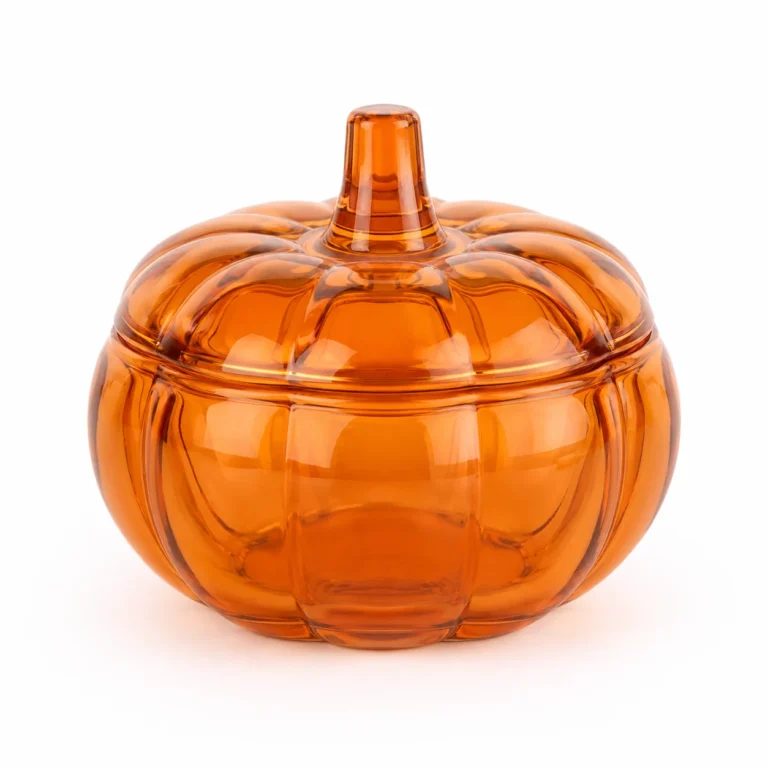
Pumpkin candle jars use ribbed, rounded seasonal forms for fall, Halloween and holiday candle collections. The sculpted exterior creates strong shelf identity, while the internal geometry still needs to support practical wax filling, wick access and repeatable candle testing.Confirm usable wax fill, inner candle shape, rib consistency, lid or stem-cap fit and base stability before production. Deep ribs and decorative stems also need fitted packing that protects the finished jar without rubbing coatings or printed surfaces.
Available Products
Showing 1–1 of 1 products
Need help narrowing the options?
Share your target capacity, closure, branding area or visual direction. We can shortlist suitable existing shapes before you invest in samples or custom tooling.
Ribbed pumpkin bodies use rounded lobes and may include a stem-style lid or cap detail while maintaining a separate internal candle cavity.
Use a small flat panel, hanging tag, direct print or bottom label because deep ribs reduce wrap-label practicality.
A broad pumpkin base is generally stable, but check the finished jar with wax and lid because a heavy stem cap can change balance.
Keep the candle opening practical for filling and wick access while matching the decorative lid or stem component.
Deep ribs can create coating shadow lines and make glass/ceramic wall variation more visible across the exterior.
Set rib depth, internal roundness, lid seat, base flatness and packing clearance before tooling.
Project Support
Continue with the most relevant sourcing, customization and validation pages for this shape.
Move a validated custom shape into production tooling, trial production and final approval.
Explore page →Validate an existing model, decorated sample or custom concept before committing to bulk production.
Explore page →Coordinate jars, lids, decoration, packaging, sampling and repeat production for candle programs.
Explore page →Related Resource
A focused reference for this shape, selected to help with product comparison, sampling or sourcing decisions.
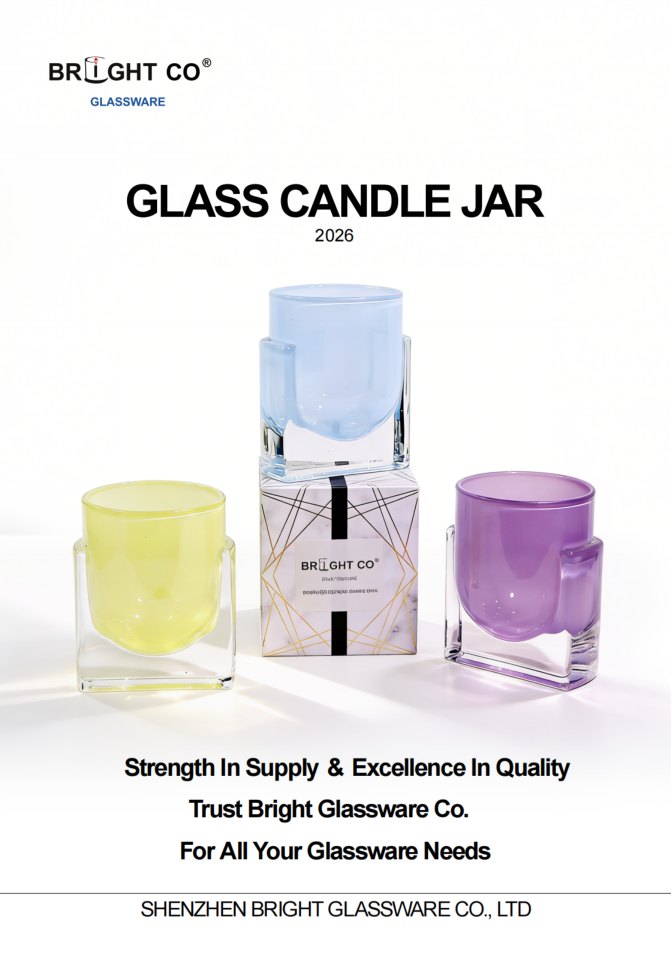
A 20-page glass candle jar catalog covering standard and decorative vessels, custom branding, accessories, packaging and one-stop candle solutions.
View Resource →FAQ
These answers cover the questions most likely to affect product selection, sampling and quotation for this collection.
Still have a question? Ask our team →No. A container being made of glass does not automatically make it suitable for candle use. Select a model intended for candle applications and evaluate the complete candle system: vessel geometry, wax, fragrance load, wick, fill level and intended burn conditions.
Before launch, run controlled burn tests with production-representative jars. Decorative appearance alone is not enough to approve a vessel for a candle program.
Start with the planned usable wax fill, target burn format, wick layout, label area, lid, box and desired shelf presence. Review outside dimensions together with the internal diameter and actual usable volume.
A wider jar may require a different wick configuration from a tall narrow jar. Request the drawing and sample, then confirm fill weight, component fit and burn performance before production.
We can provide the jar dimensions needed for wick development, but a final wick specification must be validated with the actual candle formula. Wick performance changes with inner diameter, wax type, fragrance load, dye, wick material and the intended burn profile.
Use the vessel dimensions to select starting wick candidates, then complete repeated burn testing before approving the finished candle.
Match the lid to the exact finished jar opening and rim, including any insert, sealing ring or internal structure used by the lid. Nominal diameter alone is not enough to confirm fit.
Approve the jar-and-lid combination on production-representative samples, check opening and closing feel, and then confirm the assembled height and fit inside the final retail and export packaging.
Request a Quote
Share the target capacity, preferred silhouette, closure, branding area, finish or packaging requirements you already know. Our team can compare existing shapes first and advise whether a standard model or custom mold is the better route.
We can narrow existing shapes before you spend time comparing every option.
Decoration, color, closure and packaging can be reviewed together with the selected shape.
Confirm appearance, fit and decoration on samples before bulk production.